
 EN
How to Partner with Gate Valve Manufacturers for Projects
Choosing a Gate Valve manufacturer is not simply a sourcing exercise. In a project environment, the supplier must help turn a piping requirement into a documented, reviewable package. A reliable Gate Valve partnership starts before quotation: the buyer defines the duty, the manufacturer identifies what is known and unknown, and both sides agree on the evidence needed before release.
From a B2B procurement perspective, the useful question is not “Which Gate Valve is right for the stated conditions?” It is “What information will let the project team verify that this Gate Valve configuration fits the system?” That shift prevents a common source of rework: comparing prices before connection details, materials, pressure conditions, or document requirements have been aligned.
Start with a project brief, not a product name
A Gate Valve is normally considered where isolation is the intended function, but the manufacturer cannot responsibly confirm suitability from a valve name alone. Give prospective suppliers a concise project brief that separates confirmed data from items still under review. At minimum, include the medium, line size, expected pressure and temperature, end connection, installation orientation, operating frequency, and required manual or actuated operation.
It also helps to identify adjacent equipment. A water regulating valve may serve a different control purpose, while a non slam check valve addresses reverse-flow behavior. Naming these roles early keeps the Gate Valve inquiry focused on isolation rather than asking one device to solve several unrelated duties. If the process conditions change, the selection should be revisited rather than carried over from another project.
Build a manufacturer shortlist around evidence
Do not begin by treating catalog availability as approval. Ask each Gate Valve manufacturer how it will review the project brief, clarify missing data, and record the final agreed configuration. The strongest early signal is often the quality of the questions asked. A supplier that distinguishes an assumption from a confirmed requirement makes later technical review easier.
- Request a quotation that identifies the proposed Gate Valve configuration rather than a broad family name.
- Ask which drawings, data sheets, material information, inspection records, and test documentation can be supplied for review.
- Clarify the manufacturer’s document format, revision control, lead-time assumptions, and contact responsible for technical clarification.
- Record deviations separately so they are neither lost in commercial notes nor mistaken for approved changes.
For example, API 600 may be relevant to certain steel Gate Valve designs and features. It should be listed as a document or design-basis item to verify when the project specification calls for it—not assumed to apply to every Gate Valve inquiry. The same discipline applies to material, pressure class, testing, and inspection requests.
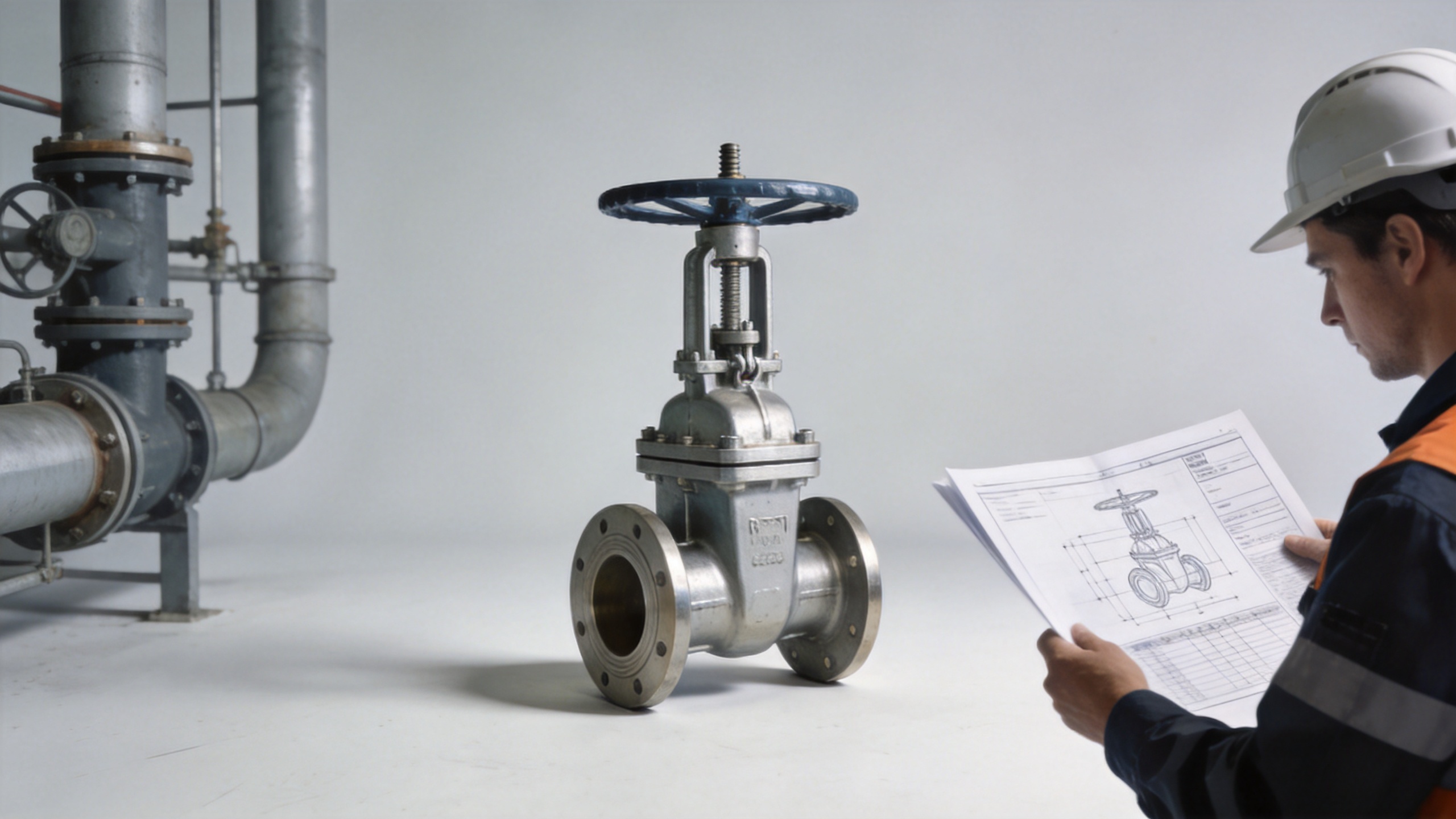
Use the RFQ to create one shared technical record
A well-structured request for quotation makes collaboration more efficient. Instead of asking only for a Gate Valve price, provide a line-item checklist and ask the manufacturer to respond against each field. This produces a traceable baseline for engineering, procurement, and quality teams.
| RFQ field | Why it matters | What to confirm with the manufacturer |
|---|---|---|
| Service conditions | They set the design context for the Gate Valve. | Medium, normal and exceptional pressure/temperature, and operating pattern. |
| Construction details | They affect fit, materials, and maintenance planning. | Body, bonnet, wedge, stem, seats, packing, and end connections. |
| Control approach | It prevents confusion between isolation and regulation. | Manual operation, actuator need, controls, and fail-state requirements if applicable. |
| Documents and inspection | They define the proof required before shipment. | Data sheet, drawings, inspection points, test records, and document revisions. |
In this process, a water regulating valve should be documented as a separate functional requirement when modulation is needed. Likewise, a non slam check valve should have its own flow, orientation, and transient-response questions. Keeping these items distinct improves the clarity of the Gate Valve package and of the project’s overall valve schedule.
Review the technical response before negotiating terms
Once proposals arrive, compare like with like. A low initial offer for a Gate Valve may not represent the lower project burden if documents are incomplete, clarifications remain open, or the quoted configuration differs from the requested basis. Put the technical review ahead of the final commercial comparison.
A practical review meeting can use three columns: confirmed requirements, supplier response, and unresolved items. Do not mark an item closed just because it appears in a brochure. Ask whether the proposed Gate Valve response is tied to the project’s specified conditions and whether supporting documents can be reviewed at the correct revision. This is especially important when installation space, interface details, or maintenance access are constrained.
Agree on communication gates through manufacture
Partnership continues after purchase order placement. Establish who approves drawings, how changes are communicated, what inspection or test notifications are required, and what must be included in the final documentation pack. A Gate Valve manufacturer should be able to show a clear path from approved specification to production and delivery records.
Keep the communication routine proportionate to project risk. For straightforward duty, a controlled data-sheet and drawing review may be enough. For critical service, the team may need additional hold points or document review. The key is not to promise a universal process; it is to define the verification path before the Gate Valve is released.
Make the partnership repeatable
After delivery, capture what the team learned: which RFQ fields triggered clarification, which documents were most useful, and where terminology caused delay. This turns a single Gate Valve order into a more reliable sourcing framework for the next project. It also makes future discussions about a water regulating valve or a non slam check valve faster because functional responsibilities and evidence expectations are already clear.
The next step is simple: prepare a project-specific Gate Valve checklist, invite manufacturers to respond against the same fields, and retain unresolved items as visible engineering actions. That approach supports a more transparent partnership without making claims that the project data has not yet proved.
 Hot News