
 EN
How Does Solenoid Valve Provide Instant Fluid Switching?
A Solenoid Valve converts an electrical command into a change in a fluid path. That simple job matters wherever a process needs a repeatable open-or-closed response without someone turning a handle. In practical terms, the electrical signal energizes a coil, the coil creates a magnetic field, and a moving element changes the relationship between a seat and the flow passage. The visible switch can feel instant, but the real response of a Solenoid Valve depends on its design, fluid conditions, electrical supply, and installation.
From an automation-control perspective, it helps to treat the valve as part of a control chain rather than as an isolated fitting. A controller or switch supplies the signal; the coil responds; the internal mechanism moves; and the process line sees a new flow condition. When those links match the duty, a Solenoid Valve offers a compact way to automate an on/off fluid task.
The switching sequence inside a Solenoid Valve
A typical Solenoid Valve has a coil, a magnetic circuit, a plunger or armature, a spring, and a valve seat. In a normally closed arrangement, the spring holds the flow path shut when the coil has no power. Applying the rated electrical signal energizes the coil. Its magnetic field pulls the plunger toward the core, overcoming the spring force and lifting the sealing element clear of the seat. Fluid can then pass through the valve body.
Removing power reverses that sequence. The magnetic force fades, the spring returns the moving part, and the seat closes. In a normally open Solenoid Valve, the resting flow condition is reversed: without power the passage is open, and energizing the coil drives it toward closure. The choice is not only a terminology issue. It determines what the line does during a loss of electrical power, which must be checked against the process objective.
The coil does not create fluid flow by itself. It moves an internal part that either opens a path, closes a path, or starts a pressure-assisted action. This distinction explains why an Solenoid Valve can be useful for liquids, gases, and pneumatic pilot signals while still requiring different body, seal, and pressure selections.
Why the response appears immediate
An electrical command reaches the coil much faster than a manual operator can react, and the plunger has a short travel path. That is why a Solenoid Valve is commonly used for discrete switching tasks such as admitting water, venting a pneumatic line, isolating a small process branch, or sending a pilot signal to a larger actuator. “Instant” should be understood as fast system switching, not as a promise of one identical timing value for every installation.
Several stages contribute to the actual result: the controller output, coil energization, magnetic pull, plunger travel, pressure movement in the line, and the downstream equipment response. A clean electrical command cannot compensate for unsuitable voltage, a sticking internal part, or a pressure condition outside the valve design. More accurately, the valve is quick when the whole chain supports quick movement.
Direct-acting and pilot-operated switching
A direct-acting Solenoid Valve uses the plunger to open or close the main seat directly. This approach is useful where the design needs to operate without relying on line pressure to move a larger main element. The details still depend on the specific valve construction and application limits.
A pilot-operated Solenoid Valve uses coil movement to control a smaller pilot passage. The pressure difference across the main element then helps move the larger sealing section. This can suit applications where the system provides the required pressure differential, but it also means installation conditions matter. If the expected differential is absent, the behavior may not match a direct-acting design. Saying that a valve is electrically controlled is not enough; the operating principle needs to match the available pressure conditions.
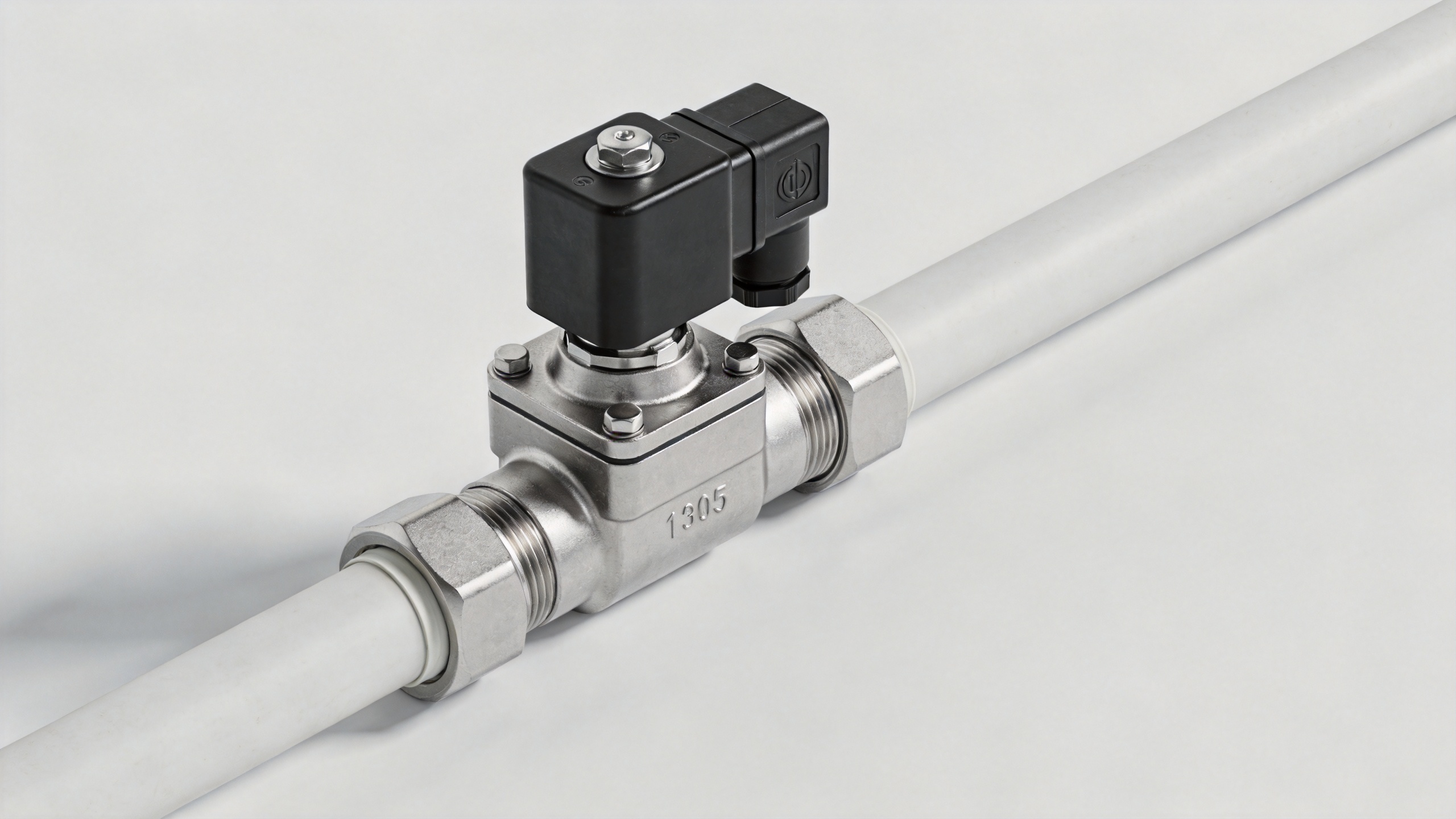
What controls a Solenoid Valve’s switching performance?
For a Solenoid Valve, the word “fast” has to be tied to the application. The following checks make the requirement more useful:
- Medium and cleanliness: liquid or gas composition, particles, viscosity, and compatibility with body and seal materials can affect motion and sealing.
- Pressure conditions: inlet pressure, outlet pressure, and the available differential influence pilot-operated designs in particular.
- Voltage and supply type: the coil must match the available AC or DC supply and the control circuit.
- Duty cycle and ambient conditions: repeated energization, coil heat, enclosure needs, and surrounding temperature should be evaluated together.
- Porting and flow requirement: connection size and required flow path must fit the system rather than merely match an existing thread.
- Fail-state logic: normally open or normally closed operation must be selected according to what the process should do when power is removed.
For example, a fire fighting valve application may place particular importance on the intended non-powered position, the control arrangement, and the project’s applicable documentation. The phrase alone does not define a suitable configuration. The actual fluid, line pressure, fire-protection design, and local project requirements still need review.
Where does the Solenoid Valve fit in an automated system?
The Solenoid Valve is often the final electrical-to-fluid connection in a small control task, but it may also command another device. In pneumatic automation, a small valve can direct air that moves a larger actuator. In water or chemical dosing arrangements, it can isolate or admit flow to a defined branch. In a fire-related control arrangement, it may serve a defined control function only when its operating state and project conditions have been confirmed.
That system view matters because the valve body, coil, wiring, controller output, connectors, tubing or pipework, and downstream load all influence the result. So-called frequent operation should be described as an actual switching pattern: how many cycles occur, under what electrical conditions, and with what maintenance access, rather than merely as a label. The signal connection should also be positioned where wiring and inspection remain practical.
A specification checklist before choosing a Solenoid Valve
FOLS Valve works with industrial valve and automatic-control discussions across applications such as water handling, environmental treatment, chemical processing, and related pipeline systems. For a Solenoid Valve inquiry, a clear information set usually leads to a more useful technical conversation:
- State the medium, including any particles, corrosive properties, or temperature range that may affect materials and seals.
- Provide normal and maximum inlet and outlet pressure, plus any expected differential pressure.
- Identify whether the required resting state is normally closed or normally open.
- Confirm voltage, AC or DC supply, connector or wiring expectations, and the controller output available.
- Describe the flow requirement, port size, connection standard, installation orientation, and available maintenance space.
- Explain the switching pattern and whether the valve is direct-acting or pressure-assisted in the intended arrangement.
Buyers sometimes encounter the search phrase electric solenoid valves com while looking for electrically controlled flow devices. A search phrase is not a specification. Before comparing options, convert it into the operating conditions above so the Solenoid Valve can be evaluated on function rather than on a broad label.
Conclusion: rapid switching starts with the right conditions
A Solenoid Valve provides rapid fluid switching by using an energized coil to move a plunger or initiate a pilot action that changes the flow path. Its practical value comes from repeatable electrical control, while its real operating behavior depends on the matched coil, valve design, medium, pressure conditions, and control logic. The next step is to organize the medium, pressure, temperature, voltage, flow, fail state, and switching pattern into one inquiry checklist. With those inputs available, the Solenoid Valve selection can be reviewed against the actual system instead of an assumed one.
 Hot News