
 EN
Where To Apply Pneumatic Ball Valve For Fast Shutoff?
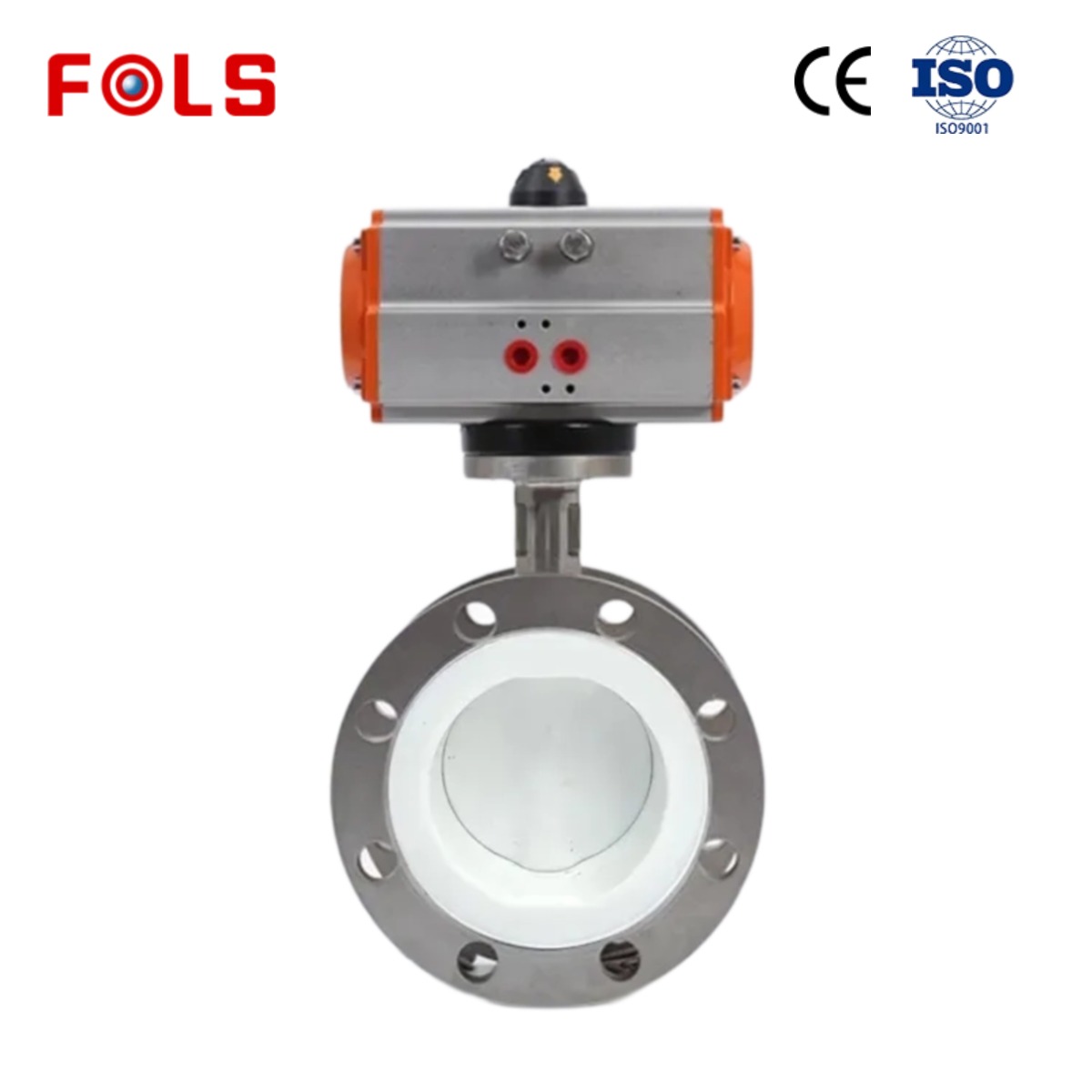
Fast shutoff is not simply a request to close a valve quickly. In an automated line, it means defining what must stop, what event calls for the stop, and what position is acceptable if instrument air or an electrical signal is lost. A Pneumatic Ball Valve is often considered when a process needs repeatable quarter-turn isolation and compressed air is already available. The practical decision starts with the whole control chain: valve body, actuator, solenoid, air preparation, tubing, exhaust path, feedback, and the process conditions at the seat.
From an automation-control perspective, a fast-shutoff package has to be assessed as an assembly rather than as a valve body alone. FOLS Valve works with pneumatic valves and automatic-control systems for industrial applications, so the most useful early discussion is usually a short operating-data sheet, not a premature promise about cycle time.
When a Pneumatic Ball Valve Is a Good Fit
A Pneumatic Ball Valve is suited to on/off isolation duties where the process benefits from a compact quarter-turn movement. Common examples include transfer lines, tank filling or draining, utility-water isolation, compressed-air branches, wastewater treatment skids, chemical handling lines, and process equipment that needs an automatic permissive or trip action. The ball creates a direct flow path when open; a 90-degree stem rotation changes the flow state.
It is a useful choice when several conditions occur together:
- The valve is mainly required to isolate or admit flow rather than regulate it continuously.
- Compressed air is reliable and can be supplied at the actuator within its specified pressure range.
- The medium, pressure, temperature, solids content, and chemical compatibility have been checked against the selected body and seat materials.
- The process can tolerate the torque behavior of a ball valve throughout opening and closing.
- The controls team can define whether the safe state is closed, open, or held in the last position.
The phrase “fast shutoff” needs a measurable target. Ask whether the requirement concerns actuator travel time, the time from an alarm to a solenoid command, or the time until flow falls to an acceptable level downstream. Pipe volume, trapped pressure, fluid properties, and the rest of the system can affect the final result even when the valve turns rapidly.
Applications That Often Need Rapid Isolation
Batch transfer and tank isolation
In batch operations, a Pneumatic Ball Valve can isolate a transfer route at the end of a fill, during a level interlock, or before a cleaning sequence. For water, compatible liquids, and many utility services, the short rotary stroke can fit compact skid layouts. The selection still needs a review of pressure differential across the closed valve and of the consequences of sudden flow stoppage.
Chemical and corrosive-media lines
Chemical processing may use automatic isolation to limit the movement of a compatible process medium after a high-level, leak, temperature, or pressure signal. Here, body alloy, ball material, seat compound, stem sealing, flange or threaded connection, and hazardous-area requirements must be confirmed for the actual service. A Pneumatic Ball Valve should not be selected from its name alone: valves that look similar can have very different materials, seals, connections, and actuator configurations.
Water treatment, wastewater, and environmental skids
Wastewater and environmental equipment can require automatic isolation around filtration, dosing, storage, or auxiliary piping. Solids, scaling, abrasive particles, and infrequent cycling can change the torque needed to move the valve. Reviewing those conditions helps avoid an actuator that performs adequately during commissioning but has little margin after service exposure.
Oil, gas, and utility systems
For oil, gas, and plant utilities, a Pneumatic Ball Valve may support remote isolation where quick response and a defined failure position are important. A gas solenoid valve can be part of the pilot circuit or a related gas-control arrangement, but it is not automatically interchangeable with the directional-control valve required by an actuator. Confirm the intended function, porting, voltage, enclosure, flow capacity, and failure behavior for the complete pneumatic circuit.
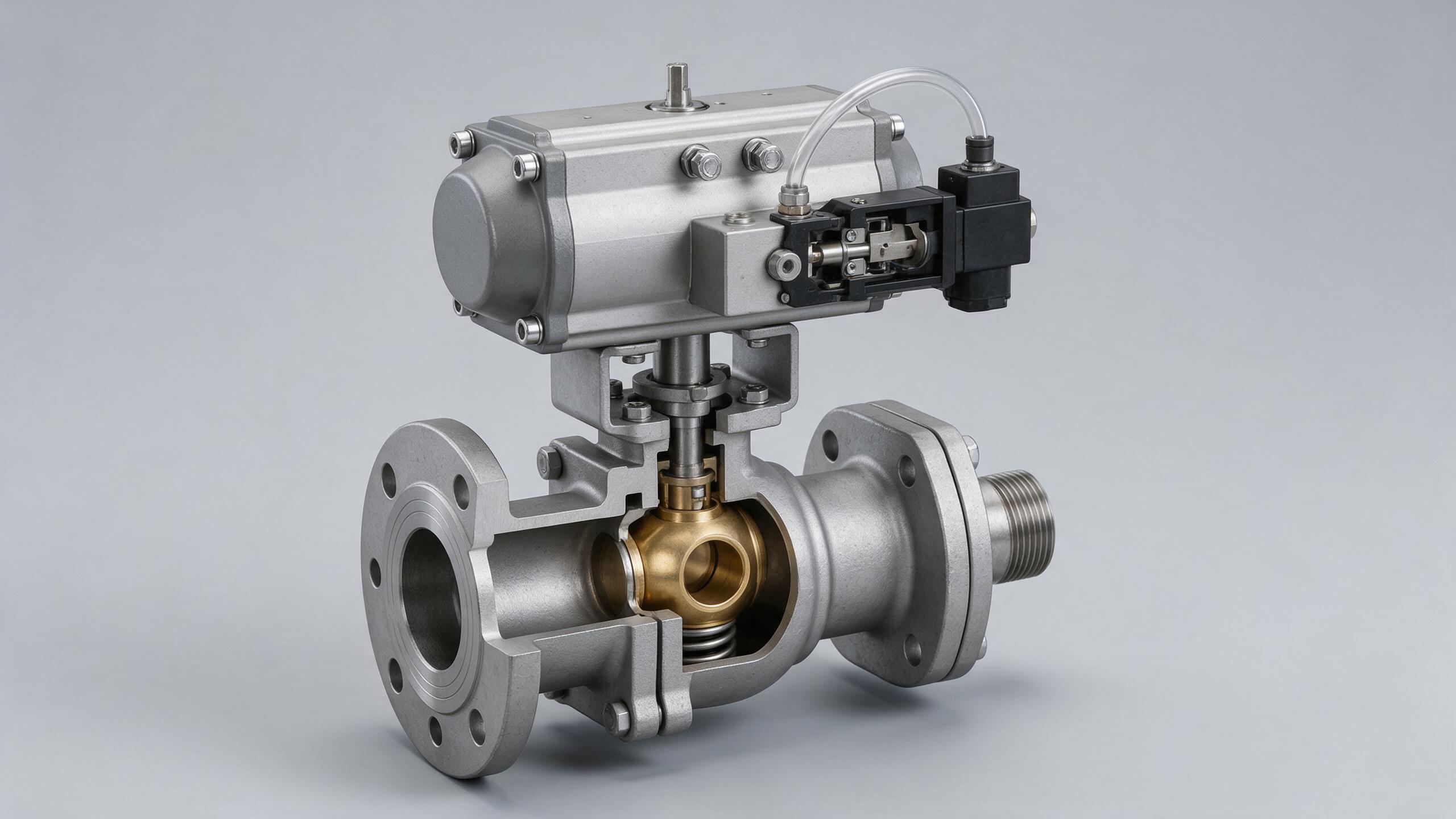
Choose Double-Acting or Spring-Return Actuation
The central fast-shutoff question is what the valve should do when normal control energy disappears. A double-acting actuator uses air for both directions. It can provide controlled operation in both strokes, but loss of air does not by itself establish a safe valve position. If the application requires a predictable loss-of-air response, a spring-return actuator is often evaluated.
With spring return, air moves the actuator in one direction and springs drive the return stroke. The valve/actuator orientation must be specified so the return stroke produces the required fail-closed or fail-open state. Do not assume that “spring return” inherently means closed. For a Pneumatic Ball Valve, confirm assembled direction, actuator torque, breakaway torque, supply pressure, and the valve position required by the hazard review.
For a routine automated duty, double acting may be appropriate. For an emergency isolation duty, engineering should identify the safe state and verify the valve package against the site’s safety design, documents, and test procedures. If a Pneumatic Ball Valve forms part of a safety-instrumented function, the sensor, logic solver, final element, and maintenance plan all matter; an individual component label alone is not a system-level conclusion.
What Determines Actual Shutoff Speed?
For any Pneumatic Ball Valve, actuator size is important, yet it is only one part of the response. Closing performance may be affected by available air pressure, air-line diameter and length, pilot-valve flow, fitting restrictions, exhaust capacity, actuator volume, valve breakaway torque, packing friction, and the pressure differential across the ball. A small control valve in the pilot circuit can limit a larger actuator, while an undersized air line can delay both pressurizing and venting.
| Item to check | Why it affects fast shutoff | Question for the specification |
|---|---|---|
| Required safe position | Sets the actuator type and assembly orientation. | Should the valve close, open, or retain position after air or power loss? |
| Valve torque | High breakaway or running torque can slow movement or cause incomplete travel. | What torque is required at the actual pressure, temperature, and media condition? |
| Air supply and tubing | Restrictions reduce the air volume available for a rapid stroke. | What pressure is available at the actuator during the demanded event? |
| Solenoid and exhaust path | Porting and flow capacity influence command response and venting. | Is the selected pilot valve sized and configured for this actuator? |
| Position feedback | Shows whether the valve reached its commanded position. | Is open/closed feedback or another diagnostic required? |
How to Specify the Control Circuit
Every Pneumatic Ball Valve package normally needs more than an actuator. The circuit may include a filter-regulator, manual isolation valve, directional solenoid valve, fittings, tubing, silencers, limit switches, a position indicator, and sometimes quick-exhaust or booster components after an engineering review. A skinner valve may be mentioned in procurement conversations, but the correct choice depends on the exact pneumatic function and the actuator’s port arrangement. Specify the function first; then compare suitable valves by documented operating characteristics.
At minimum, include these items in the request:
- Medium, concentration where relevant, temperature range, line pressure, pressure differential, and expected cycling frequency.
- Valve size, connection standard, body material, ball and seat material, and any cleanliness or fugitive-emissions requirements.
- Required open/close direction, target response definition, available instrument-air pressure, and the desired state after loss of air or electrical power.
- Control voltage, solenoid function, enclosure or area classification needs, and feedback-switch requirements.
- Installation orientation, accessible maintenance space, proof-test expectations, and the documentation needed for the project.
A Practical Fast-Shutoff Checklist
Before selecting a Pneumatic Ball Valve, write down the shutdown event and review the following checklist with the process, mechanical, instrumentation, and maintenance teams:
- Define the event that initiates closure and the required final Pneumatic Ball Valve position.
- State whether the target is normal automation, process protection, or a formally assessed safety function.
- Confirm media compatibility and the maximum pressure differential at closure.
- Calculate actuator torque with appropriate margin for expected service conditions.
- Check air supply pressure at the actuator, tubing size, pilot-valve capacity, and exhaust routing.
- Specify feedback and test access so a commanded closure can be verified.
- Review documents, maintenance instructions, and test intervals appropriate to the installed package.
The next step is to turn the checklist into a concise inquiry: medium, size, pressure, temperature, connection, cycle rate, actuator supply, control signal, safe state, and desired closing response. That information allows FOLS Valve or another technical supplier to discuss a configuration based on conditions rather than a generic “fast” claim.
 Hot News





