
 EN
What Makes Wafer Butterfly Valve Space Efficient?
When a pipe rack, treatment skid, or retrofit has little room between flanges, a Wafer Butterfly Valve is often worth examining. Its space advantage does not come from a vague claim that it is simply smaller. It comes from the way the valve body sits between two mating pipe flanges instead of carrying a full flanged body or a pair of projecting lug patterns. For an industrial valve application engineer, the useful question is not “Is a Wafer Butterfly Valve compact?” It is “Will its complete installed envelope fit the line, the actuator, and the maintenance plan?”
The compact feature is the between-flange body
A Wafer Butterfly Valve is designed to be centered between two pipe flanges and clamped by through-bolts. The valve body is therefore mainly the thickness required for the seat, disc, stem support, and alignment features. It does not need the broad flange rims found on a double-flanged construction. This can reduce the face-to-face length occupied by the valve assembly.
That distinction matters on crowded piping. A shorter face-to-face body can leave more room for adjacent instruments, spool pieces, insulation breaks, or access around a frame. It may also make a replacement layout easier where the existing flange gap is tight. However, a Wafer Butterfly Valve still relies on two system flanges, bolting, and suitable alignment; compact construction does not mean that every surrounding clearance requirement disappears.
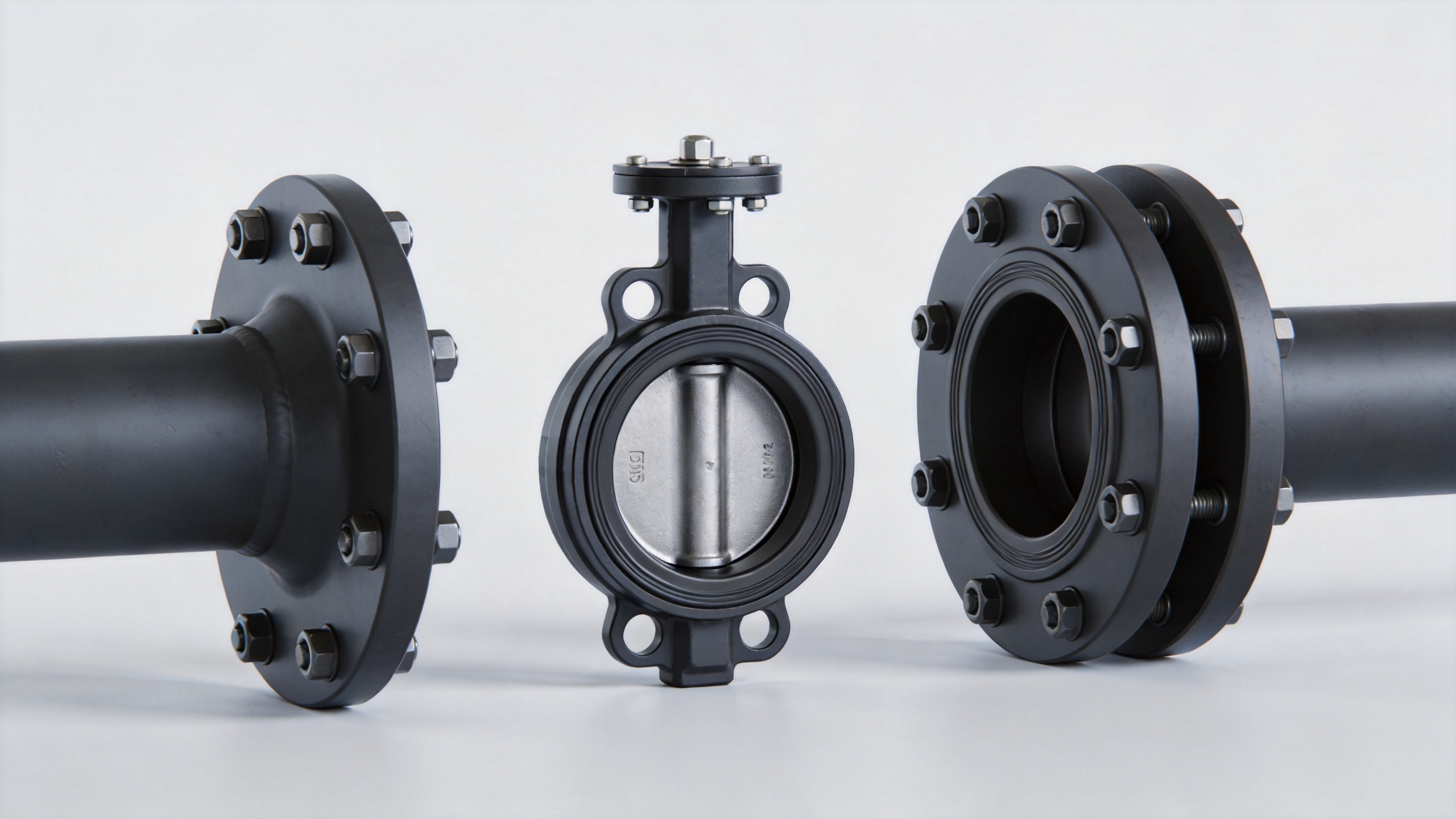
Why the installed envelope can be smaller
There are three practical reasons a Wafer Butterfly Valve can use less space than a comparable flanged arrangement.
- Reduced body projection: the body fits within the flange pair rather than extending as a full flange at each end.
- Fewer external connection features: a wafer pattern uses alignment holes or ears rather than a complete set of threaded lugs around the body.
- Shorter face-to-face dimension: for a specified size and design standard, the distance between pipe flange faces can be lower than for some alternative valve constructions.
These features explain why a Wafer Butterfly Valve is commonly considered for water handling, HVAC, process utility, and skid piping where mounting depth matters. They do not establish suitability by themselves. Pressure-temperature conditions, media compatibility, seat design, flange standard, and operating torque still need separate confirmation.
Compare body space, not just valve diameter
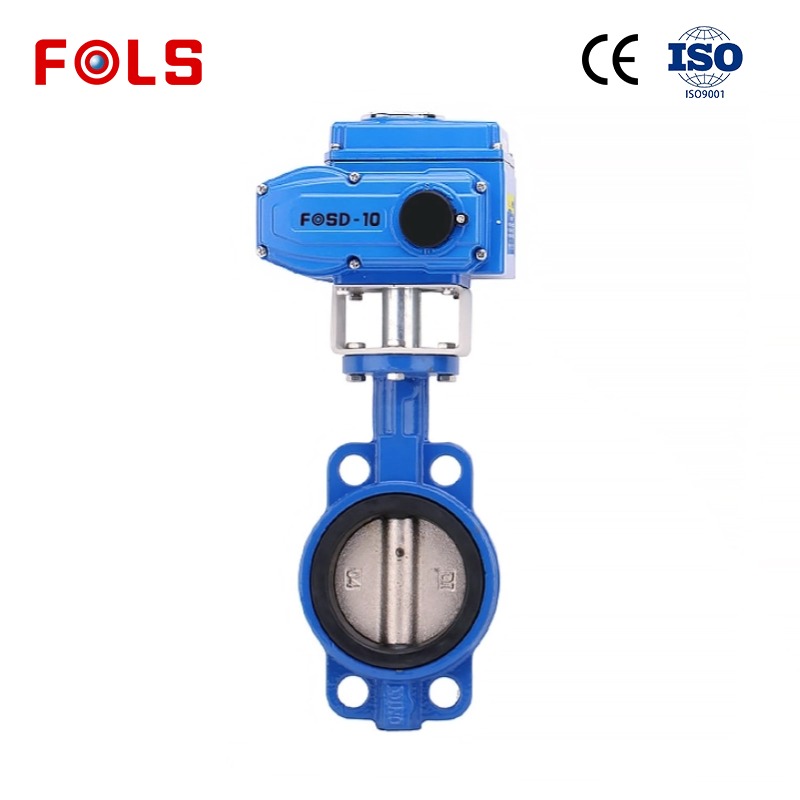
A useful comparison starts with the same nominal size, pressure class, piping standard, and control requirement. A Wafer Butterfly Valve may be thinner through the pipeline axis than a lug-style or double-flanged unit, but the real footprint includes more than the body. Long through-bolts need room for installation and tightening. The disc needs clearance inside the pipe and must not strike a flange bore or liner. A lever, gear operator, pneumatic actuator, or electric actuator adds its own height and side clearance.
This is especially important where a valve is installed close to a wall, cable tray, pump, or other valve. A Wafer Butterfly Valve may solve an axial-length constraint while creating a different access question above or beside the line. In other words, compactness is a system-layout benefit, not an automatic guarantee of the smallest possible service envelope.
Wafer, lug, and flanged styles serve different layout needs
The connection style should follow the piping and maintenance objective. A Wafer Butterfly Valve is clamped between both flanges, so it is often considered where a compact, in-line isolation or control point is needed and the connected line is supported appropriately. A lug-style body has threaded or through-lug features around its perimeter; those features can support different maintenance or end-of-line arrangements when the application permits. A double-flanged design has integral end flanges and generally occupies more axial body space, while offering another connection format for the project specification.
None of these labels confirms an operating duty. If line removal, one-side piping work, dead-end service, or frequent maintenance is part of the requirement, it should be reviewed with the valve manufacturer and the piping design rather than inferred from a general comparison.
What to verify before choosing a Wafer Butterfly Valve
Before specifying a Wafer Butterfly Valve for a tight layout, build a short fit-up checklist. It is more reliable than selecting by a product name alone.
- Confirm the nominal size, flange drilling pattern, flange-face condition, and the applicable dimensional standard or manufacturer drawing.
- Check the required face-to-face dimension against the available pipe gap and planned gasket or seat arrangement.
- Verify disc clearance with the mating flange bore, pipe internal diameter, and any lining or buildup that could interfere with rotation.
- Map bolt insertion and tightening access. Through-bolts can be compact in the final assembly yet still require working room during installation.
- Allow for handle travel, gearbox position, actuator height, air tubing or wiring, and future removal space.
- Match body, disc, stem, and seat materials to the actual medium, temperature, pressure, and operating cycle.
For example, a 6 flanged butterfly valve may be evaluated for a compact pipe section, but a flanged body and a wafer body do not share the same mounting geometry. Compare the drawing, not only the nominal six-inch designation. Similarly, a butterfly type check valve is a different functional device: it responds to flow direction, whereas a butterfly isolation valve is selected around shutoff or control requirements.
Standards and drawings make “compact” measurable
A Wafer Butterfly Valve should be evaluated against the dimensional and connection requirements that apply to the project. Standards such as API 609 cover defined areas for wafer, lug, and double-flanged butterfly valves, including dimensional and testing scope. That does not mean every valve in a catalog meets that standard. It means the buyer should request the relevant drawing, dimensional table, pressure-temperature information, and test documentation before relying on a claimed fit.
For a retrofit, measure the live pipe gap and inspect the existing flanges rather than relying only on an old bill of materials. For a new build, reserve space for installation tools and service access at the same time as the valve’s face-to-face length. These checks turn the compact body of a Wafer Butterfly Valve into a practical layout decision.
Conclusion: compact geometry needs a complete fit-up review
A Wafer Butterfly Valve can be space efficient because its body is clamped between existing flanges and can have a shorter axial profile than some alternatives. Its value is clearest when pipe spacing is limited and the surrounding flange, bolt, disc, actuator, and service clearances are all workable. Start with the actual medium, operating conditions, flange specification, and access constraints, then confirm the manufacturer’s dimensions. That approach helps determine whether a Wafer Butterfly Valve is the right compact option for the specific line.
 Hot News