
 EN
What Is a Butterfly Valve and Its Key Characteristics?
A Butterfly Valve is a quarter-turn valve that uses a circular disc to start, stop, or regulate flow in a pipe. Turn the stem about 90 degrees and the disc moves from a position roughly parallel with the flow path to one that blocks it. That simple motion is why a Butterfly Valve is often considered when a piping system needs compact shutoff, relatively quick operation, or an automated valve arrangement.
From an industrial valve application engineer’s perspective, the useful question is not whether a Butterfly Valve is universally better than another valve type. It is whether the medium, pressure, temperature, line size, sealing requirement, and control method make this design a sensible fit. The valve body is only one part of the decision; the disc, seat, stem, connection, actuator, and pipeline all matter.
How Does a Butterfly Valve Work?
At the center of a Butterfly Valve is a disc mounted on a stem. A lever, gearbox, pneumatic actuator, or electric actuator rotates that stem. In the open position, the disc presents a relatively small obstruction to flow. In the closed position, the disc contacts the seat to create the intended shutoff. Because the movement is rotational rather than linear, a Butterfly Valve can move from open to closed with a quarter turn.
This design can be used for isolation and, in suitable configurations, for flow regulation. However, “can regulate” does not mean every Butterfly Valve should be selected for precise control duty. If the process needs stable control across a demanding operating range, the valve characteristic, actuator response, positioner, pressure drop, cavitation risk, and control-loop requirements should be reviewed together.
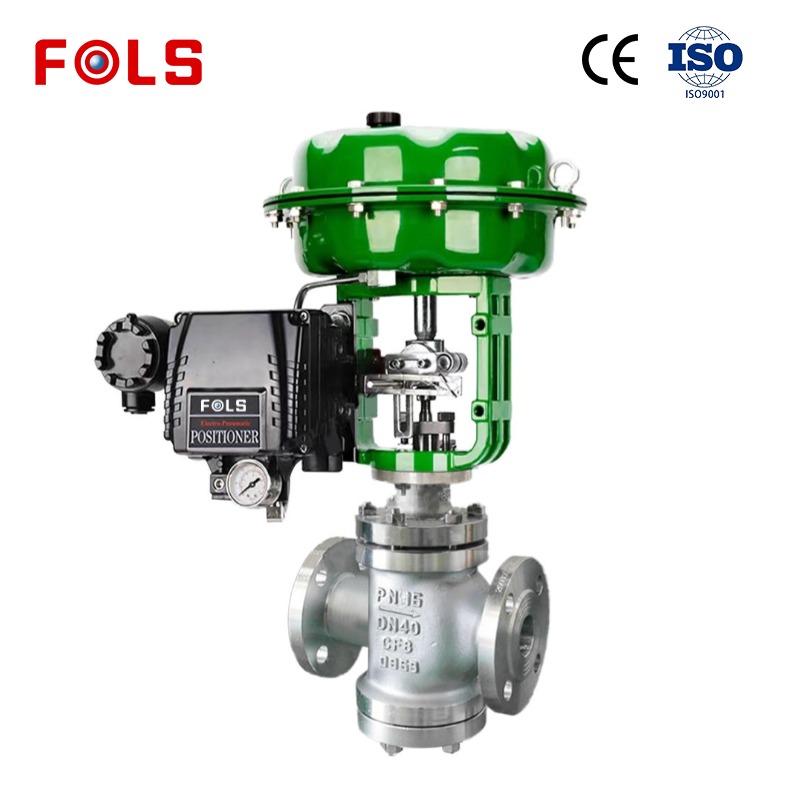
That is also the practical answer to how does a control valve work: a control valve changes the flow area in response to a control signal so the process variable can be managed. A butterfly design may be part of that control chain, but the body, actuator, signal interface, and failure position must be specified as a system.
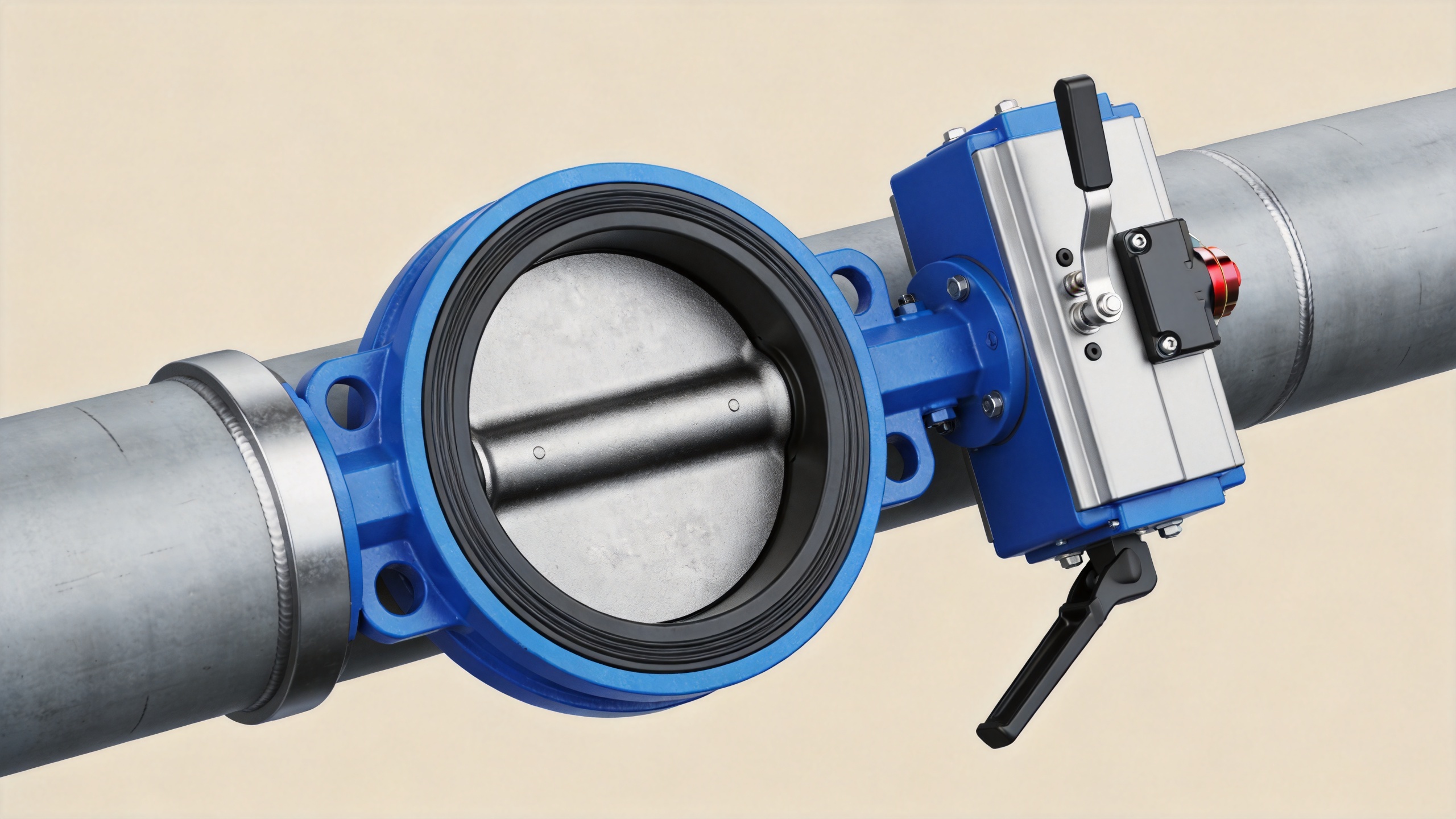
Key Characteristics of a Butterfly Valve
1. Compact quarter-turn construction
A Butterfly Valve generally has a short face-to-face profile compared with some linear-motion valves. Wafer and lug configurations are commonly installed between flanges, while double-flanged versions provide another body configuration. Compactness can be valuable where installation space, pipe support, or actuator clearance affects the layout. It still does not remove the need to check flange compatibility, bolt arrangement, and access for maintenance.
2. A disc remains in the flow path
Even when fully open, the disc and stem of a Butterfly Valve remain within the flow path. That may be acceptable in many systems, but it can be important where pressure loss, solids, velocity, slurry behavior, or cleaning requirements are sensitive. A nominal size by itself is not enough to predict performance. The actual piping conditions and the manufacturer’s flow data should be checked.
3. Seat and material choices define service boundaries
The seat is critical to how a Butterfly Valve seals and where it can be used. Resilient-seated, high-performance, and metal-seated designs can have very different operating envelopes. Body material, disc material, stem material, seat material, and any lining must be compatible with the medium and the expected temperature and pressure. More accurately, a body pressure rating alone does not settle suitability; the seat and seal limits may be the limiting factor.
For example, an elastomer seat may suit one water or general-service application but be unsuitable for a different chemical or temperature condition. PTFE-based and metal-seated arrangements may address other conditions, but they are not automatic upgrades. Ask for the relevant pressure-temperature information, material specification, and test or application documentation before reaching a conclusion.
4. Multiple operating and automation options
A manual handle may be adequate for an infrequently operated small valve, whereas a gearbox can help when operating torque or line size increases. A pneumatic or electric actuator can automate a Butterfly Valve for remote operation or process integration. Do not treat the actuator as an afterthought: confirm available air or power, control signal, required cycle speed, torque margin, manual override, and the required action on loss of power or air.
5. Configuration affects isolation and installation choices
Concentric, double-offset, and triple-offset constructions are different design families, not interchangeable labels. Connection style also matters. A lug-style Butterfly Valve may be considered where piping layout or service needs differ from a wafer-style installation, but any requirement for dead-end service must be explicitly confirmed. If a specification refers to API 609, it is useful because that standard covers topics including design, materials, dimensions, pressure-temperature ratings, and examination or testing for covered valves. It should not be assumed that an unspecified valve complies with it.
Butterfly Valve vs. Gate Valve: What Should You Compare?
Buyers sometimes begin with gate valve sizes, but diameter is only one comparison point. A gate valve is typically associated with linear motion and full-bore isolation behavior when fully open, while a Butterfly Valve uses a rotating disc that remains in the bore. The preferred option depends on the service objective rather than a simple size threshold.
| Question to compare | Why it matters |
|---|---|
| Is the duty isolation, modulation, or both? | The operating behavior and control requirement can change the suitable valve design. |
| What are the medium, temperature, and differential pressure? | These conditions influence body, disc, seat, and seal selection. |
| How often will the valve cycle? | Operating frequency affects actuation, wear considerations, and maintenance planning. |
| What connection and installation space are available? | Flange pattern, face-to-face dimension, access, and pipe loading need to match the system. |
| What documentation is required? | Data sheets, material records, pressure-temperature data, and tests should be confirmed before purchase. |
In other words, do not start by asking which valve is most suitable.” First write down the conditions that make one design more suitable. The same principle applies when comparing a Butterfly Valve with ball, gate, globe, or other valve types.
A Practical Butterfly Valve Selection Checklist
For a productive technical discussion, prepare these items before requesting a Butterfly Valve quotation or recommendation:
- Process medium: Include concentration, solids content, corrosiveness, and any cleaning or sterilization requirements.
- Operating conditions: State normal and maximum pressure, temperature, flow direction, and differential pressure where relevant.
- Size and connection: Confirm nominal pipe size, flange standard, face-to-face constraint, and installation orientation.
- Materials and sealing: Identify required body, disc, stem, seat, and lining compatibility rather than naming a material without the service context.
- Operation: Specify manual, pneumatic, or electric actuation; if automated, include power or air supply, control signal, and failure action.
- Verification: Request the documents that matter for the project, such as a data sheet, material details, dimensions, pressure-temperature data, and applicable inspection or test information.
A Butterfly Valve is a versatile pipeline component because it combines quarter-turn operation with a compact disc-and-seat arrangement. Its strongest characteristics are not a promise of universal suitability; they are design features to match against actual service conditions. When the medium, pressure, temperature, sealing requirement, installation, and control objective are clear, a Butterfly Valve can be evaluated on evidence rather than assumption.
 Hot News





