
 EN
What Defines Flanged Butterfly Valve In Projects?
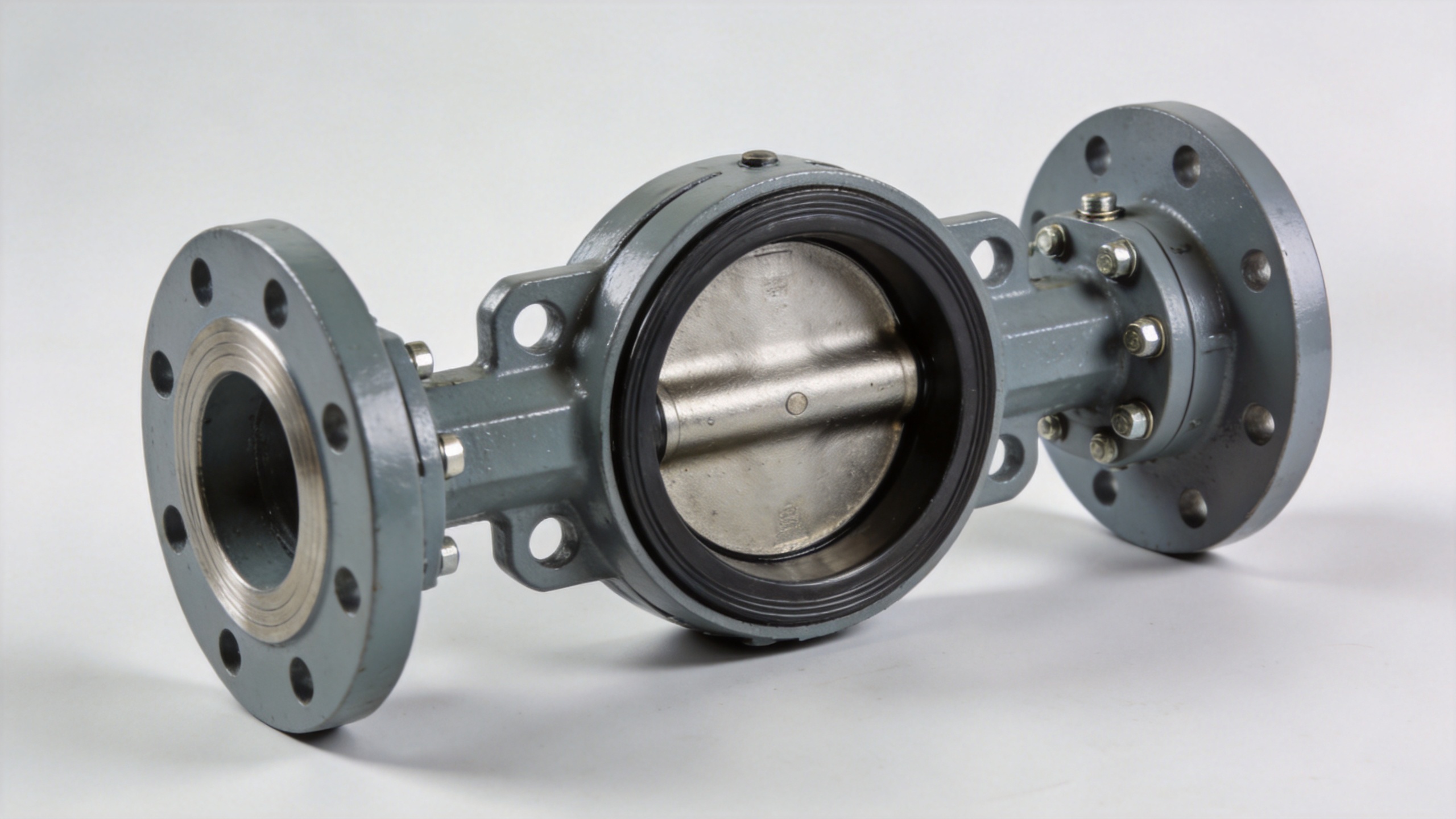
A Flanged Butterfly Valve is defined less by a marketing label than by the way its valve body connects to the piping system. It has flange ends that bolt directly to mating pipe flanges, while a disc inside the bore turns to open, throttle, or close flow. That sounds straightforward, but a project specification still has to establish the actual flange standard, size, pressure-temperature conditions, material, seat, disc, shaft, and operating method.
From a project-specification perspective, the useful question is not simply “is this a flanged valve?” It is whether the selected Flanged Butterfly Valve matches the line’s medium, operating envelope, bolt pattern, installation arrangement, and control intent. A flanged end can simplify some layout and maintenance decisions, but it does not by itself prove suitability for every service.
The defining feature: integral flanged ends
The body of a Flanged Butterfly Valve has flange faces at both ends. The valve is positioned between the pipeline’s mating flanges and secured with the specified bolts and gasket arrangement. This differs from a wafer valve, which is held between pipe flanges with longer through-bolts, and from a lug valve, which has separate threaded or unthreaded lugs around its perimeter.
Because the ends are part of the valve body, project teams often consider a Flanged Butterfly Valve where a direct bolted connection, a defined face-to-face space, or a particular piping layout is important. However, flange drilling must match the project requirement. References such as ASME B16.5 or EN 1092-1 may be relevant depending on the project, size, rating, and regional specification, but the valve documentation must confirm the applicable pattern. “Flanged” is not enough information to assume Class, PN, or compatibility.
How the valve works in a piping system
Like other butterfly designs, a Flanged Butterfly Valve uses a rotating disc. A quarter-turn movement generally moves the disc from a flow-restricting position toward open or closed. The valve can be manually operated or paired with a gear operator, pneumatic actuator, electric actuator, or an automated control arrangement. Saying that a valve is flanged describes the end connection; it does not define the actuator, failure position, control signal, or torque requirement.
That distinction matters in projects with automated control. The valve is only one part of the control chain. The actuator, mounting interface, power or air supply, control signal, and required position feedback should be reviewed together. If the operating condition changes, the actuator selection may need to change even when the basic Flanged Butterfly Valve body remains a viable option.
What project engineers normally need to define
A reliable specification starts with operating conditions, then maps them to the valve configuration. Instead of asking for a generic valve preference, first document the conditions that determine fit.
- Medium: Identify the fluid, solids content, corrosiveness, and any cleanliness requirements. These factors guide body, disc, shaft, and seat material discussions.
- Pressure and temperature: State normal and maximum conditions, including upset conditions where applicable. The pressure-temperature relationship should be checked against the proposed design and materials.
- Line size and flange requirement: Confirm nominal pipe size, flange facing, drilling, rating system, and the project standard rather than relying on a nameplate assumption.
- Function: Clarify whether the Flanged Butterfly Valve is for isolation, throttling, or repeated modulating service. Disc position and operating frequency can affect the selection discussion.
- Actuation: Define hand lever, gearbox, pneumatic, electric, or control-system requirements, including the desired failure action and available utility.
- Installation and maintenance: Check available pipe support, access for bolting, removal space, insulation, and the intended maintenance procedure.
A single parameter has value, but its relationship to the pipeline and operating method is more important. For example, a pressure rating should be checked alongside temperature, material, flange system, and the actual service medium.
Why the flange pattern needs its own check
Flange compatibility is often the feature that turns a general valve discussion into a project decision. The nominal diameter may appear correct while the drilling, facing, pressure designation, or bolt arrangement does not correspond to the mating pipe flange. Before procurement, request the dimensional drawing and confirm the face-to-face dimension, flange drilling, face type, fastener requirements, and any applicable project standard.
For projects that call for it, documents related to butterfly-valve design, materials, face-to-face dimensions, pressure-temperature ratings, inspection, and testing may also need review. API 609 is one example of a standard that can be relevant to certain butterfly-valve scopes. Its applicability is a project verification point, not a claim that every Flanged Butterfly Valve automatically conforms to it.
Comparing flanged, wafer, and lug butterfly designs
| Connection style | Project question to ask | What still needs confirmation |
|---|---|---|
| Flanged | Does an integral bolted end connection suit the layout and specification? | Drilling, rating, face-to-face dimension, materials, gasket and bolt details. |
| Wafer | Is a compact between-flange installation acceptable for the line arrangement? | Pipe-flange interface, bolt arrangement, alignment, and service limitations. |
| Lug | Does the piping or maintenance plan require lugged connections? | Lug design, fasteners, loading conditions, and isolation procedure. |
None of these forms is universally superior. A Flanged Butterfly Valve may be a sensible route when its end connection and service conditions align with the specification, while another connection form may be more suitable when the system layout or maintenance plan points elsewhere.
Do not confuse it with other valve functions
A Flanged Butterfly Valve is generally selected for flow isolation or regulation within its confirmed operating limits. It is not defined by the same function as a flanged pressure relief valve, which is intended for pressure-protection duty and must be selected around a separate set-pressure and relief-system review. Similarly, a union check valve is a non-return device intended to limit reverse flow; it has a different function and connection concept. Including those items in the same line list does not make them interchangeable.
This separation helps avoid a common specification error: choosing a valve based on its end connection while overlooking the required process function. First identify whether the line needs shutoff, control, pressure protection, or backflow prevention; then choose the valve family and connection details accordingly.
A practical project confirmation checklist
- Describe the medium, normal and maximum pressure, temperature, and expected operating cycle.
- Confirm nominal size, mating flange standard, pressure designation, face type, and bolt pattern.
- Review body, disc, seat, and shaft materials against the medium and temperature range.
- State whether the Flanged Butterfly Valve is for on-off service, throttling, or modulating control.
- Define the operator or actuator, control interface, feedback, and failure requirement.
- Request the relevant drawing, data sheet, inspection or test information, and applicability evidence for any specified standard.
- Verify field access for installation, bolting, removal, and later maintenance.
Conclusion
What defines a Flanged Butterfly Valve in a project is its integral flanged end connection combined with a butterfly disc mechanism—not an assumed pressure class, material, or service capability. The sound selection path is to establish the process duty and piping standard first, then confirm the detailed valve and actuator configuration against those conditions. That approach keeps a useful connection feature from being mistaken for a complete technical specification.
 Hot News