
 EN
Pneumatic Ball Valve Performance in Pharmaceutical Plants
A Pneumatic Ball Valve can be an effective automated isolation device in a pharmaceutical plant, but speed alone is not the deciding measure. The useful question is whether the valve body, sealing arrangement, actuator, air supply, control signal, and documentation fit the specific process duty. For product-contact or critical utility service, that assessment should begin before a valve is called sanitary or suitable.
From an automation-control perspective, a valve performs as a chain: the ball valve establishes the flow path, the pneumatic actuator supplies the quarter-turn movement, and the pilot valve or solenoid turns a command into motion. In a regulated facility, that chain also has to support cleanability, traceable configuration, and predictable behavior during a loss of air or power.
What “performance” means for a Pneumatic Ball Valve
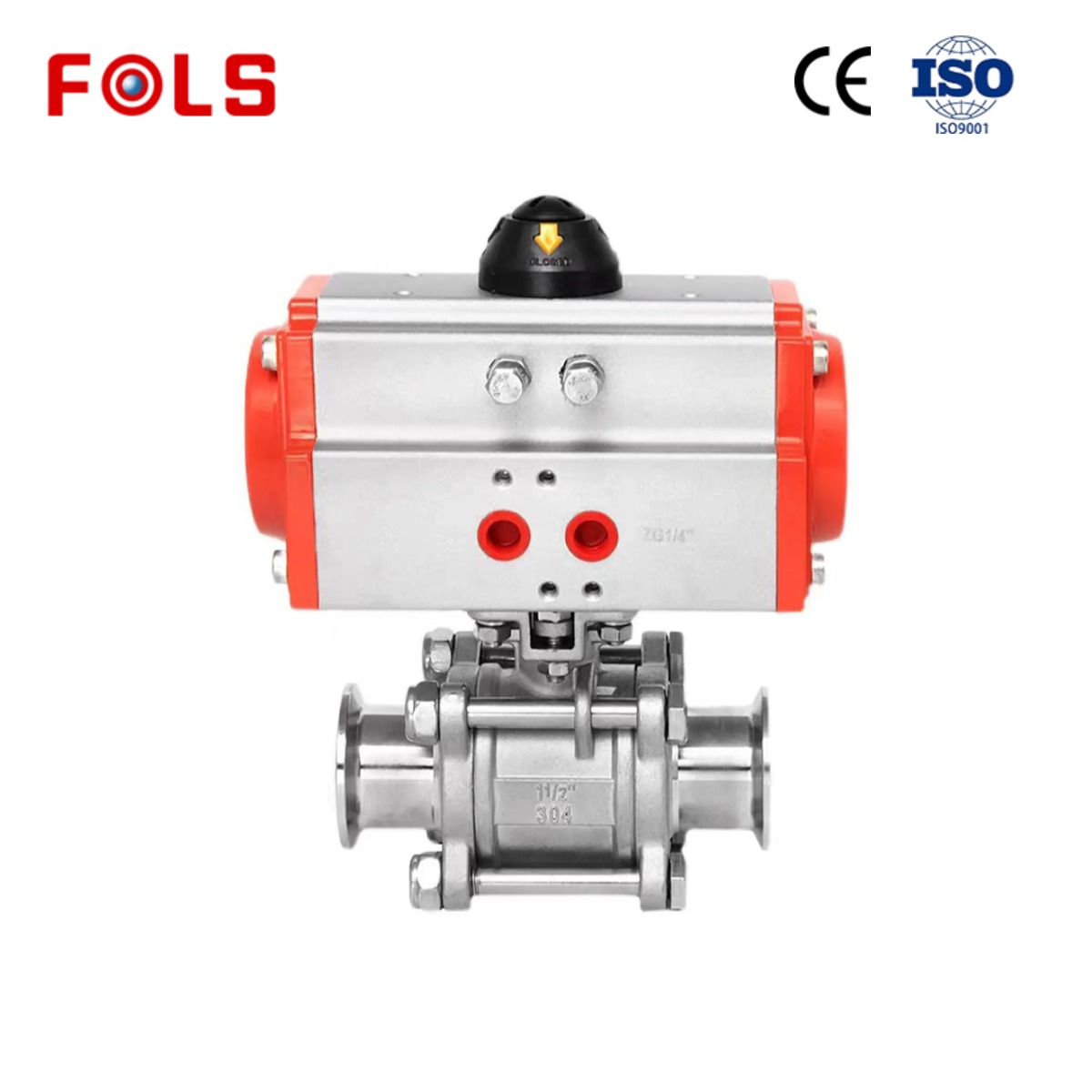
A Pneumatic Ball Valve combines a rotary ball-valve body with an actuator driven by compressed air. It is often selected where rapid on/off isolation, repeated cycling, or remote operation is required. That description is useful, but it is incomplete for pharmaceutical applications. Performance must include more than cycle time or nominal pressure rating.
- Process isolation: the valve must match the medium, operating pressure, temperature, line size, and required shutoff duty.
- Hygienic suitability: product-contact materials, seat design, surface condition, connection style, drainability, and cleaning access need project-specific review.
- Control reliability: actuator torque, available air pressure, solenoid function, feedback, and failure action must work together.
- Qualification readiness: drawings, material records, seal information, pressure-test evidence, and cleaning or sterilization-related documentation may be required by the site.
Do not start by asking whether a ball valve is better than another valve type. Start by writing down the medium, cleaning method, temperature profile, pressure conditions, cycle frequency, and desired fail state. A single pressure value matters, but its relationship to the piping system and actuator arrangement matters more.
Begin with product-contact risk and cleanability
For drug-product contact and other controlled process duties, equipment construction is not a marketing label. In the United States, 21 CFR 211.65(a) sets the principle that product-contact surfaces should not be reactive, additive, or absorptive in a way that changes drug-product safety, identity, strength, quality, or purity beyond established requirements. That principle does not automatically approve or reject a Pneumatic Ball Valve; it tells the project team what must be evaluated and documented.
Review the valve’s wetted materials and elastomers against the actual medium and cleaning regime. Then assess whether the geometry supports the site’s cleaning and draining expectations. A ball valve can offer a compact, full-bore flow path in some configurations, yet cavity management, seat geometry, orientation, end connections, and the cleaning procedure all affect the final result. Where sterile, aseptic, or high-purity service is involved, the engineering specification should define the relevant hygienic criteria rather than relying on a generic description.
It is also important to separate a cryogenic-duty discussion from pharmaceutical service. Cryogenic valves address extremely low-temperature duties and may use construction features intended for thermal contraction, insulation, or extended stems. Those features do not by themselves establish hygienic fitness, cleanability, or a suitable seal strategy for pharmaceutical processing. If a plant has an unusual low-temperature utility or process condition, treat it as a separate engineering review.
Match the actuator to the operating duty
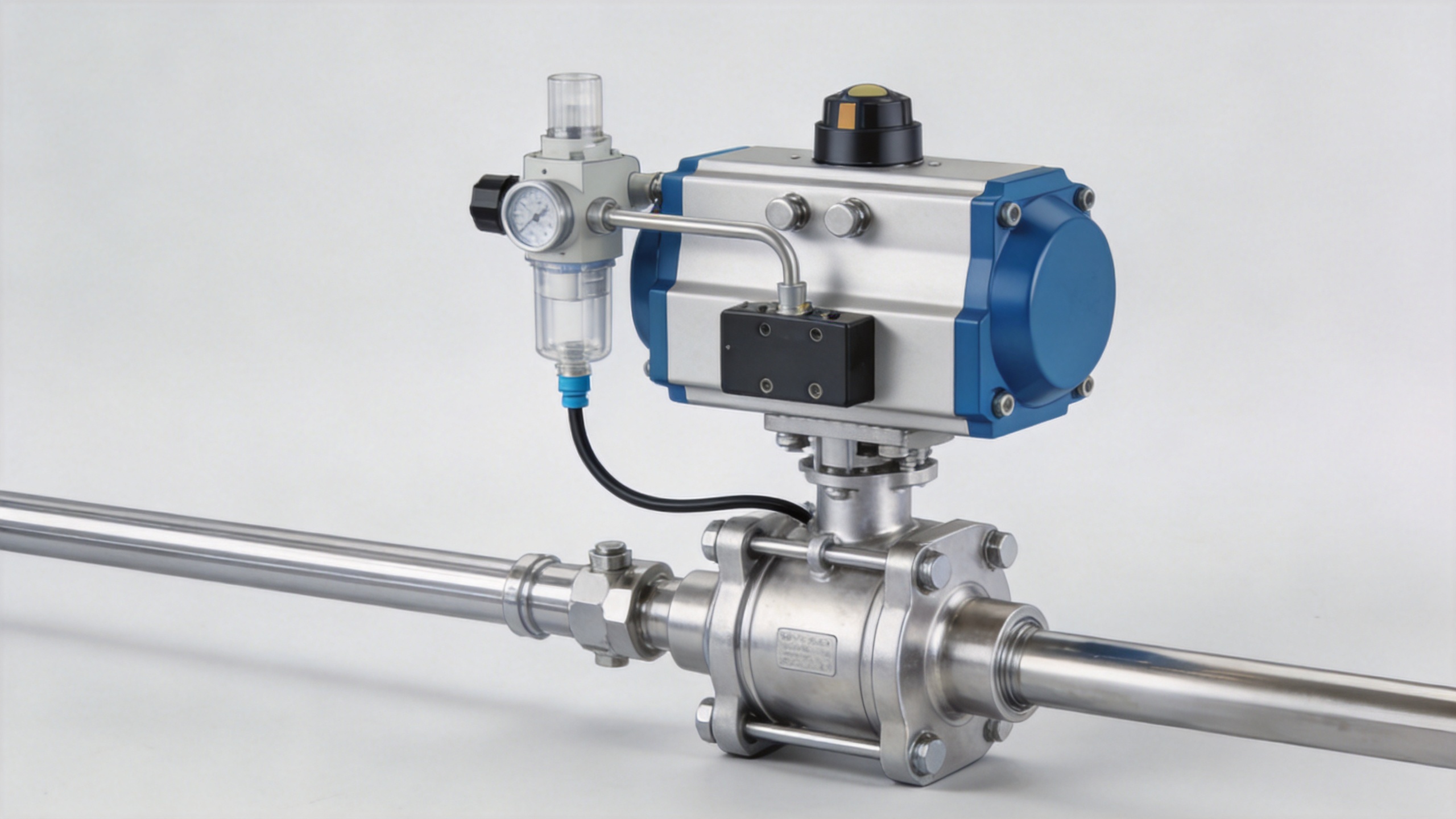
The actuator is central to Pneumatic Ball Valve performance because it converts air pressure into the torque that turns the stem. Confirm the breakaway and running-torque requirement of the selected valve configuration, then check that the available plant air pressure and actuator sizing provide an appropriate operating margin under the expected temperature and cycling conditions. Do not infer actuator adequacy from body size alone.
Choose the required motion and failure action
A double-acting actuator uses air to drive both opening and closing motions. A spring-return actuator uses air in one direction and springs in the other, so it can move toward a predefined position when air is lost. Neither approach is universally preferable. The process hazard review should determine whether fail-closed, fail-open, or fail-in-place behavior is required for the line.
That decision should be documented alongside the valve’s normal state, emergency state, and interlock logic. For example, isolating a transfer line may favor one failure action, while protecting pressure relief, drainage, or cleaning circulation may lead the team to specify another. The correct answer depends on the process; it should not be assumed from the words “Pneumatic Ball Valve.”
Where a 4 way solenoid valve fits into the control chain
A 4 way solenoid valve is commonly considered when a double-acting pneumatic actuator needs directional air control. Its porting and spool arrangement should be verified against the actuator circuit, air preparation, tubing, exhaust treatment, control voltage, enclosure needs, and maintenance practice. The solenoid is not an accessory to specify at the end; it affects response behavior and diagnostic clarity.
For a spring-return actuator, the pilot arrangement may differ, so the control schematic should drive the selection. Confirm whether the installation needs manual override, position indication, limit switches, a valve-control top, or remote feedback to the control system. In pharmaceutical plants, clear tag identification and accessible maintenance points can make commissioning and later troubleshooting less disruptive.
Evaluate cycling, air quality, and installation details
Frequent cycling can expose mismatches between actuator sizing, air supply quality, solenoid response, and valve friction. Define the expected cycle count and switching frequency early. Then verify filtered, dry air of sufficient pressure at the actuator under simultaneous-demand conditions. Condensate, particles, or unstable supply pressure can degrade pneumatic repeatability even when the valve body itself is correctly specified.
Installation orientation and support also deserve attention. Actuator weight, stem alignment, pipe loads, access for maintenance, and the location of feedback devices can affect reliability. A compact assembly is not automatically easy to service once it is placed within a skid or crowded process corridor. In procurement discussions, first make the service conditions and interface details clear; doing so usually reduces repeated clarification later.
A practical specification checklist
Before releasing a Pneumatic Ball Valve for pharmaceutical-plant service, align engineering, quality, automation, and procurement around a single review list:
- Define the fluid, concentration, temperature range, pressure range, flow direction, and required isolation function.
- Identify whether the line is product contact, clean utility, noncritical utility, or another service category.
- Specify wetted materials, seal materials, end connections, surface and drainability expectations, and the cleaning or sterilization sequence where applicable.
- Confirm body style, bore, pressure class, temperature limits, and valve torque for the complete configured assembly.
- Select double-acting or spring-return actuation and document the required fail position.
- Match the pneumatic circuit and, where applicable, the 4 way solenoid valve to the actuator and control-system requirements.
- Define air-supply quality, minimum operating pressure, feedback, manual override, enclosure, and electrical interface requirements.
- Request the documents needed for the project: drawings, bill of materials, material information, test records, seal details, and any site-specified hygienic or quality evidence.
- Plan installation, access, commissioning tests, and maintenance responsibilities before the line is released.
When to compare other valve designs
A Pneumatic Ball Valve is often compelling for fast quarter-turn isolation, but the appropriate process valve depends on the duty. If cleanability, dead-leg sensitivity, throttling behavior, containment, or very frequent modulation is central to the application, compare the relevant alternatives under the same process assumptions. The comparison should look at the complete assembly and cleaning strategy, not just the initial purchase price.
Similarly, do not treat every temperature-related requirement as a reason to use cryogenic valves. Cryogenic construction responds to a particular low-temperature problem. Pharmaceutical applications may instead prioritize compatible materials, validated cleaning, controlled actuation, and documentation. In either case, ask the supplier for evidence relevant to the stated duty before reaching a conclusion.
Conclusion: verify the whole assembly, not only the valve body
Reliable Pneumatic Ball Valve performance in pharmaceutical plants comes from a disciplined match between process duty and the full automation package. Start with the medium and hygiene expectations, then verify the ball valve, actuator, air supply, solenoid circuit, feedback, failure action, and records as an integrated system. That approach avoids unsupported compliance claims while giving engineering and quality teams a clearer path to qualification.
Before final selection, provide the process conditions, cleaning method, required fail state, available air pressure, controls interface, and documentation expectations for technical review. The more complete the input, the more meaningful the configuration assessment will be.
 Hot News

