
 EN
How to Select a Reliable Electric Actuator Supplier for Projects
Choosing an Electric Actuator supplier is not simply a sourcing exercise. On a project, the actuator has to match the driven equipment, control philosophy, installation constraints, and handover documentation. A low initial quotation can become expensive if the delivered Electric Actuator lacks the agreed interface, has an unclear duty limit, or arrives without the records needed for commissioning. The practical question is whether the supplier can provide evidence that the proposed Electric Actuator fits this project.
From a procurement perspective, put the specification, technical review, commercial scope, and after-sales response on one checklist. This approach is useful for valve automation projects as well as other controlled-motion applications.
Start with the project duty, not a catalog model
A capable Electric Actuator supplier should begin by asking what the unit must move and how it will operate. For a valve application, the discussion normally includes required torque, valve type, operating torque margin, travel, speed, operating frequency, control signal, voltage, and fail-safe expectations. For linear motion, the equivalent questions are thrust, stroke, side loading, mounting geometry, and cycle profile.
That distinction matters when an inquiry contains adjacent terms such as electro pneumatic positioner or linear slide actuator. An electro pneumatic positioner belongs in a pneumatic control arrangement and should not be casually treated as an electric replacement. A linear slide actuator may solve a positioning task but has different mechanical and control questions from a rotary valve Electric Actuator. A reliable supplier clarifies the required motion and system boundary before proposing equipment.
Send the project’s known conditions in writing. If temperature, hazardous-area requirements, mounting standard, or cable-entry preference are not yet confirmed, mark them as open items. This is more useful than allowing assumptions to disappear into a quotation.
Evaluate the supplier’s technical response
The strongest early signal is the quality of the supplier’s questions and calculations. A credible Electric Actuator supplier can explain which inputs affect sizing and identify what remains to be verified. For a valve package, ask whether the proposed Electric Actuator is being evaluated against break torque, running torque, seating torque, and the actual operating conditions, rather than a generic nominal value.
- Does the supplier request a datasheet, valve information, duty profile, and control requirements?
- Can it state the basis for the selected Electric Actuator and the assumptions used?
- Can it describe the mounting interface, manual override, local controls, feedback, and required accessories?
- Will it identify incompatible or missing information before release rather than make an unrecorded substitution?
Do not reward a quick answer that skips these questions. In project work, a fast response is valuable, but a complete confirmation is more valuable when interfaces or service conditions are uncertain.
Request documents that can be checked
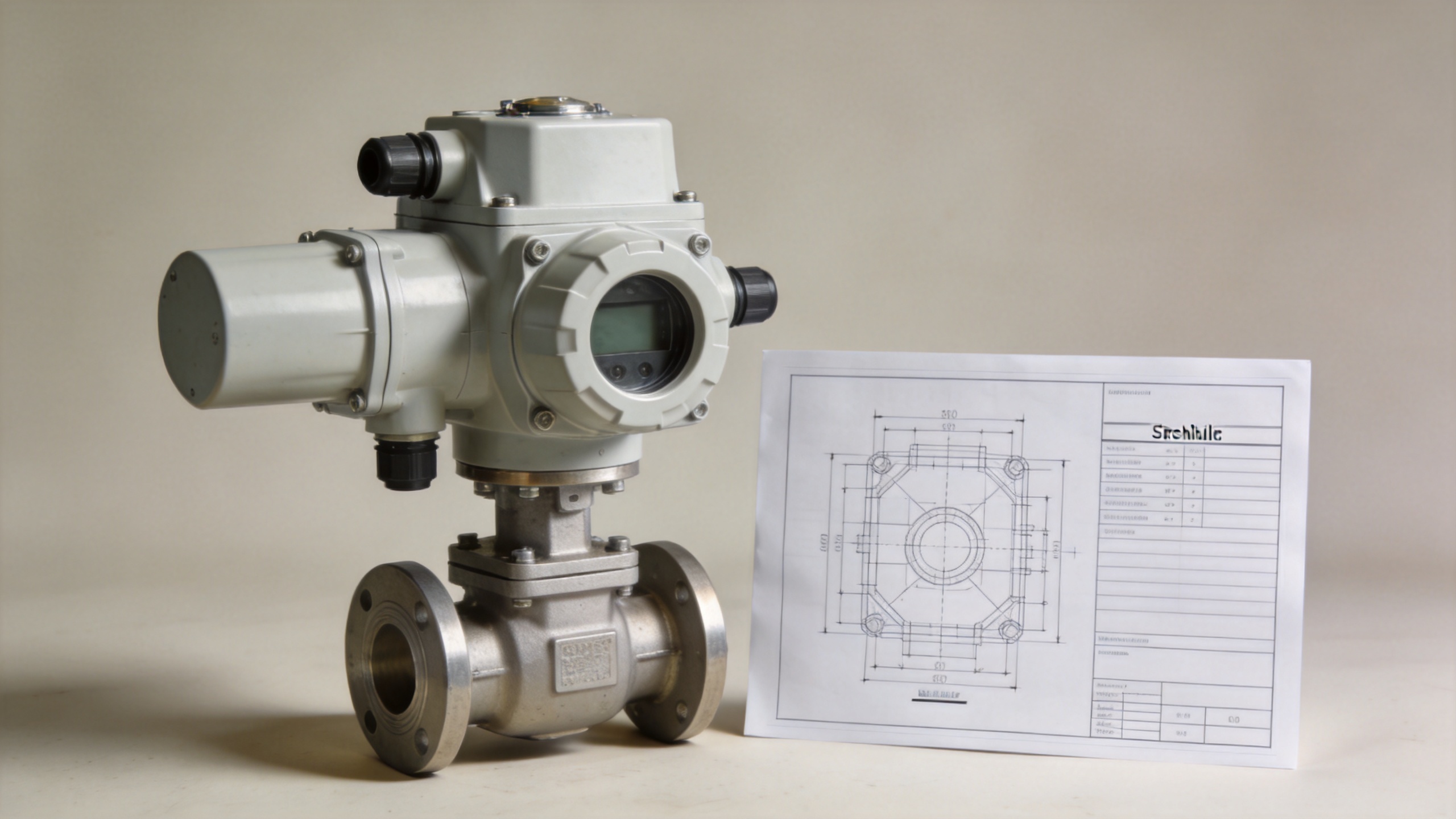
Documentation turns a supplier claim into something a project team can review. Ask for the current datasheet, dimensional drawing, wiring diagram, connection details, bill of supplied accessories, and the model-identification logic for the proposed Electric Actuator. If environmental protection is important, request the exact enclosure rating and the document or test evidence that applies to the offered configuration. IEC describes IP ratings as a classification for protection of enclosures against dust or liquid intrusion; the buyer still needs to verify the stated rating for the actual product and installation.
For projects with formal inspection or client approvals, agree on document timing before the purchase order. A reliable Electric Actuator supplier should be able to separate available documentation from documentation that must be prepared, reviewed, or confirmed. It should not present unverified certification, testing, or application suitability as an established fact.
Compare quotations on scope, not on the headline price
Put comparable offers into a scope matrix. The proposed Electric Actuator model is only one line. Compare power supply, signal type, enclosure, actuator output, mounting kit, control package, spare parts, packing, lead time, inspection, warranty terms, and technical-document deliverables. A quotation that appears lower may exclude a control module, mounting component, or testing activity required by the project.
| Review area | What to confirm | Why it matters |
|---|---|---|
| Operating duty | Torque or thrust basis, travel, cycles, and load conditions | Confirms that the Electric Actuator is selected for the real task. |
| Controls | Voltage, input/output signals, local controls, feedback, and interlocks | Reduces integration changes during commissioning. |
| Mechanical interface | Mounting dimensions, couplings, orientation, and maintenance access | Avoids a correct actuator that cannot be installed or serviced easily. |
| Evidence | Drawings, datasheets, test records, and configuration-specific documentation | Gives the project team a reviewable acceptance basis. |
Also compare the supplier’s change-control process. If the selected Electric Actuator becomes unavailable, who approves an alternative, which documents are revised, and how is the impact on controls or installation recorded? Clear answers reduce last-minute substitutions.
Check manufacturing, testing, and traceability realistically
Ask each candidate supplier how it identifies the offered Electric Actuator, controls configuration changes, and records inspection results. The appropriate inspection plan depends on the project, so do not assume every supplier performs the same factory test or that every test proves suitability for a particular site. Instead, define the required test or inspection records in the purchase specification and ask the supplier to confirm whether they can provide them.
Where site access is limited, look beyond basic operation. Ask how the Electric Actuator can be manually operated, diagnosed, isolated, and replaced. Automation does not eliminate maintenance; it changes the inspection focus to power, signal interfaces, settings, sealing, and accessible service space.
Assess communication before placing the order
Project reliability often shows up in ordinary communication. A dependable Electric Actuator supplier gives a revision-controlled offer, answers technical questions directly, distinguishes confirmed data from assumptions, and states what it needs from the buyer. It should be comfortable with a specification-review call when the application is complex.
Ask for the proposed milestone path: technical clarification, drawing approval, production release, inspection, shipment, commissioning support, and spare-part follow-up. The goal is not to demand promises the supplier cannot verify. It is to see whether the supplier has a workable process for managing an Electric Actuator project after the quotation stage.
A practical RFQ checklist
- Describe the driven equipment and required motion.
- Provide available torque or thrust, travel, duty-cycle, environmental, and mounting information.
- State power, control, feedback, and safety requirements for the Electric Actuator.
- List required drawings, certificates, inspection records, and approval milestones.
- Ask the supplier to identify assumptions, exclusions, lead time, and spare-part recommendations.
- Compare the technical and commercial scope line by line before approving the final Electric Actuator configuration.
Make the final decision on evidence and fit
Select the supplier that makes the project easier to verify, install, commission, and maintain—not merely the one that names an Electric Actuator at the lowest price. A structured review of duty, interface, documentation, scope, and support gives procurement and engineering a common basis for the decision. If details are still incomplete, keep them visible as approval conditions. That discipline helps ensure the final Electric Actuator proposal is matched to the project rather than to an assumption.
 Hot News