
 EN
How to Select a Professional Ball Valve Supplier
Choosing a professional Ball Valve supplier is not simply a matter of comparing unit prices. A quote can look complete while leaving unanswered questions about media compatibility, pressure limits, sealing materials, inspection scope, traceability, or delivery control. For industrial buyers, those gaps often appear later—during engineering review, installation, or commissioning—when changing a Ball Valve specification is more difficult and expensive.
As a procurement evaluator, start with a disciplined question: can the supplier turn your actual service conditions into a clear, reviewable Ball Valve proposal? A capable supplier does not need to promise that every Ball Valve is right for every duty. Instead, it should identify what must be confirmed and provide evidence that the offered configuration can be manufactured, inspected, and documented as requested.
Start with the service conditions, not the catalog
The first supplier comparison should be built around the application. Before asking for a price, provide the medium, temperature range, operating and design pressure, line size, connection type, flow direction if relevant, operating frequency, and control method. If the service includes solids, corrosion, gas, vacuum, high cycling, or a safety-critical isolation duty, say so early. A Ball Valve that is suitable for clean water at moderate conditions may require a different body material, seat, packing arrangement, bore, or actuator arrangement in another service.
Do not begin by asking which valve is most suitable. Write down the conditions that determine suitability. This is also the fastest way to see whether a Ball Valve supplier asks useful clarification questions or simply sends a generic catalog page. A responsive technical review should connect body and trim materials, sealing choices, pressure class, end connection, actuation, and any project specification to the stated duty.
Check whether the supplier understands the required isolation function
Not every isolation requirement is the same. A standard quarter-turn Ball Valve may be appropriate for straightforward shutoff, while a process or pipeline specification may call for a defined leakage class, cavity relief approach, fire-safe design, antistatic features, or an arrangement such as double block and bleed. The phrase double block and bleed should not be treated as a label to add to any quotation. Ask the supplier to explain the valve arrangement, isolation purpose, bleed path, operating sequence, and applicable project requirements.
Likewise, clarify the meaning of a requested 1 ball valve. It may refer to a one-piece construction, a one-inch size, a single valve in a bill of materials, or a customer’s internal shorthand. A professional supplier will not assume. It will restate the requirement in the quotation and drawings so the purchasing team can confirm that the proposed Ball Valve matches the intended configuration.
Evaluate engineering communication before placing the order
Supplier capability becomes visible in the quality of its pre-order documents. Request a quotation that separates confirmed values from items awaiting approval. The document should identify the Ball Valve type, nominal size, pressure designation, material specification, seat and seal material, end connections, operator or actuator, accessories, quantity, and any exceptions. For automated service, ask how actuator torque, control signal, fail position, air supply or power supply, and mounting interface will be checked together.
A useful review is not a long list of unverified claims. It is a controlled path from your operating data to a manufacturable Ball Valve. If a supplier cannot explain a material substitution, cannot distinguish standard scope from optional testing, or avoids documenting assumptions, treat that as an issue to resolve before a purchase order rather than after delivery.
Ask for testing evidence that matches the quoted configuration
Testing is one of the clearest areas for comparing suppliers. ISO 5208:2015 specifies examinations and tests used to establish the integrity of the pressure boundary of metallic industrial valves. That reference alone does not prove that a particular Ball Valve meets your project needs. Ask which test method, test medium, pressure, duration, acceptance criteria, and report apply to the offered configuration.
For pipeline applications, API Specification 6D addresses design, manufacturing, testing, and documentation for pipeline valves. Its use depends on the purchase specification and service, not on a supplier’s marketing language. Where API 6D or an equivalent requirement is applicable, request the exact documentation scope in advance. Pressure-test reports and material test reports may be important, but the required level of traceability should be agreed before production begins.
- Will each Ball Valve receive the stated shell and seat tests?
- Can the supplier provide test records linked to the valve identification or lot as required?
- Which certificates are standard, and which require advance agreement?
- How are nonconformities, rework, and final release recorded?
Review manufacturing and quality controls
Good supplier selection goes beyond inspection paperwork. Ask how the supplier controls incoming materials, machining or casting sources, assembly, pressure testing, marking, packaging, and final inspection. The goal is not to demand every document on every order; it is to define the controls that matter for your Ball Valve service and project risk.
Pay particular attention to material traceability when the media, temperature, pressure, or customer specification makes it important. A supplier should be able to explain how heat numbers, material certificates, component identification, and final valve markings are handled when that scope is requested. If the job includes a double block and bleed function, confirm that the inspection plan addresses the complete assembly rather than only an individual component.
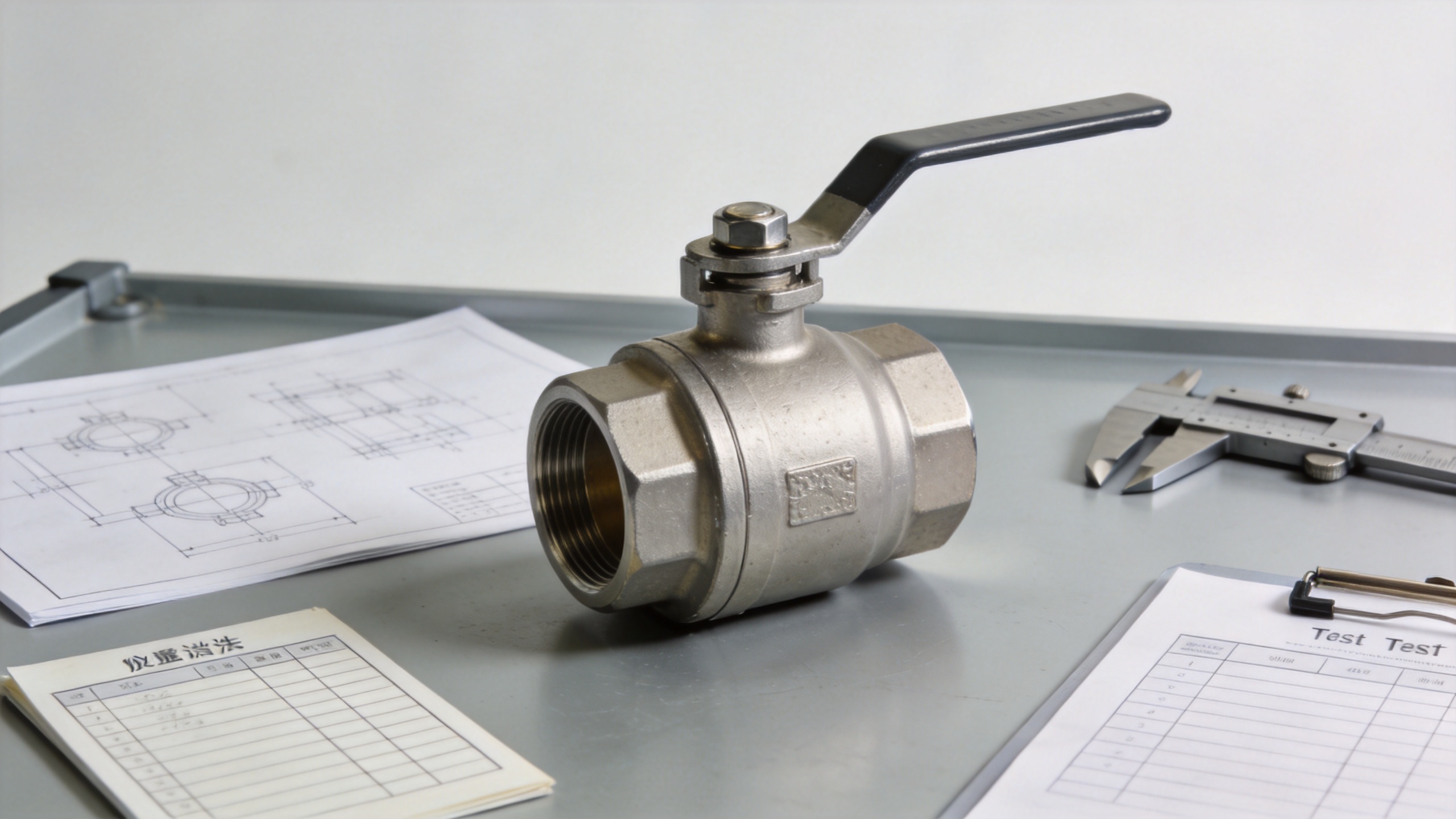
Compare commercial execution, not just the opening price
A lower initial quotation does not automatically mean lower total procurement cost. Compare lead time, engineering response time, document turnaround, packaging, spare-parts support, minimum order rules, shipping terms, and how changes are controlled. A Ball Valve supplier that resolves specifications early can reduce avoidable clarification cycles later.
| Evaluation area | What to request | Why it matters |
|---|---|---|
| Technical review | Written confirmation of duty and configuration | Reduces specification ambiguity |
| Quality evidence | Agreed inspection and test records | Links testing to the ordered Ball Valve |
| Documentation | Certificate list and submission timing | Supports project release and traceability |
| Delivery control | Production milestones and packing details | Helps manage installation planning |
Use a practical supplier qualification checklist
- Send complete operating conditions and request a written Ball Valve selection basis.
- Confirm materials, seals, pressure rating, connections, and operator or actuator details.
- Define whether special isolation, including double block and bleed, is actually required.
- Agree testing, acceptance criteria, traceability, and documents before production.
- Review a sample drawing, data sheet, or inspection plan for complex orders.
- Compare lead time and communication quality alongside price.
- Keep approved deviations and final specifications with the purchase order.
Final decision
The right professional Ball Valve supplier is the one that makes the purchase easier to verify. Look for clear questions, documented assumptions, realistic test commitments, and a process that connects engineering, quality, and delivery. When the duty is defined and the evidence is agreed in advance, you can compare suppliers on a more useful basis than price alone—and place a Ball Valve order with fewer avoidable unknowns.
 Hot News