
 EN
How to Choose an Electric Valve Manufacturer for Global Projects
Choosing an Electric Valve manufacturer for a global project is less about finding the lowest unit price and more about making the whole control package predictable. A valve body, actuator, wiring option, documents, spare parts, and response process all have to work across the project’s locations and handoffs. From a B2B procurement perspective, the useful question is not “Which supplier has an Electric Valve?” but “Which manufacturer can prove that this Electric Valve fits our conditions and can support it after shipment?”
Start by separating confirmed requirements from assumptions. The project team may know the nominal size and preferred valve style, yet still need to confirm medium, temperature, pressure, operating frequency, fail position, control signal, local power supply, and ambient conditions. That distinction prevents a familiar-looking Electric Valve from becoming an expensive exception during commissioning.
1. Turn the project brief into an Electric Valve specification
Before comparing manufacturers, issue one shared data sheet. It should define whether the Electric Valve performs on/off duty, modulating duty, or a routing function; the valve body material and seat requirements; end connections; allowable pressure and temperature; and any applicable project standards. Add the actuator voltage, control input, feedback requirement, enclosure expectation, manual override, cycle frequency, and required operating time.
Voltage deserves its own line item. A 12v valve can be appropriate where a low-voltage control architecture is already specified, but it is not simply interchangeable with other actuator supplies. Ask the manufacturer to identify the rated supply range, inrush behavior if relevant, wiring diagram, and protections required by the project. Confirm the available site power and control-panel design before treating a 12v valve as a standard choice.
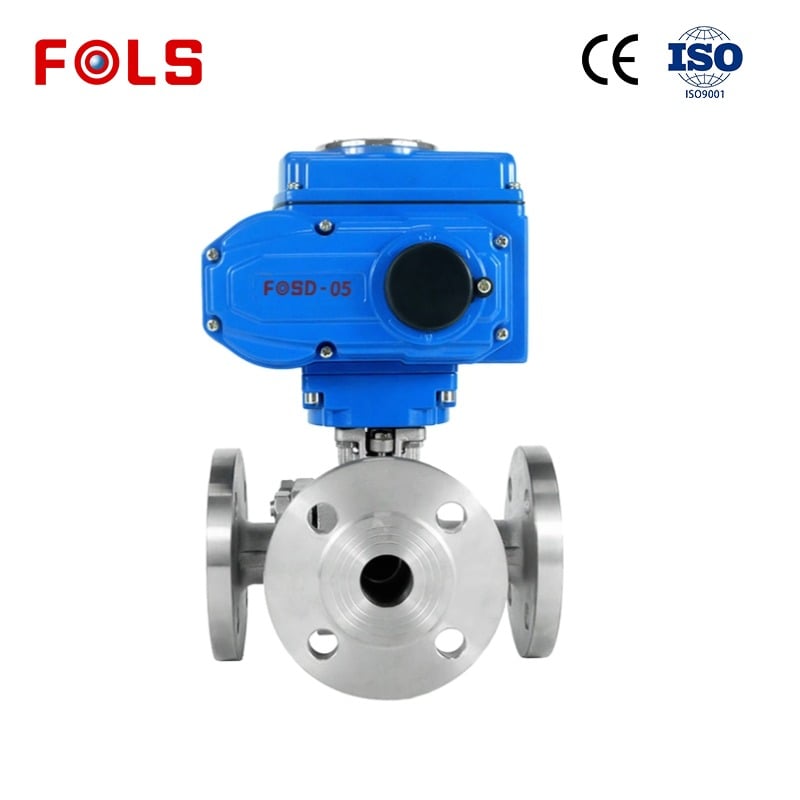
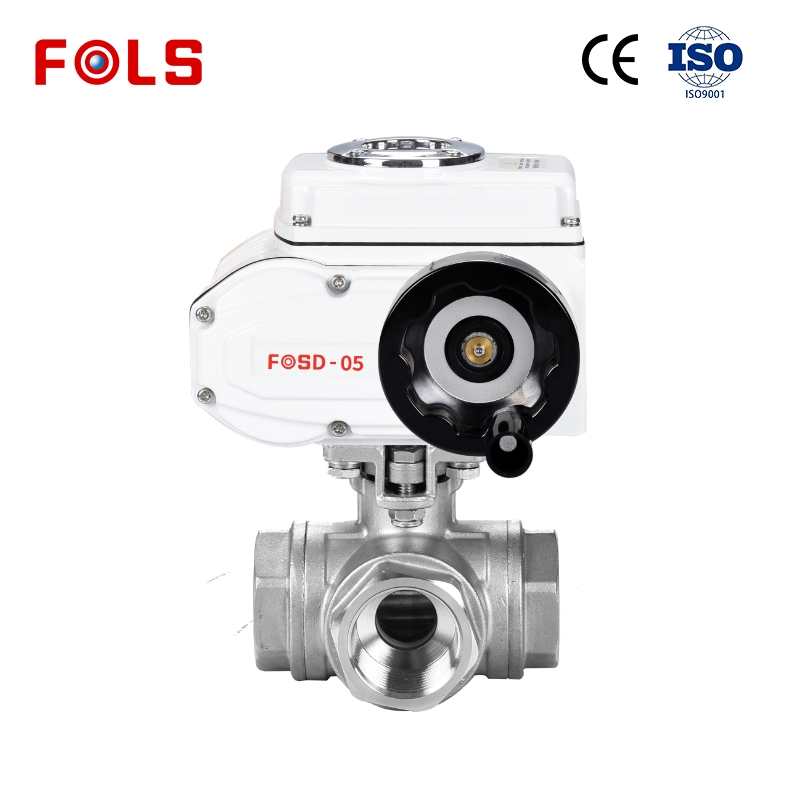
For a 3 way electric ball valve, document the required flow path and the desired state at each actuator position. Terms such as L-port and T-port describe routing possibilities, but the intended process sequence still needs to be shown on the project drawing. A supplier should review that sequence rather than assume that every 3 way electric ball valve serves the same mixing or diverting task.
2. Assess engineering fit, not just the catalogue range
A credible Electric Valve manufacturer should be able to ask focused questions about the service conditions and explain what remains to be verified. Look for a clear separation between valve-body selection and actuator selection. The body must suit the medium and mechanical conditions; the actuator must deliver suitable torque, duty behavior, control logic, and environmental protection for that body in the stated application.
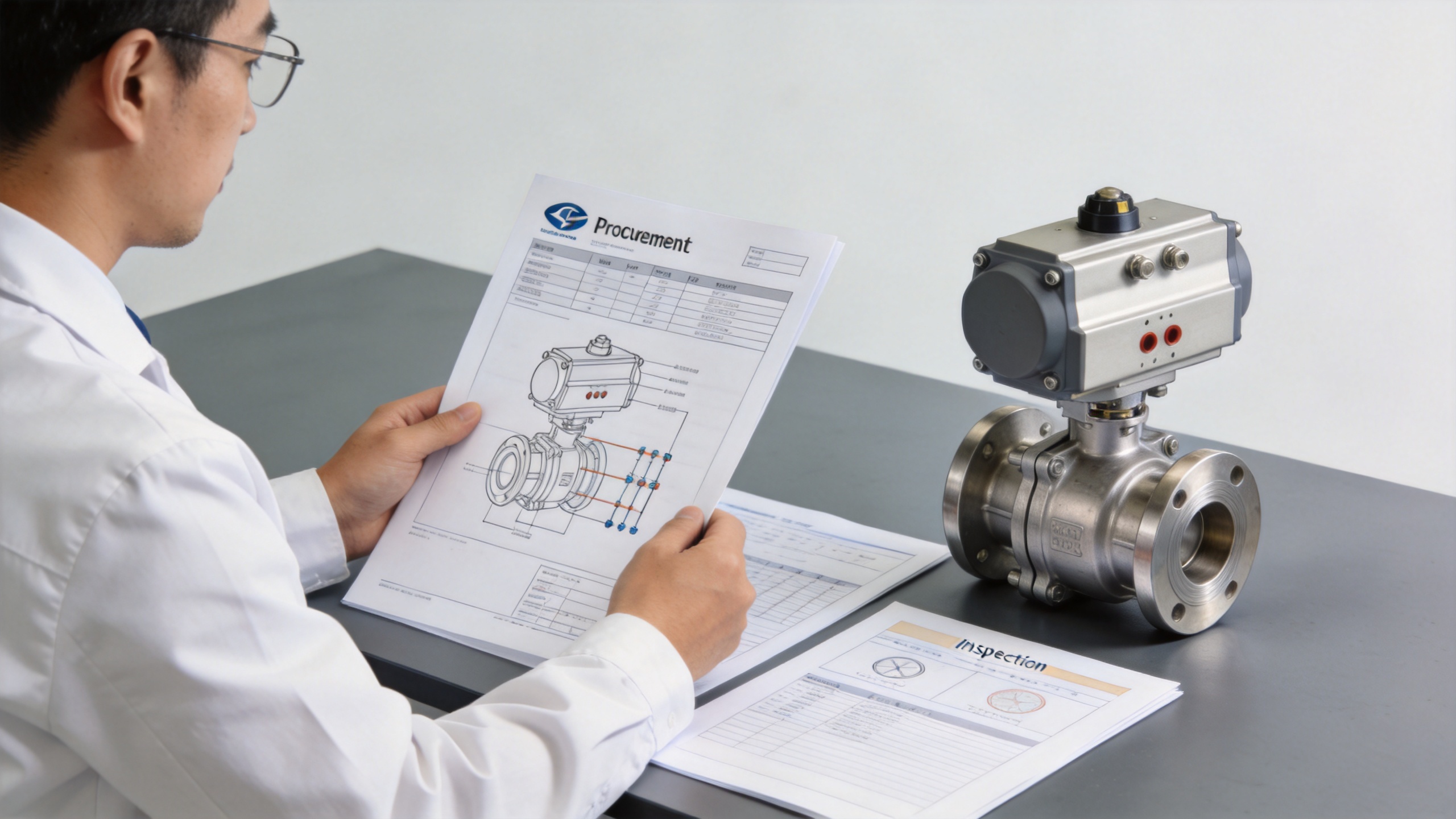
Request dimensional drawings, a bill of materials or configuration description, wiring documentation, and the basis for the actuator-to-valve interface. For quarter-turn assemblies, ISO 5211 is a useful verification point because it specifies requirements for attaching part-turn actuators, with or without gearboxes, to industrial valves. It is not a shortcut to assume compatibility: ask the manufacturer to identify the actual mounting pattern, stem interface, and any bracket or coupling used for the quoted Electric Valve.
Also ask how the manufacturer handles torque margins. A generic actuator label alone does not demonstrate that a specific Electric Valve will operate across changes in pressure differential, temperature, seal friction, or cycling conditions. A stronger answer is a documented selection rationale tied to the submitted conditions, with open items marked as open.
3. Verify quality evidence and global compliance pathways
Global projects may involve customer specifications, local regulations, machine requirements, or third-party inspections. Do not ask a manufacturer merely whether it is “compliant.” Instead, provide the applicable requirement list and request document-level evidence for the exact configuration. This may include material traceability where required, pressure-test records, inspection plans, declarations, electrical drawings, and packing or marking requirements.
For installations exposed to dust, moisture, washdown, or outdoor conditions, ask for the enclosure classification and the conditions under which it applies. IEC 60529 defines the degrees of protection provided by enclosures that are commonly expressed as IP codes. The practical procurement task is to match the stated IP requirement to the project environment and verify whether cable entries, connectors, and installation orientation affect the completed Electric Valve assembly.
Where the package enters machinery, electrical integration should be reviewed by the responsible project engineer. IEC 60204-1 addresses safety-related electrical equipment of machines; whether and how it applies depends on the delivered system. A reliable Electric Valve manufacturer can provide technical documents for review without overstating certifications or applicability.
4. Test the manufacturer’s project communication process
For international sourcing, communication quality is part of product quality. Send the same RFQ to shortlisted manufacturers and compare more than the price. Are deviations clearly stated? Are unanswered parameters listed? Does the quotation identify the precise Electric Valve configuration, rather than a broad family name? Can the team explain revision control when the voltage, seal, port configuration, or documentation requirement changes?
Pay close attention to the response to edge cases. A manufacturer that flags an uncertain medium, ambiguous fail position, or incomplete control signal is often safer to work with than one that immediately promises an Electric Valve without clarification. Fast acknowledgement matters, but complete confirmation matters more.
5. Compare lifecycle support before placing the purchase order
An Electric Valve is part of a maintainable system, not a one-time shipment. Ask about recommended commissioning checks, adjustment limits, troubleshooting information, spare-part availability, lead-time communication, and how serial or batch identification supports later enquiries. Define the support channel, document format, language needs, and response expectations before award.
For a 12v valve or a 3 way electric ball valve, include a practical acceptance checklist: correct model and port arrangement, actuator supply and signal, travel or position indication, mounting hardware, drawings, labels, packaging, and test evidence required by the order. This protects both buyer and supplier from discovering a configuration mismatch after the goods cross borders.
A practical manufacturer-selection checklist
- Can the manufacturer restate the process and control requirements for the Electric Valve in a configuration-specific quotation?
- Does it provide drawings, wiring information, interface details, and clearly bounded technical evidence?
- Can it identify unresolved assumptions instead of hiding them in a catalogue description?
- Does its quality and document process align with the project’s inspection, marking, and traceability needs?
- Can it support commissioning questions, replacements, and revision control after delivery?
Choose an Electric Valve manufacturer after the technical fit, evidence package, communication discipline, and lifecycle plan point in the same direction. That approach does not replace engineering approval, but it gives global project teams a repeatable way to reduce avoidable sourcing risk before the purchase order is released.
 Hot News





