
 EN
How Manual Valve Ensures Reliable Direct Flow Control
When a piping system needs a clear, local decision at the line, a Manual Valve gives the operator direct control of the flow path. There is no actuator, signal cable, air supply, or control logic between the handwheel or handle and the closing element. That simplicity is useful, but it is not a blanket guarantee of suitability. From an industrial valve application perspective, the reliable choice starts with the medium, pressure, temperature, connection, and operating routine—not with the valve name alone.
A Manual Valve is often a practical fit for isolation points, infrequently adjusted branches, maintenance bypasses, and systems where an operator can safely reach the valve. In water treatment, building services, drainage, chemical handling, and process piping, direct control can make inspection and troubleshooting more straightforward. The key is to match the valve’s function to the process rather than expecting one design to cover every flow-control task.
What “direct flow control” means in a Manual Valve
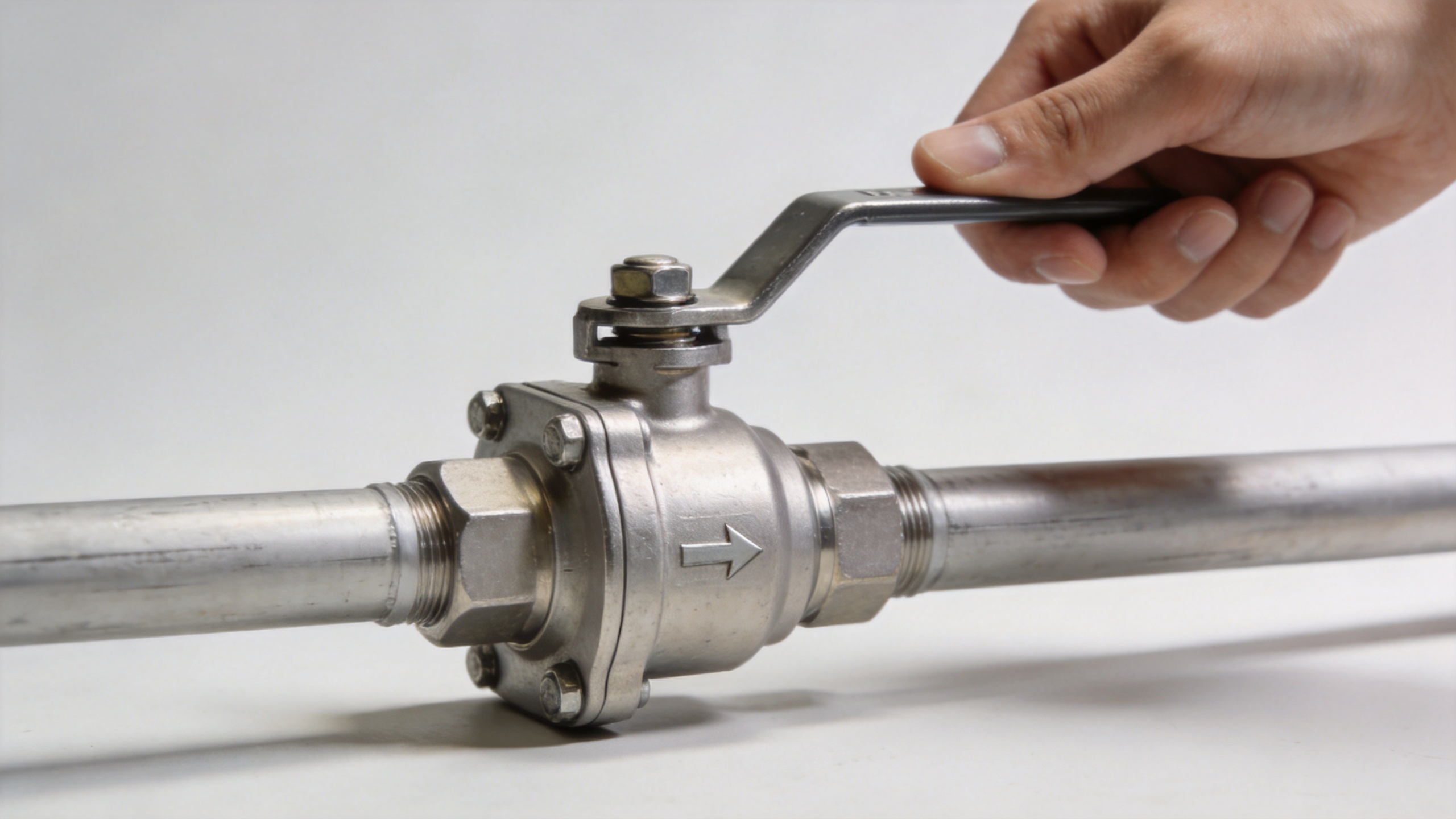
Direct flow control means the operator moves the valve mechanism by hand. A lever, handwheel, or gear operator transfers force to a stem, ball, disc, gate, plug, or globe-style closure. The operator can see the handle position, feel the operating resistance, and stop or adjust movement at the point of use. This direct relationship can be valuable when a local shutdown must be obvious during service work.
The required motion depends on the valve design. A manual ball valve commonly uses a bored ball. Turning its handle through a quarter turn moves the bore from alignment with the pipe to a closed position. This is why a ball valve is often selected for clear on/off duty. By contrast, a handwheel-operated valve may use multiple turns to move a closure gradually, which can offer a more deliberate adjustment approach when the design is intended for it.
It is important to separate isolation from precise process regulation. A Manual Valve can be positioned manually, but the acceptable control accuracy depends on the valve type, trim or closure geometry, pressure differential, process stability, and the operator’s ability to repeat a setting. If the process demands continuous, remote, or highly repeatable modulation, an automated control arrangement may be the more appropriate direction.
Why a direct operator connection can support reliability
Reliability in this context comes from having fewer control-chain components to verify. A manual setup does not depend on a solenoid, positioner, electrical signal, instrument-air quality, or actuator sizing. That can reduce the number of interfaces that need attention for a simple local isolation duty. It also makes the intended action easy to communicate: an accessible handle or handwheel gives personnel a visible point of control.
Still, fewer components do not remove the need for engineering checks. A valve that is difficult to reach, installed in the wrong flow direction where direction matters, paired with an unsuitable seal, or operated beyond its intended conditions will not become reliable merely because it is manual. More accurately, direct operation can simplify the control path when the valve body, materials, connection, and operating conditions are matched to the system.
- Clear local action: operators can open, close, or set the valve at the pipe location.
- Visible status cues: lever position or handwheel travel may support site procedures, subject to the valve design and marking.
- Straightforward maintenance planning: service teams can focus on accessibility, packing or seals where applicable, and mechanical wear.
- No external actuation utility for the basic movement: a simple Manual Valve avoids relying on air or electrical power for that local operation.
Match the valve type to the control job
Do not first ask whether a ball valve, butterfly valve, gate valve, or globe valve is “better.” First write down what the process actually requires. A Manual Valve used mainly for rapid isolation has different priorities from one used for a gradual manual adjustment point. The table below provides a starting framework, not a substitute for a documented specification review.
| Control need | Manual valve characteristic to review | Question to confirm |
|---|---|---|
| Fast local on/off isolation | Quarter-turn action and shutoff behavior | Is quick open/close operation appropriate for the process and pressure conditions? |
| Deliberate manual adjustment | Valve geometry, travel, and repeatability | Can the required flow change be managed safely without automatic control? |
| Corrosive or chemically sensitive media | Body, ball/disc, seat, seal, and stem materials | Are all wetted materials suitable across the real temperature and concentration range? |
| Limited maintenance space | Handle sweep, handwheel clearance, removal access | Can personnel operate and inspect the Manual Valve without unsafe reach or obstruction? |
| Future automation possibility | Mounting and interface options | Should the specification keep an upgrade path open for a later actuator? |
Where a 3 piece ball valve can make service easier
A 3 piece ball valve is frequently considered where a ball-valve flow path is appropriate and the maintenance plan benefits from a body construction that can be serviced without removing every connected pipe section. Whether that advantage applies depends on the actual end connections, piping layout, isolation procedure, and available clearance. It should be confirmed from the product drawing and maintenance instructions rather than assumed from the name alone.
For a manual isolation point, the selection discussion should cover more than the lever. Confirm the bore requirement, body and seat materials, pressure-temperature rating, end connection, allowable medium, and the space needed to operate or service the valve. If the system sees frequent cycling, ask how often the Manual Valve will be moved and who will be responsible for checking operating torque and sealing performance over time.
When a 2 pvc ball valve deserves closer application review
A 2 pvc ball valve may be relevant in compatible low- to moderate-demand piping applications, but size alone says very little about suitability. PVC material behavior, medium compatibility, temperature, pressure, joint method, support of adjoining pipe, and exposure conditions must all be checked against the actual specification. A manual handle can provide a simple local operating point, yet the surrounding plastic piping system still needs correct installation and support.
This is a useful example of why a Manual Valve should be evaluated as part of the system. The same nominal size can be used in very different services. Before purchase, verify the media, pressure and temperature envelope, connection standard, and whether personnel need an easily visible open/closed indication. If the line may be modified later, also consider how isolation and maintenance can be carried out without placing unnecessary stress on the pipework.
A practical selection and installation checklist
In procurement conversations, putting the operating conditions into one short list usually prevents repeated clarification later. Before finalizing a Manual Valve, confirm these points:
- Medium: identify the fluid, concentration, solids content, and any cleaning or flushing exposure that may affect body or sealing materials.
- Pressure and temperature: check the required operating range together, rather than treating either rating as a standalone approval.
- Function: state whether the valve is for isolation, occasional manual adjustment, draining, bypassing, or another defined duty.
- Connection and size: match the end connection, nominal size, and installation orientation to the pipe specification.
- Operating frequency: distinguish an emergency or maintenance isolation point from a valve cycled several times per shift.
- Access and safety: reserve enough room for handle travel, handwheel movement, identification, and safe maintenance.
- Verification documents: request the relevant drawing, material information, rating details, and any application-specific evidence needed for the project.
Operating habits that protect direct control
Reliable manual control also depends on routine practice. Operators should follow site procedures, avoid forcing a handle or handwheel when resistance is abnormal, and investigate the cause rather than applying uncontrolled leverage. A change in operating feel can be a useful prompt to inspect for process deposits, misalignment, mechanical interference, or a condition that requires technical review.
For critical services, record the intended normal position, access limitations, lockout or isolation process, and the conditions that require escalation. This does not turn a Manual Valve into an automated safety system; it makes the human-controlled point clearer to the people who depend on it. Where process consequences are significant, evaluate the wider shutdown and safeguarding design with qualified engineering support.
Choose direct control with a clear boundary
A Manual Valve supports reliable direct flow control when its straightforward operating method matches the process duty and the installation is planned around real conditions. It can be an effective local solution for visible isolation and operator-managed flow paths. The strongest decision is not “manual versus automatic” in the abstract. It is a documented match among the medium, pressure, temperature, control frequency, valve design, materials, connections, and maintenance access.
If those factors are still incomplete, pause the specification rather than relying on a product name. A clear operating-condition checklist gives engineers, purchasers, and maintenance teams a better basis for selecting the right manual valve configuration and confirming the information needed before installation.
 Hot News