
 EN
How Electric Ball Valve Delivers Precise Flow Regulation
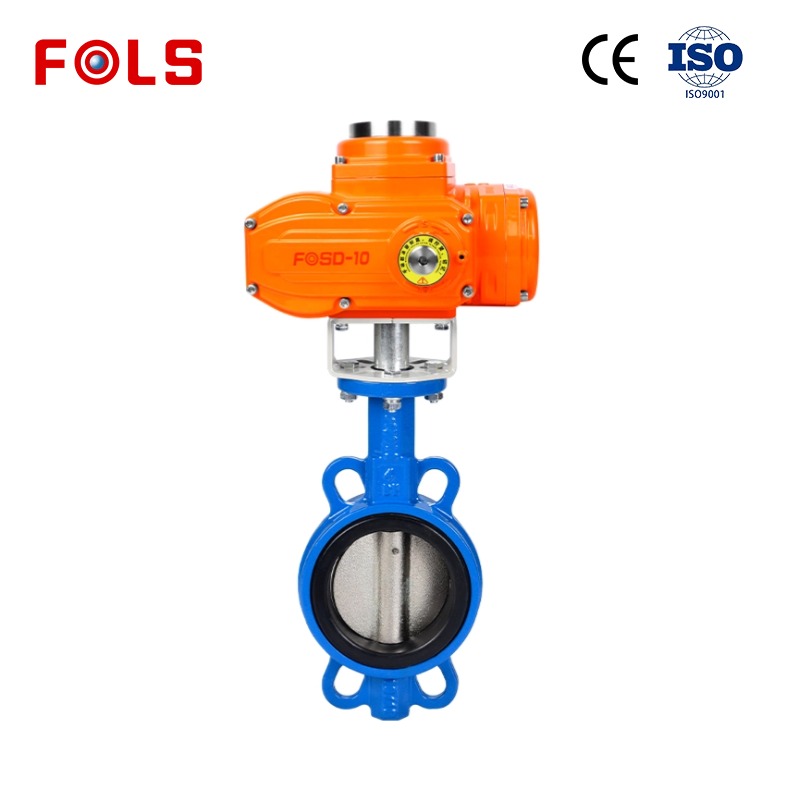
An Electric Ball Valve is often introduced as a simple automated shutoff device. That description is useful, but incomplete. When the actuator, control signal, feedback method, valve geometry, and process conditions are considered together, an Electric Ball Valve can support repeatable flow changes rather than only open-or-closed operation. The important distinction is this: automation alone does not create precision. Precision comes from matching the Electric Ball Valve and its controls to the job.
From an industrial valve application engineer’s perspective, start with the medium, pressure differential, temperature, required flow range, and control objective. Only then should you decide whether an Electric Ball Valve is the right control element. This prevents a common mistake: specifying an actuator because it is electric, while leaving the required positioning behavior undefined.
What actually regulates flow in an Electric Ball Valve?
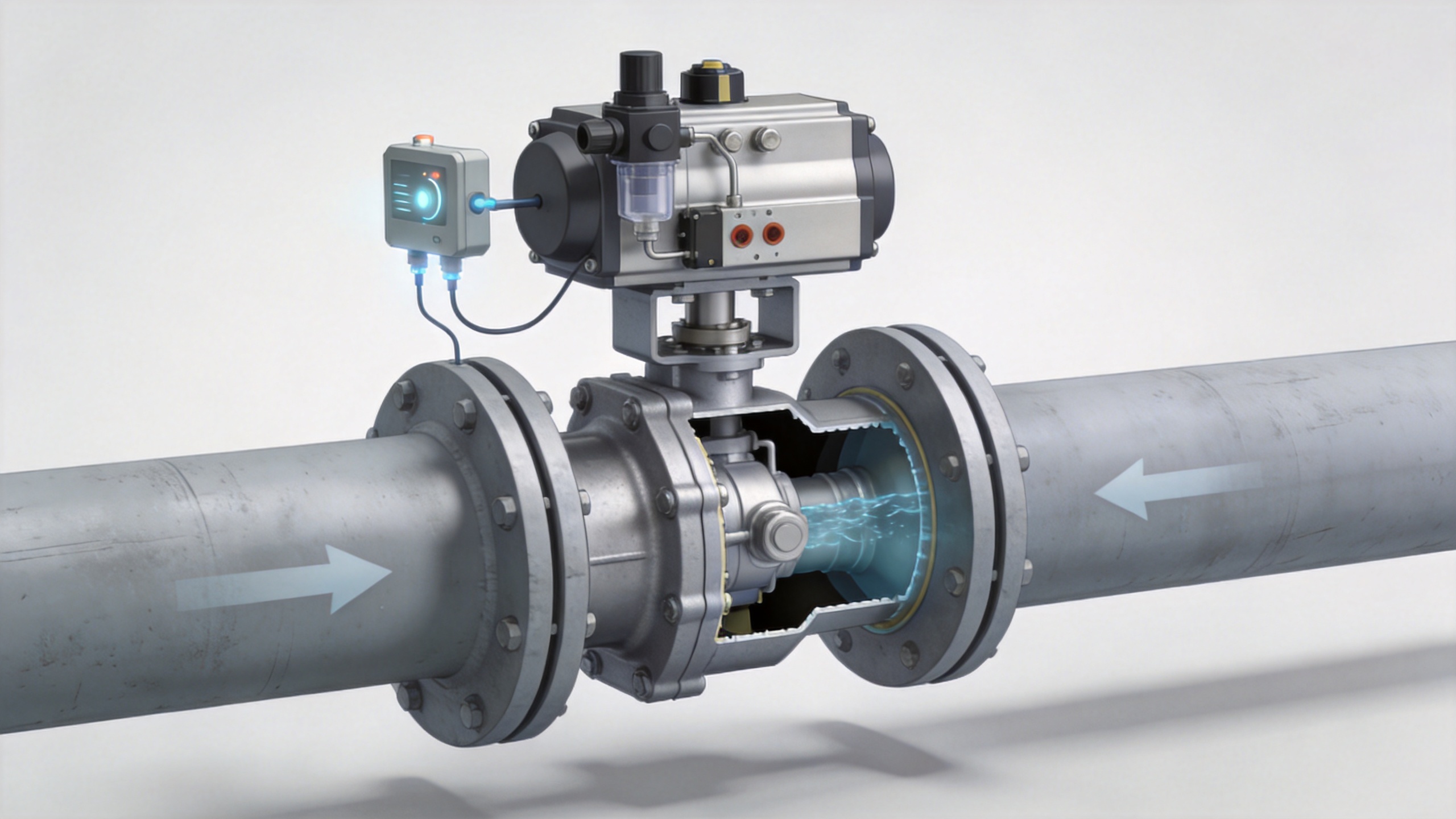
A standard ball valve controls passage through the relationship between a drilled ball and the valve seat. As an actuator turns the ball, the opening presented to the fluid changes. In an on/off Electric Ball Valve, the actuator normally drives to one end position or the other. That is excellent for isolation, filling, draining, or zone switching. It is not automatically proportional control.
For more refined duty, the Electric Ball Valve needs a modulating actuator or an actuator/control package that can stop at commanded intermediate positions. A controller may send a signal such as 4–20 mA, 0–10 V, or a digital command; the actuator then moves the ball toward a target angle. Position feedback helps the system compare the requested position with the actual position and correct for error. In practical terms, the valve is part of a loop: sensor or operator demand, controller, actuator, valve position, and resulting process flow.
Do not assume that every intermediate angle creates a proportional flow change. A conventional full-port ball has a nonlinear installed characteristic, especially near the closed position. Pipe losses, upstream pressure, downstream pressure, media viscosity, and cavitation risk can all change the result. An Electric Ball Valve can still be a sound choice, but its behavior should be verified against the required operating range rather than inferred from actuator travel alone.
On/off control and modulating control solve different problems
The most useful first question is not “Which valve is better?” It is “What must the flow do over time?” An on/off Electric Ball Valve is appropriate when the system only needs to start or stop a defined flow path. Typical examples include tank fill isolation, a bypass that is either available or closed, and a watering zone that is scheduled to run or stop.
A modulating Electric Ball Valve is appropriate when the desired flow must move toward a setpoint or when a process value such as level, temperature, pressure, or blend ratio is being controlled indirectly through flow. The controller must have a meaningful input, a stable tuning approach, and an actuator resolution suitable for the adjustment required. If the process only tolerates a few discrete states, a costly continuously modulating arrangement may add little value. Conversely, a basic on/off actuator cannot be expected to hold a repeatable partial opening merely because the ball can physically rotate through it.
| Control need | Suitable Electric Ball Valve approach | What to confirm |
|---|---|---|
| Isolation or scheduled zone switching | On/off actuator | Voltage, cycle time, end-position indication, fail position |
| Repeatable partial flow setting | Positioning or modulating actuator | Command type, feedback, resolution, travel calibration |
| Closed-loop process control | Modulating Electric Ball Valve with controller | Installed flow behavior, sensor signal, tuning, pressure range |
Five factors that determine useful precision
1. Ball-port geometry and usable travel
Port shape has a major effect on controllability. A standard bore may deliver a large flow change over a small portion of travel, while a characterized ball or appropriately sized valve can make the useful control zone easier to use. Rather than choosing the largest available Electric Ball Valve, check the normal and minimum flow requirements. Oversizing can make low-flow adjustment touchy.
2. Actuator resolution, torque, and speed
The actuator must overcome operating torque under real differential pressure, not only bench conditions. It should also move slowly enough—or be controlled carefully enough—to avoid overshoot in a sensitive loop. Resolution is relevant when a small position change creates a meaningful flow change. A precise control command cannot compensate for an underspecified actuator.
3. Position feedback and signal compatibility
A modulating Electric Ball Valve benefits from clear command and feedback conventions. Confirm whether the system uses analog signals, digital communication, floating control, or a controller-specific interface. Confirm what happens on signal loss and whether the reported position is actual shaft position, a calculated value, or only an end-switch state.
4. Media and pressure conditions
Pressure differential changes torque and flow response. Suspended solids, scale, sticky media, or incompatible seals can alter the behavior of an Electric Ball Valve over time. The valve body, ball material, seats, and seals must therefore be evaluated alongside control performance. A stable water test does not automatically predict behavior with a different liquid or operating pressure.
5. Installation and control-loop design
Flow regulation is a system result. Straight-run limitations, pump cycling, pressure regulators, filters, pipe diameter, and sensor placement can all matter. Before commissioning an Electric Ball Valve, document the normal flow, anticipated pressure range, required response time, and the action expected when power or the control signal is lost.
Using an Electric Ball Valve in irrigation systems
A drip irrigation valve may be selected for simple zone isolation, for scheduled watering, or for more deliberate pressure and flow management. Those are not identical duties. For a zone that is simply enabled by a timer, an on/off Electric Ball Valve may be evaluated as an automated isolation option if its materials, supply voltage, cycle duty, pressure rating, and controller interface suit the installation. It should not be described as precise regulation unless the actuator and control arrangement actually support controlled intermediate positions.
With a solenoid valve for sprinkler system applications, the familiar requirement is usually rapid controller-driven on/off zone operation. A solenoid design and an Electric Ball Valve use different actuation approaches, so selection should be based on hydraulic conditions, power availability, response expectations, maintenance practices, and the controller—not on a label alone. Where a site needs to maintain a target flow, reduce water hammer, or coordinate a variable process, a modulating arrangement may merit engineering review. Where it only needs dependable zone switching, a simpler on/off device may be more appropriate.
For a drip irrigation valve application, filtration, debris tolerance, and pressure regulation upstream or downstream may matter as much as the valve command. For a solenoid valve for sprinkler system application, verify the controller output, valve voltage, wire-run conditions, and required opening behavior. In both cases, avoid making flow claims without measured site conditions.
A practical selection and commissioning checklist
- Define whether the Electric Ball Valve must isolate, stage, or continuously regulate flow.
- Record the medium, temperature, normal and maximum pressure differential, flow range, and pipe connection requirements.
- Select a body, ball, seat, and seal combination compatible with the actual medium.
- Match actuator torque, operating voltage, duty cycle, enclosure, control signal, and fail action to the installation.
- For modulation, verify the command range, feedback signal, actuator calibration, and controller tuning before relying on partial positions.
- Commission the Electric Ball Valve across the expected flow range, and retain observed position-versus-flow data for future adjustments.
Final perspective
An Electric Ball Valve delivers useful flow regulation when its valve characteristic and actuator capability are chosen for the real control objective. For on/off service, simplicity and correct sizing are often the priorities. For proportional service, the valve must be treated as one part of a measured, feedback-capable control loop. That distinction gives engineers and buyers a more reliable way to evaluate an Electric Ball Valve, a drip irrigation valve, or a solenoid valve for sprinkler system installation without assuming that one actuator style fits every duty.
 Hot News