
 EN
How Does Gate Valve Control Straight Through Flows?
A Gate Valve is built primarily for isolation: it opens a pipeline for passage or closes it to stop passage. Its useful feature is the relatively straight flow route available after the gate is fully lifted out of the bore. That distinction is useful to both plant engineers and procurement teams. A Gate Valve is not simply a generic flow-control device; its value depends on the medium, pressure, temperature, operating frequency, and the job the valve must perform.
In a water, wastewater, oil, chemical, or utility line, the practical question is usually not “which valve is better?” It is whether the line needs an open-or-shut isolation point or repeatable regulation at intermediate positions. Start with that duty, then compare valve types and actuator options.
What happens inside a Gate Valve?
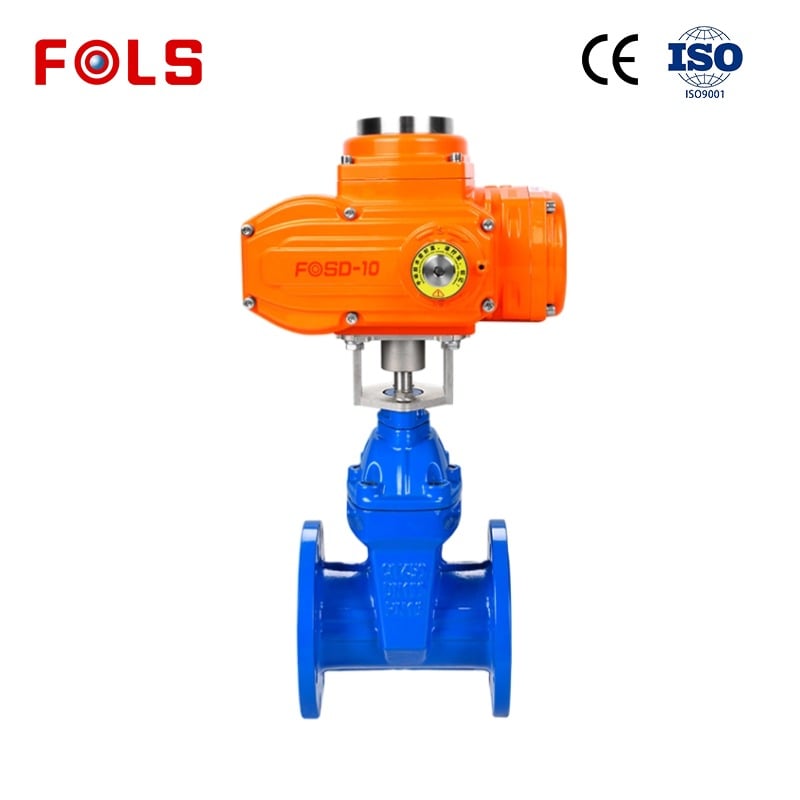
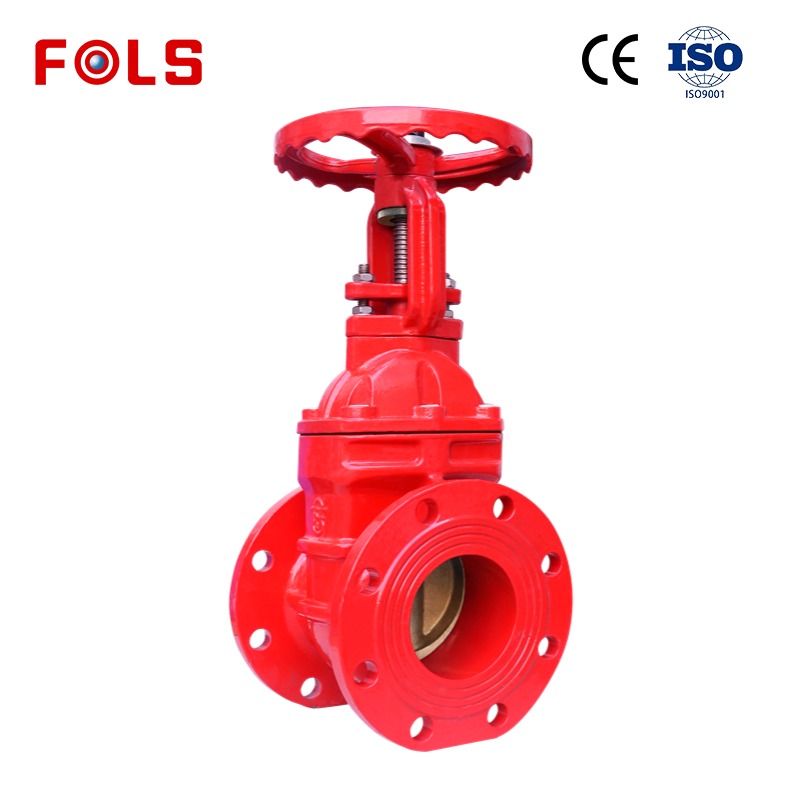
A conventional Gate Valve has a body with a passageway, two seating surfaces, a wedge or parallel gate, a stem, and an operating mechanism. Turning a handwheel or driving the stem with an actuator moves the gate vertically, across the bore. As the gate lowers, it meets the seats and blocks the path. As it rises, the opening progressively increases until the gate clears the main stream.
When the Gate Valve is fully open, the gate is above the principal flow area. Fluid can then travel through a passage that is close to the pipe’s own direction rather than being forced through a sharply turning route. That is what people mean by “straight-through flow.” It does not mean every design has identical pressure loss, but it does explain why a fully open Gate Valve is often considered for isolation duty where a relatively unobstructed bore is useful.
Why full opening creates the straight-through flow path
The flow path is controlled mechanically by gate position. At closed position, the wedge contacts the seat faces and interrupts the bore. During opening, the exposed opening grows from a narrow gap to the full port. At full lift, the gate no longer sits in the central passage, allowing the medium to continue largely along the pipe axis.
This characteristic can be relevant where operators want an isolation valve that is normally either open or closed. In a stable water line, for example, leaving a suitably selected Gate Valve fully open can reduce the obstruction caused by a partially lowered closure element. Bore geometry, size, trim, fluid properties, pipe layout, and system pressure conditions still determine the result.
Why a Gate Valve is usually not a throttling valve
A Gate Valve can physically occupy an intermediate position, but that does not make it a preferred precision-regulation device. With the gate partly across the bore, fluid accelerates through a restricted and uneven opening. The resulting turbulence, vibration, local pressure changes, and wear potential can rise with differential pressure and fluid conditions. Experimental material on partially open gate valves also identifies turbulence and cavitation risk as conditions that require application-specific evaluation.
More accurately, a partially open Gate Valve may be used only when the application engineer has reviewed the specific service and accepts the limits. It should not be treated as a general substitute for a control valve. If the process needs frequent modulation, a defined flow characteristic, or reliable positioning, evaluate a valve designed for regulation instead.
Gate Valve versus ball-valve alternatives
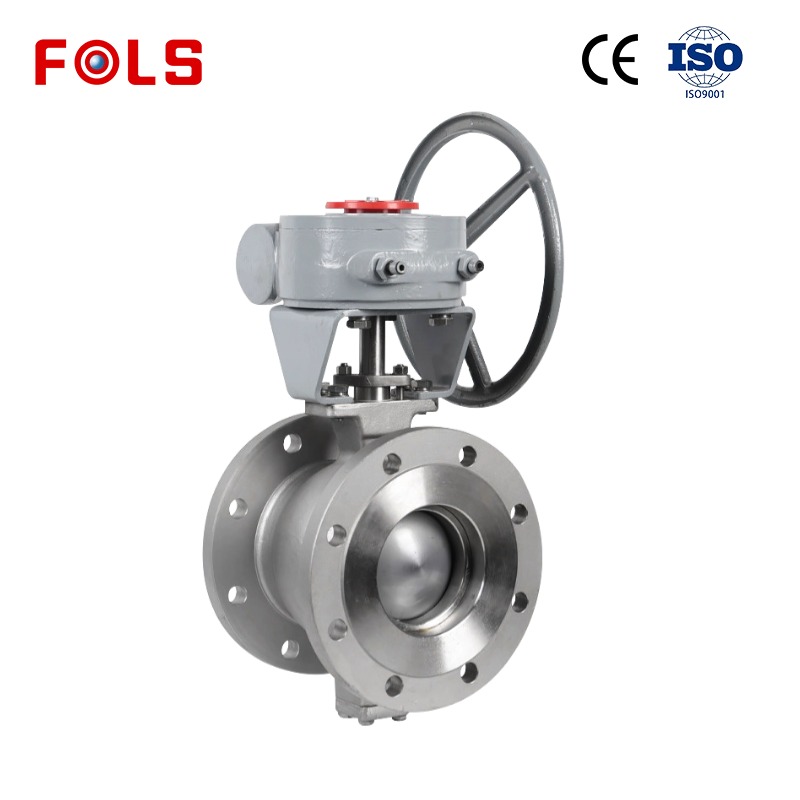
A Gate Valve and a v ball valve address different flow tasks. The gate design relies on linear travel to isolate a line, while a v ball valve uses a shaped ball opening to create a controllable flow area through rotation. Where an application requires controlled changes in flow, the characteristic of a v ball valve may be more relevant than the full-open isolation advantage of a Gate Valve.
The same distinction applies to a steam ball valve. Steam service requires attention to pressure, temperature, materials, seals, cycle frequency, and safety procedures. Whether a steam ball valve or a Gate Valve is suitable cannot be decided from the fluid name alone. The service conditions and operating purpose must be confirmed together.
Selection points that affect real flow performance
Before specifying a Gate Valve, build the discussion around the pipeline rather than the valve name. A useful review includes:
- Medium: Is the fluid clean, corrosive, abrasive, viscous, or carrying solids?
- Pressure and temperature: What are normal, minimum, maximum, and transient conditions?
- Duty: Will the Gate Valve remain fully open or closed most of the time, or is intermediate control expected?
- Connection and size: What pipe standard, end connection, bore, face-to-face space, and installation orientation apply?
- Operation: Is manual operation sufficient, or is an electric, pneumatic, or other actuator needed?
- Maintenance: Is there clearance to access the stem, bonnet, packing, and actuator after installation?
For steel gate-valve procurement, a buyer may also ask which construction standard, material designation, pressure class, inspection documents, and test records apply. API 600 is one example of a specification covering steel gate-valve design and construction; it should be requested and verified where the project requires it, not assumed from a product label.
How to use the straight-through advantage correctly
The straight-through behavior of a Gate Valve is valuable when the operating plan is clear: open the line fully for normal transfer, then close it for isolation. It is less suitable when the operator must repeatedly hold a stable flow rate at changing intermediate openings. Using an isolation valve for a control task can otherwise transfer wear and maintenance issues into the system.
For industrial valve discussions, it helps to separate confirmed facts from open questions. A supplier can review a Gate Valve configuration against the medium, pressure-temperature envelope, dimensions, connection, actuation, and documentation needs. Until those conditions are confirmed, no single valve type should be presented as universally suitable.
Conclusion
A Gate Valve controls straight-through flow by lifting its gate out of the main bore, leaving a comparatively direct path when fully open. Its strength is on-off isolation, not routine throttling. Define the operating duty first, then verify the material, seats, pressure-temperature limits, connections, and actuation. That process makes it easier to decide whether a Gate Valve, a v ball valve, or another design is the more appropriate choice for the line.
 Hot News