
 EN
Globe Valve Use Cases in Steam Distribution Networks
In a steam network, a Globe Valve earns its place when the job is to manage flow deliberately rather than simply open a line as quickly as possible. From an application-engineering viewpoint, the first question is not “Which valve suits the duty?” but “What must this branch do under changing steam demand?” A Globe Valve can be a practical answer for controlled branches, warm-up duties, and selected isolation points, provided the pressure-drop budget, steam conditions, trim, and maintenance plan have been confirmed.
Steam distribution networks combine high temperature, changing load, condensate risk, and personnel-safety concerns. That mix is why a Globe Valve should be selected by duty, not by name alone. Its linear closure motion can support progressive throttling and more deliberate adjustment than many quarter-turn designs. The trade-off is a more restrictive flow path, so a Globe Valve is usually a poor default where low resistance and full-bore isolation are the dominant requirements.
Why a Globe Valve Fits Certain Steam Duties
A Globe Valve changes the flow area as the plug moves toward or away from the seat. In steam service, that behavior is useful where an operator or control system needs to reduce, increase, or stabilize flow in response to process demand. The valve is not automatically a control valve merely because it is a globe pattern; body design, trim, actuator, positioner, sizing method, and control objective all still matter. But the underlying geometry makes a Globe Valve a logical starting point for many throttling discussions.
Pressure drop is the counterweight. Every valve consumes some available differential pressure, and a Globe Valve commonly consumes more than a gate-style isolation valve because the flow changes direction through the body. That loss can be acceptable, even useful, when controlled reduction is the purpose. It can be costly when a downstream user already has a limited pressure margin. Treat pressure loss as part of the branch calculation, not as a minor catalog specification.
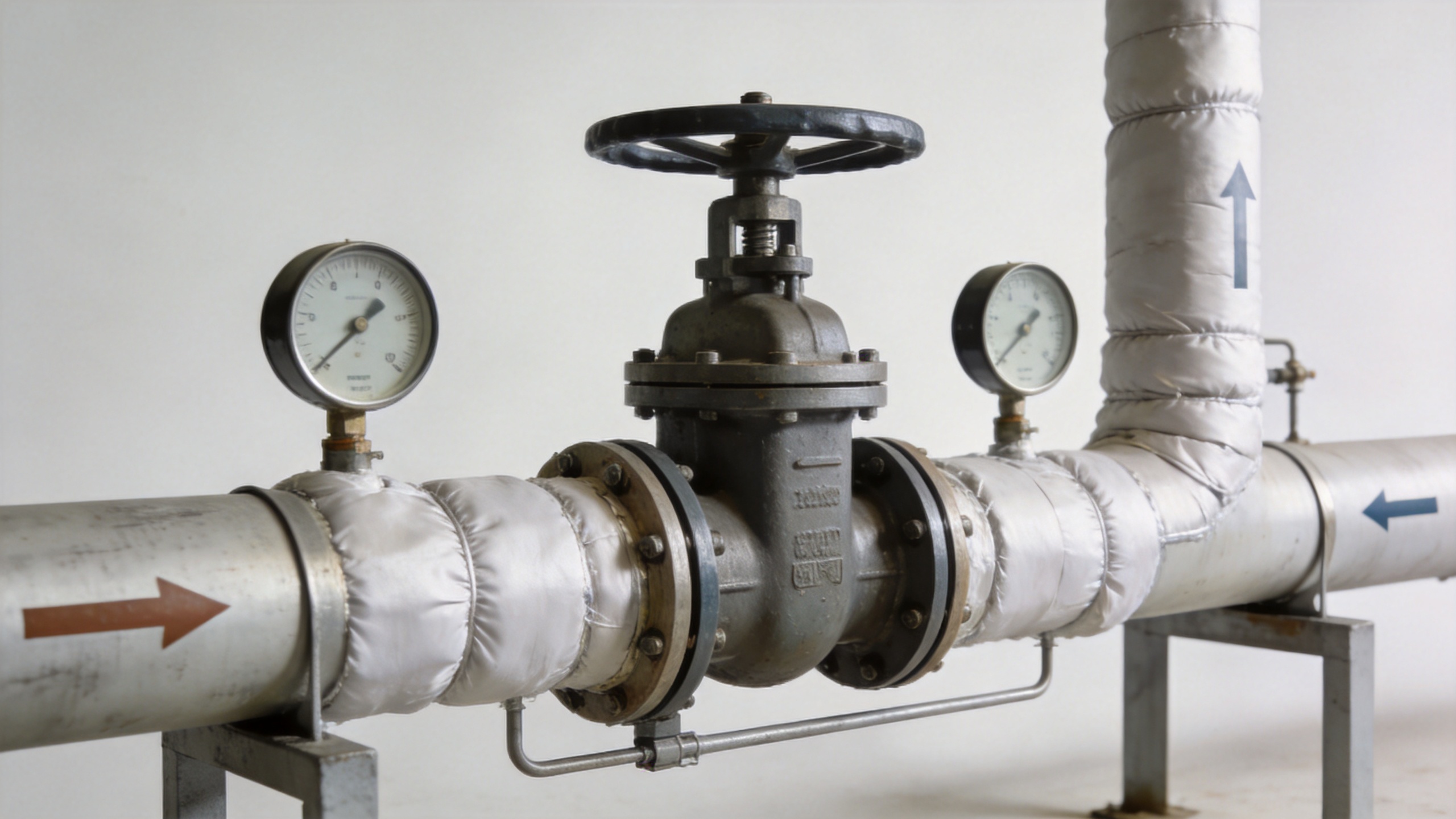
Common Globe Valve Use Cases in a Steam Distribution Network
1. Modulating steam to a process heat user
A frequent Globe Valve use case is a branch that feeds a heat exchanger, coil, jacket, or other process heat user with variable demand. When the load rises or falls, the valve must move predictably enough for the control arrangement to respond. For this duty, confirm upstream and downstream pressures, required turndown, expected flow range, temperature, condensate-management arrangement, and the consequences of a failed-open or failed-closed position. A correctly specified Globe Valve is part of the loop; it does not replace sizing or control-loop design.
2. Controlled warm-up of a steam branch
Long or intermittently used lines can benefit from a gradual warm-up procedure. Opening a Globe Valve progressively can help an operating team introduce steam in a controlled way while verifying that condensate removal and drainage are functioning. This is not a promise that a valve alone prevents water hammer. Drainage design, trap performance, pipe slope, start-up procedure, and site conditions determine the result. Still, the throttling capability of a Globe Valve can make the start-up step more manageable than an abrupt full-open action.
3. Local isolation where adjustment may be needed
Some steam branches need isolation today but may also need limited adjustment during commissioning or troubleshooting. A Globe Valve can be considered for these locations when the added pressure loss is acceptable and the operating procedure supports it. The distinction matters: if the branch needs dependable low-loss isolation for normal service, another valve type may be the better primary choice. If the branch needs both shutoff and occasional controlled restriction, a Globe Valve deserves evaluation.
4. Reducing flow to a noncritical auxiliary load
Auxiliary users such as tracing sections or secondary heating loads may need flow limited to a practical operating range. Here, a Globe Valve can provide a visible, incremental adjustment point, particularly in manual systems. Before adopting that approach, determine whether the duty calls for a fixed restriction, a regulating device, automated control, or an operational setpoint that staff can safely repeat. A handwheel setting without a documented basis is not a stable control strategy.
Where a Globe Valve Is Usually Not the First Choice
A Globe Valve may be the wrong choice where the line must pass steam with minimal pressure loss, where rapid on/off action is essential, or where the selected valve cannot safely handle the differential pressure and cycling required by the duty. It is also worth separating unrelated valve searches from the steam specification. For example, a 2 inch foot valve for water pump addresses suction-line retention in a liquid-pumping arrangement; it does not define the requirements for a steam branch. Mixing those duties into one purchase specification invites a configuration error.
Among common steam valve types, each design solves a different problem. A globe pattern emphasizes controllability; an isolation design may prioritize lower resistance; a specialized pressure-control device may be needed when regulated downstream pressure is the real requirement. The appropriate selection follows the system function rather than a broad statement that one valve type is universally superior.
Selection Checks Before Specifying a Globe Valve
- Steam condition: Confirm whether the service is saturated or superheated, plus normal and upset pressure and temperature.
- Flow objective: Define whether the Globe Valve will isolate, throttle manually, modulate automatically, or support warm-up.
- Pressure-drop allowance: Calculate the available differential pressure across the selected Globe Valve at relevant flow conditions.
- Materials and sealing: Match body, trim, packing, bonnet, and end connection to the actual operating envelope and project requirements.
- Flow direction and installation: Follow the manufacturer’s instructions for the chosen body and trim; orientation is configuration-specific.
- Actuation and failure position: If automated, specify the actuator, signal, position feedback, and safe response to loss of power or air.
- Access: Leave sufficient room for handwheel operation, actuator service, packing inspection, and safe maintenance isolation.
Turn the Use Case into a Clear Enquiry
A useful Globe Valve enquiry describes the system rather than supplying only nominal size. Include medium, pressure and temperature range, normal and maximum flow, line size, required end connection, control method, available differential pressure, installation location, and any project standard or documentation requirement. If the valve will regulate flow, add the desired control behavior and failure position. This checklist helps technical teams distinguish a manual throttling valve from a modulating assembly before a quotation is compared.
The practical conclusion is simple: use a Globe Valve in steam distribution when controllable flow or progressive adjustment is valuable enough to justify the associated pressure loss and specification effort. Confirm the duty, make unknowns visible, and compare options under the same operating assumptions. That approach produces a more useful selection than choosing a Globe Valve solely because it is familiar in steam service.

 Hot News