
 EN
EN
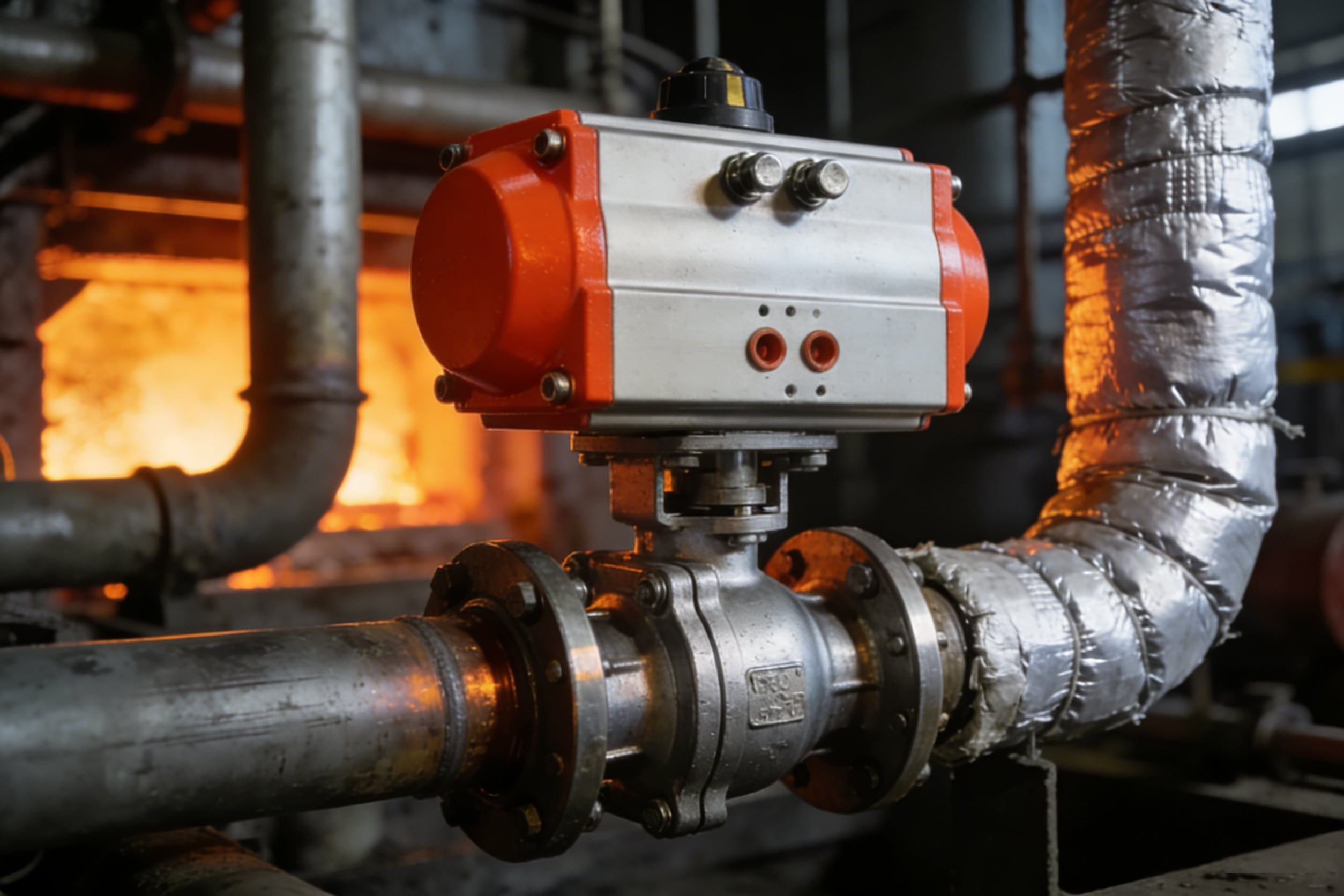
Material Limitations and High-Temperature Structural Integrity of Pneumatic Ball Valves
Thermal Expansion, Creep, and Fatigue in Valve Bodies and Balls
When temps go beyond 260 degrees Celsius, regular carbon steel pneumatic ball valves start having problems because the ball expands differently from the body. This mismatch leads to binding issues and torque spikes that can be over three times what they normally are at room temperature according to ASME standards from 2021. Running these valves continuously past 427 degrees really speeds up something called creep deformation, which basically means the material gets stretched out permanently when it's under pressure. Tests following ASTM guidelines from 2023 found that seals can lose about 40% of their effectiveness after just 1,000 hours of operation. And then there's thermal cycling too, which causes fatigue cracks especially around the weld areas. The chance of failure goes up about 15% for every additional 50 degrees Celsius above what the valve was designed to handle.
High-Performance Alloys: Inconel, Hastelloy, and Ceramic Solutions for >427°C Service
Specialized materials enable reliable operation beyond 427°C:
- Nickel-based superalloys (Inconel 718, Hastelloy C-276) retain ~90% of room-temperature tensile strength at 650°C
- Ceramic-matrix composites (silicon carbide/silicon nitride) resist oxidation up to 1,400°C
- Duplex stainless steels with nitrogen hardening reduce thermal expansion by 35% versus 316SS
These alloys mitigate galling and seizure through matched thermal expansion coefficients. While cost premiums range from 3–8 times standard valves, ceramic-coated balls in steam service sustain over 10,000 cycles without measurable degradation in flow control precision.
Sealing Solutions for Extreme Temperatures: From Soft Seats to Metal-to-Metal Hard Seals
Why PTFE/EPDM Fail Above 260°C — and When Metal Hard Seals Become Essential
PTFE and EPDM soft seats deliver ANSI Class VI leakage performance at lower temperatures but undergo irreversible thermal degradation above 260°C: PTFE suffers molecular breakdown and cold flow; EPDM oxidizes, hardens, and cracks. This leads to compression set, chemical bond dissociation, and permanent leakage paths.
Metal-to-metal hard seals—using precision-machined stainless steel or Stellite seats—are essential above 260°C or in abrasive service. Though rated to ANSI Class IV/V, they maintain structural integrity up to 600°C due to creep resistance, surface hardness, and compatibility with thermal expansion differentials.
| Seal Type | Max Temp | Leakage Class | Failure Mechanism |
|---|---|---|---|
| PTFE/EPDM | 200–260°C | ANSI VI | Thermal decomposition, extrusion |
| Metal | 600°C | ANSI IV/V | Surface galling, erosion |
Transitioning to metal seats is non-negotiable in steam distribution, combustion systems, or thermal oil services—where soft-seat decomposition poses catastrophic risk.
Stem Sealing Innovations: Bellows, Heat Shields, and Thermal Cycling Resilience
Stem sealing is the most vulnerable point in high-temperature pneumatic ball valves due to dynamic motion and localized thermal stress. Conventional elastomeric gland packing fails rapidly above 200°C from degradation, compression set, and fugitive emissions during pressure fluctuations.
Modern solutions deploy layered protection:
- Bellows seals: Hermetic metallic convolutions eliminate dynamic leakage paths while accommodating axial stem movement
- Thermal barriers: Ceramic-coated heat shields deflect radiant energy away from actuator interfaces
- Graphite-reinforced packing: Self-lubricating laminates retain resilience across 300+ thermal cycles
These features support dependable operation in extreme environments—including refinery coker units and calciner exhaust systems—where resistance to thermal shock is as critical as peak temperature tolerance.
Pneumatic Actuation Reliability at Elevated Temperatures
Torque Derating, Diaphragm Material Limits, and Integrated Thermal Protection
Getting reliable actuation working properly above 260 degrees Celsius depends on solving three main problems that are all connected somehow. When temperature goes past 150 degrees, torque output drops about half a percent for each additional degree. That means actuators need to be sized larger than normal, typically between 20 to 40 percent bigger. Most standard diaphragm materials like PTFE and EPDM start breaking down after around 100 operating cycles once temps hit 200 degrees. Fluorocarbon based compounds can push the usable lifespan out to about 230 degrees, whereas metal bellows seals actually allow for completely leak free operation even at extreme temperatures up to 450 degrees. Putting in integrated thermal protection systems makes a big difference too. These include things like ceramic heat shields and air cooling jackets which cut down component temperatures anywhere from 70 to 120 degrees Celsius. This helps prevent components from seizing up during those thermal cycles and keeps response times under a second despite the harsh conditions.
Real-World Application Guidelines for High-Temperature Pneumatic Ball Valves
Putting pneumatic ball valves into high temperature service requires serious attention to detail from engineers. First things first, check those polymer seals made of PTFE or EPDM materials. They need to be rated for continuous operation under 260 degrees Celsius. If the application goes beyond this temperature limit, switch to metal-to-metal seating arrangements to prevent seal extrusion issues down the line. When it comes to valve body construction, materials like Inconel 625 or Hastelloy C-276 offer better protection against oxidation and embrittlement when temps climb past 427 degrees. Ceramic balls are also worth considering since they maintain their shape even when subjected to intense thermal stress. Installation isn't just about bolting things together either. Make sure there's room for pipe expansion with proper loop designs, and don't forget to apply graphite based lubricant on stem surfaces to stop galling problems. Actuator systems should have built in thermal safeguards through heat shielding or simply reducing torque settings conservatively because regular diaphragms tend to break down quickly once temperatures hit around 150 degrees. For ongoing maintenance, schedule quarterly tests at actual operating temperatures to spot early signs of seat wear. Thermal imaging scans can help find problem areas before they become major headaches. And remember to double check certification documents against standards like API 607 for fire safety in hydrocarbon environments or ISO 17292 regarding metallic valve integrity. Keeping detailed records of pressure temperature ratings for every specific service condition helps plug potential safety holes in the system.
FAQs
What are the main materials used to enhance high-temperature pneumatic ball valve performance?
Materials such as Nickel-based superalloys like Inconel 718 and Hastelloy C-276, ceramic matrix composites, and duplex stainless steels are commonly used to enhance performance at high temperatures, reducing thermal expansion and resisting oxidation.
Why do PTFE/EPDM soft seats fail at high temperatures?
PTFE/EPDM soft seats fail at high temperatures due to thermal degradation, leading to molecular breakdown for PTFE and oxidation and cracking for EPDM. They experience compression set and create permanent leakage paths.
How can thermal protection be integrated into pneumatic actuation systems?
Thermal protection can be integrated by using ceramic heat shields, air cooling jackets, and metal bellows seals, which help in maintaining component temperatures and ensure reliability in extreme conditions.
Table of Contents
- Material Limitations and High-Temperature Structural Integrity of Pneumatic Ball Valves
- Sealing Solutions for Extreme Temperatures: From Soft Seats to Metal-to-Metal Hard Seals
- Pneumatic Actuation Reliability at Elevated Temperatures
- Real-World Application Guidelines for High-Temperature Pneumatic Ball Valves
- FAQs

