
 EN
Where Is Manual Valve Required In Industrial Piping?
A Manual Valve is not simply the low-cost alternative to an actuator. In an industrial piping system, it gives people a direct, local way to isolate a line, make equipment safe for maintenance, drain a section, or take controlled action when automatic equipment is unavailable. From an industrial valve application engineer’s perspective, the question is not whether every line needs one. It is whether the operating scenario calls for a clearly accessible, manually operated isolation point.
That distinction matters in water treatment, chemical service, oil and gas support systems, process skids, and utility piping. The applicable piping code, hazard review, site operating procedure, and lockout/tagout program determine the final arrangement. Still, several locations repeatedly deserve a design review.
Start with the job the manual valve must perform
Before choosing a valve type, define the duty. A Manual Valve may be intended for positive isolation, routine adjustment, emergency shutdown, venting, draining, or bypassing. One location can require more than one function, but one valve should not be assumed to do all of them. For example, a drain valve provides a controlled low-point release; it does not automatically make upstream equipment safe to open.
Do not begin by asking whether a ball valve or butterfly valve is better. First write down the fluid, pressure, temperature, line size, normal flow direction, and the consequence of leakage. Then identify who must operate the valve and under what conditions. That sequence makes it easier to see where manual access is genuinely needed.
Common industrial piping locations that need manual isolation
At equipment inlets and outlets
Pumps, filters, strainers, heat exchangers, tanks, analyzers, and control-valve stations commonly need a Manual Valve on the connecting piping so a defined item can be removed or inspected without stopping an entire system. Inlet and outlet isolation may both be needed, depending on the equipment and process arrangement. A downstream check valve, for instance, is not a substitute for a deliberate isolation point.
Access matters as much as placement. A valve installed above a pipe rack, behind guarding, or where an operator cannot safely reach the handle may not support the maintenance role intended by the drawing. Allow operating clearance, label the service, and consider whether the valve needs a lockable position.
Upstream and downstream of control equipment
Automated valves and instruments can need manual block valves around them. This can support calibration, replacement, troubleshooting, or planned shutdown. A bypass may also be considered where process continuity is necessary, but it needs its own operating logic so it is not opened casually. Put differently, automation can control normal flow, while a Manual Valve gives maintenance personnel a local boundary when the automation is being worked on.
At branches, dead legs, drains, and vents
Branch lines often benefit from a manual isolation valve near the takeoff, particularly where a downstream user, instrument, or package unit might be serviced independently. Low points may require manual drain valves to remove trapped liquid; high points may require vents to release air or safely depressurize a segment when the procedure calls for it. Their need and exact configuration depend on the process fluid and the project’s safety review, not on a generic line-size rule.
Where maintenance requires energy isolation
For service tasks, a Manual Valve can be part of the energy-isolation boundary when it is suitable for the fluid and the site’s lockout/tagout procedure. OSHA guidance discusses local valves as possible equipment-isolation devices when the required energy-control conditions are met. The practical takeaway is cautious: verify the valve can be locked or otherwise controlled as required, address stored pressure, and do not treat a single closed valve as proof that a line is depressurized.
Where hazardous fluid could remain trapped, the isolation plan may need a bleed, vent, drain, blank, or another verified barrier. The exact method should follow the applicable process-safety practice and site procedure.
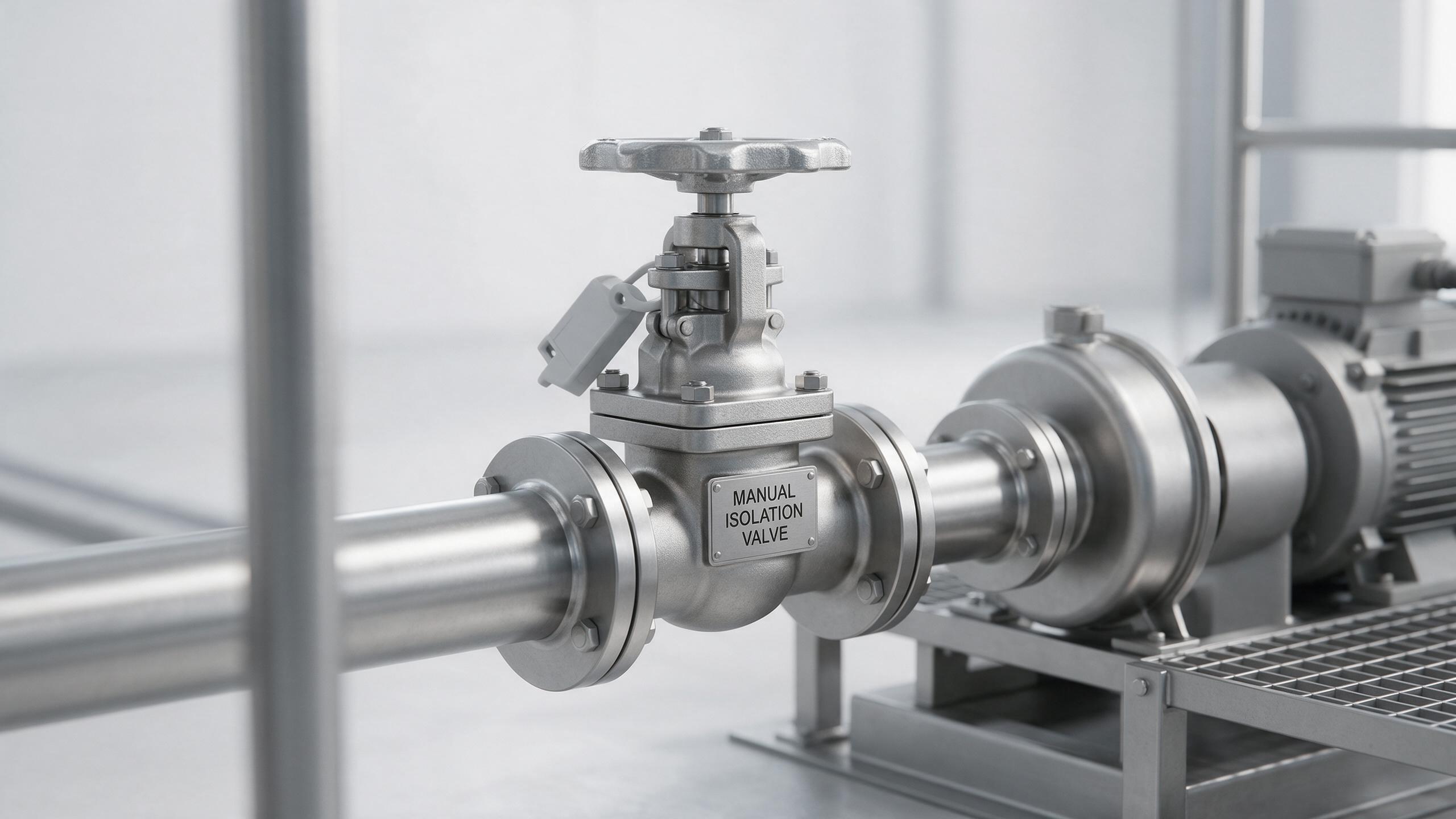
Manual operation versus automatic actuation
A Manual Valve is often appropriate when operation is occasional, local, and deliberate. It can be a practical choice for maintenance isolation, commissioning points, utility branches, and manual emergency actions that trained personnel can perform safely. Automatic actuation becomes more relevant when the valve must respond remotely, repeatedly, quickly, or as part of an interlock.
These are not competing categories in every case. An actuated process valve can sit between manual block valves. The manual devices establish service and maintenance boundaries; the actuated valve handles normal control or remote shutdown. Consider the failure state, access during a power or air loss, and whether an operator can identify the correct valve under abnormal conditions.
How valve type and size affect the decision
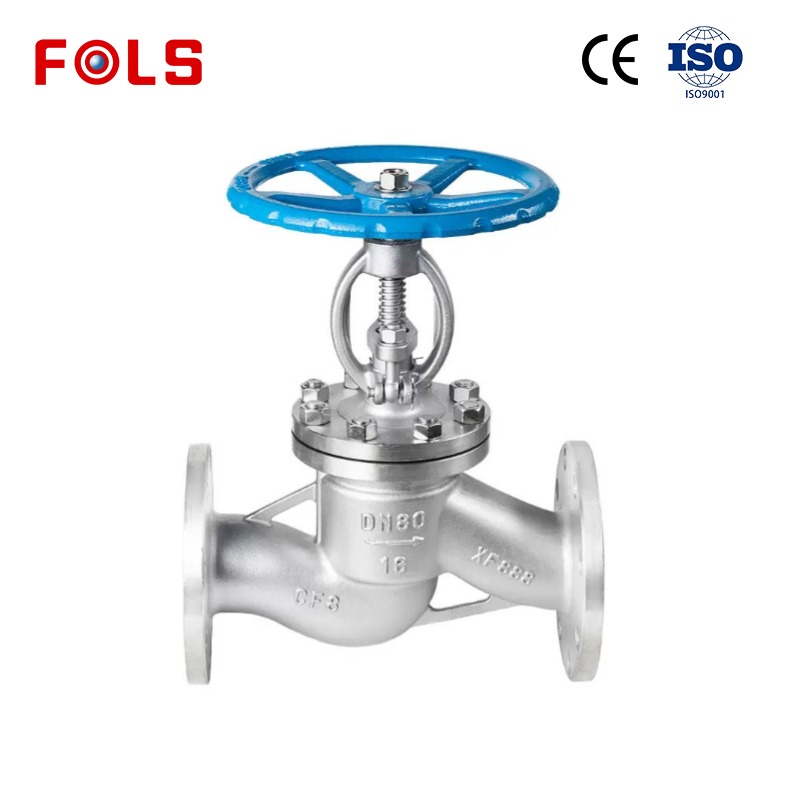
Once the location and duty are clear, match the valve design to the process. Quarter-turn ball valves are often considered where quick on/off action is useful and the selected seat, body material, and pressure rating fit the service. Gate valves can suit full-bore isolation duties in appropriate services, while globe valves may be considered where controlled throttling is part of the duty. Butterfly valves can be useful in larger lines when their shutoff, torque, lining, and pressure limitations are compatible with the system.
Small PVC utility lines need the same disciplined review. A 1 inch pvc ball valve or a 3 inch pvc ball valve may be suitable for compatible low-pressure water or chemical-transfer duties, but size alone says nothing about temperature, solvent compatibility, UV exposure, end connection, or the required isolation integrity. Confirm the valve manufacturer’s ratings and the piping specification before selecting either size.
A placement checklist for the piping review
- Identify every equipment item that must be isolated for inspection, replacement, or cleaning.
- Mark sources of pressure, flow, gravity drain, and stored process fluid on the P&ID.
- Decide whether each Manual Valve is for isolation, draining, venting, bypassing, or controlled operation.
- Check operator access, handle travel, identification, and the need for locking or tagging.
- Verify valve material, pressure-temperature rating, end connection, seat compatibility, and shutoff expectation.
- Review whether a closed valve can trap hazardous pressure and whether a safe bleed or drain point is required.
- Confirm final locations against the governing code, project specification, and site energy-control procedure.
The practical answer
Manual valves are required wherever the design needs people to establish a dependable local operating or isolation boundary and that task cannot be safely left to an automatic device alone. The strongest candidates are equipment connections, maintenance boundaries, branch lines, vents and drains, and points defined by the shutdown or lockout procedure. The correct arrangement depends on the fluid, hazards, access, and governing requirements. By documenting those conditions first, a piping team can decide where a Manual Valve adds useful control rather than adding an unexamined component.
 Hot News





