
 EN
How Does Electric Ball Valve Improve Automation Accuracy?
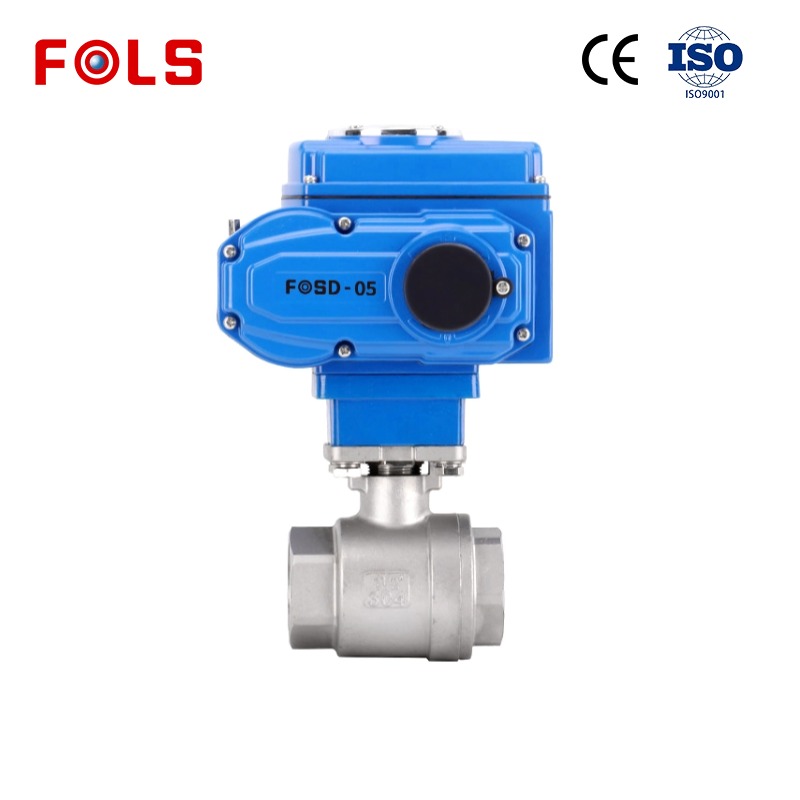
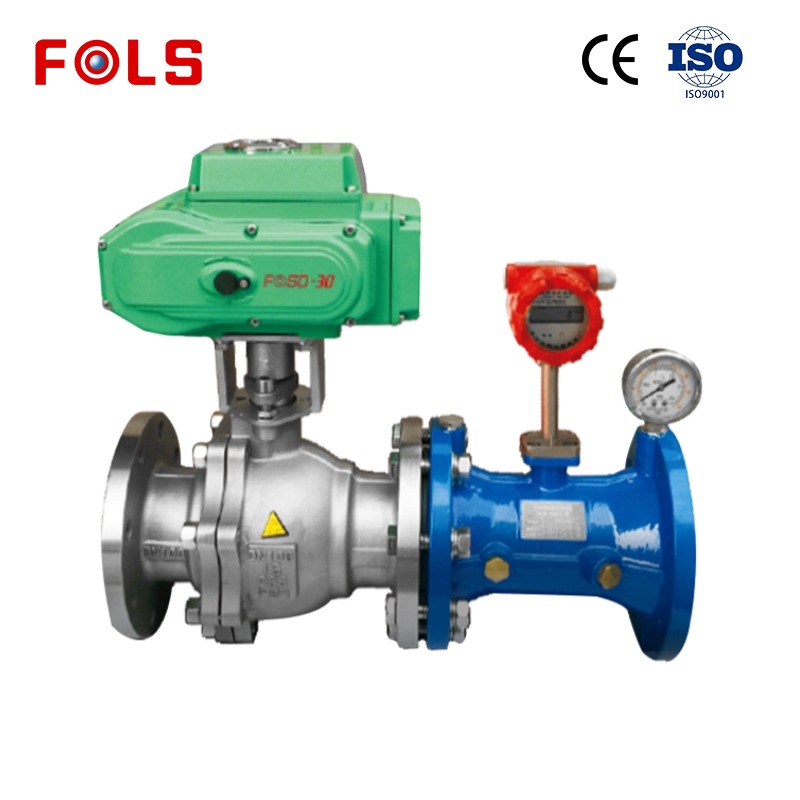
Automation accuracy is often described as a controls problem, yet the final mechanical movement still matters. An Electric Ball Valve turns a digital or analog command into a quarter-turn movement at the pipe. When its valve body, actuator, signal type, and commissioning settings suit the duty, the assembly can repeat the intended open, closed, or intermediate state with less manual intervention. For engineers specifying industrial water, wastewater, chemical-transfer, or utility lines, that repeatability is the practical value of an Electric Ball Valve.
From a valve-application perspective, the useful question is not whether an Electric Ball Valve is inherently accurate. It is whether the complete loop can deliver the required state under the actual pressure, temperature, cycle rate, media, and control logic. That distinction keeps a specification focused on measurable operating conditions rather than broad claims.
Accuracy starts with a defined control task
In a simple on/off duty, an Electric Ball Valve receives an open or close command and rotates the ball until it reaches a travel limit. Accuracy means the assembly reaches the commanded end position consistently, reports status when required, and does so within the time window expected by the process. Examples include tank isolation, batch transfer, and remotely controlled utility branches.
For modulating duty, the meaning changes. The controller may send a 4–20 mA, voltage, or fieldbus command; a positioning actuator interprets that demand and drives the ball toward a requested angle. Some electronic actuators use position feedback to compare actual travel with the requested position. In this case, Electric Ball Valve accuracy depends on resolution, dead band, response to changing load, and calibration at the usable ends of travel. A quarter-turn ball valve can be appropriate where the process tolerates its inherent flow characteristic, but it is not automatically the right final-control element for every throttling loop.
How an Electric Ball Valve improves repeatability
1. It replaces manual judgement with a controlled travel sequence
Hand-operated valves rely on an operator to stop at the desired handle position. An Electric Ball Valve uses a motor and gear train to apply repeatable rotary motion. End switches or an internal position system establish where travel ends. That is particularly useful where the same action occurs many times, where the valve is difficult to access, or where a control room needs a reliable status signal.
2. Feedback closes the gap between command and motion
A command alone shows what the system requested; it does not prove where the ball stopped. Feedback options can return open/closed indication, a continuous position signal, or a fault condition to the PLC or other controller. When specified with compatible control hardware, an Electric Ball Valve can therefore support alarm logic for a travel timeout, an unexpected position, or a command-position mismatch. The improvement is not merely more wiring: it is the ability to verify a physical action instead of assuming it happened.
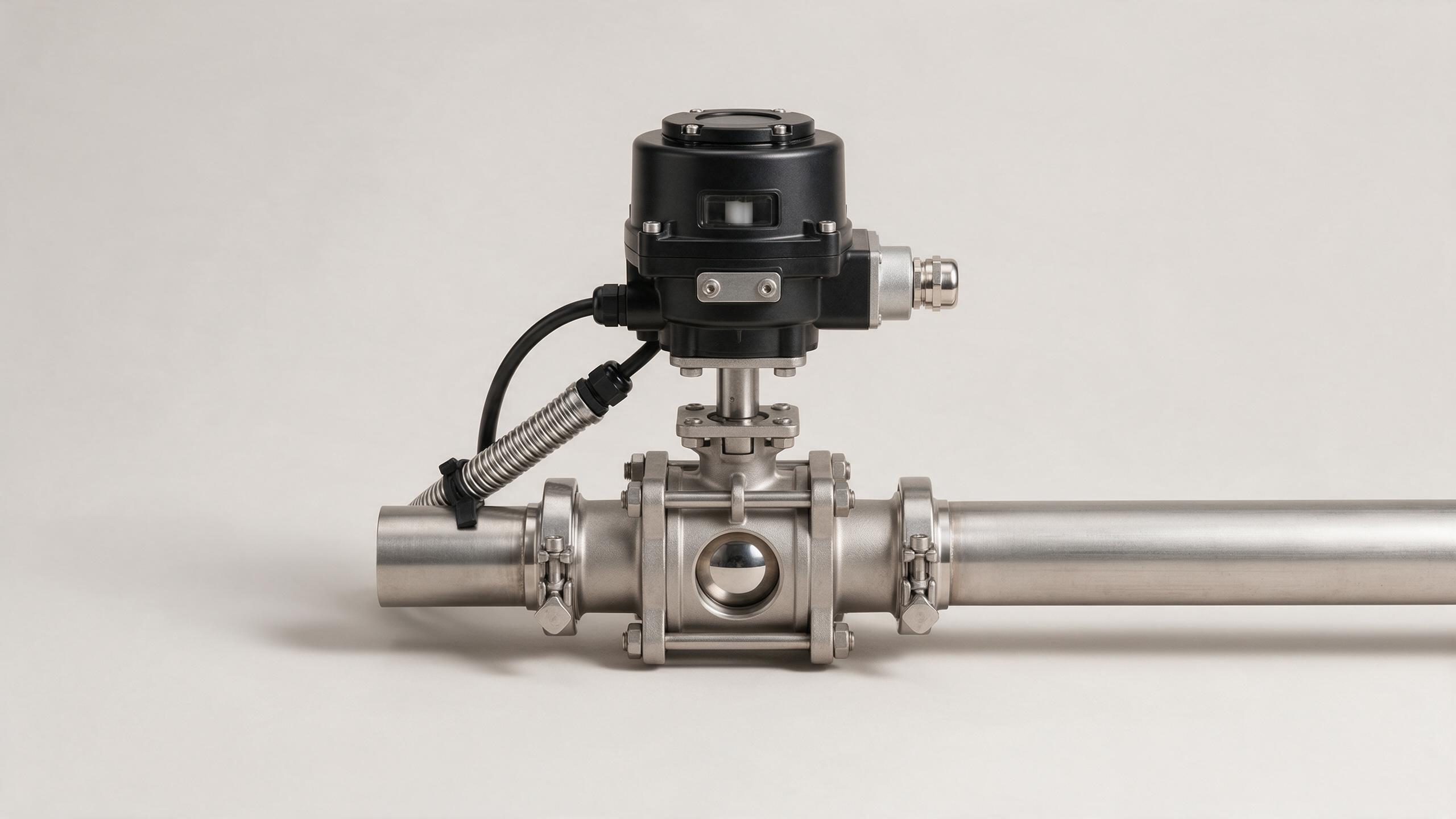
3. Torque margin protects the intended movement
Valve breakaway torque may rise because of differential pressure, media deposits, seal friction, temperature, or long idle periods. If an actuator is sized too close to nominal torque, the Electric Ball Valve may stall, arrive late, or fail to reach its configured endpoint. A sensible selection process compares actuator output across its travel with the valve torque expected at the real operating conditions, then leaves an engineering margin appropriate to the service. This is why actuator sizing should be reviewed together with the valve, not as an afterthought.
4. A compatible mounting pattern reduces assembly uncertainty
Many industrial quarter-turn valves and actuators use ISO 5211 mounting dimensions. The standard provides a common mounting-pattern framework for part-turn assemblies, but the purchaser should still verify flange pattern, stem connection, torque, height, and access to manual override. A properly matched Electric Ball Valve assembly has fewer alignment variables during installation, which supports repeatable travel and easier maintenance.
Where the control loop can still lose accuracy
An Electric Ball Valve cannot correct a poorly designed process loop by itself. A valve that is oversized may make useful control occur in a small part of its travel. A poorly selected ball port, seat material, or actuator speed can make the response unsuitable for the media and piping arrangement. Electrical noise, an incorrect scaling range, a weak power supply, or a control dead band can also show up as apparent valve error.
Start by defining the controlled variable: is the goal to isolate, divert, meter, hold a level, or establish a safe state? Then document pressure differential, media compatibility, temperature, line size, expected cycles, required fail position, available power, command signal, and feedback requirement. This list lets the design team determine whether an Electric Ball Valve needs straightforward on/off control, a modulating actuator, a spring-return configuration, or another valve style.
Electric ball valves in irrigation and emergency duties
An irrigation solenoid valve and an Electric Ball Valve both automate water service, but their selection logic is different. A solenoid valve is commonly used for pilot-operated zone control and rapid cycling in irrigation networks. A motorized ball valve may be considered when a full-bore quarter-turn path, a particular material choice, slower controlled operation, or remote status feedback is important. Pressure, debris tolerance, power availability, and cycle profile should guide the choice rather than the name of the device.
Likewise, a sprinkler emergency shut off valve should be selected according to the approved fire-protection design, local code, and the required supervisory or emergency function. It should not be substituted casually with a general-purpose Electric Ball Valve. In any safety-related installation, the responsible designer should confirm valve listing requirements, fail-state logic, actuation source, supervision, and testing procedure before equipment is chosen.
Commissioning checklist for better automation accuracy
- Confirm travel: Verify that full-open and full-close positions correspond to the actual valve orientation, not only to an indicator on the actuator.
- Calibrate the signal: For modulating service, map the controller output to the intended valve positions and check the returned feedback against the command.
- Test under operating differential pressure: A bench test may not represent breakaway torque or timing in the line.
- Check response and alarms: Record typical travel time and confirm that timeout, fault, and position signals are interpreted correctly by the control system.
- Plan periodic inspection: Review seals, mounting hardware, cable entries, manual override condition, and repeatability at intervals suited to the service.
A practical specification approach
For a reliable automated assembly, specify the Electric Ball Valve as a system: valve construction and port type; media and temperature limits; maximum differential pressure; actuator torque and speed; power supply; command input; feedback; enclosure needs; manual override; mounting pattern; and required fail position. During technical discussions, separating confirmed data from items that still need verification makes the result easier to commission and maintain.
Guangzhou Fols Valve Technology focuses on industrial valves, electric actuators, and automatic-control applications. For an automation project, provide the operating conditions and control requirement so the valve body and actuator configuration can be evaluated together. That approach gives an Electric Ball Valve the conditions it needs to deliver repeatable motion, observable status, and a control response aligned with the process.
 Hot News





