
 EN
What Makes Electric Butterfly Valve Great For Plants?
A plant operator may need to isolate a water line from a control room, repeat a process sequence, or check whether a valve actually reached its commanded position. An Electric Butterfly Valve can bring those actions into one control chain. Its usefulness, however, depends on the fluid, the required shutoff and the actuator configuration, not simply on adding a motor to a valve.
For an automation team, the practical question is not whether this design suits every line. It is whether the valve, actuator, wiring and control logic fit a particular duty. Here is how to assess that fit before requesting a quotation.
What an electric butterfly assembly does
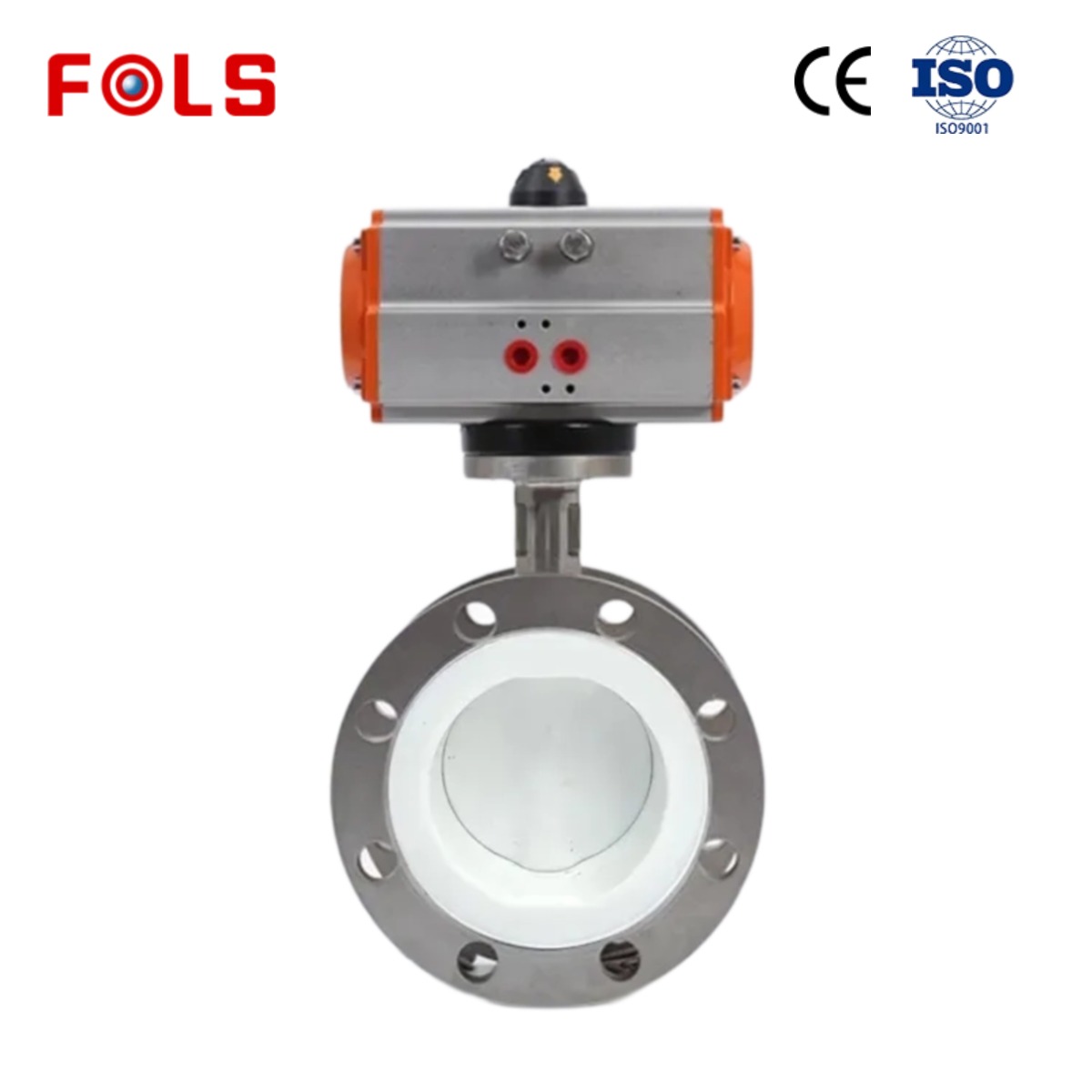
A butterfly valve uses a disc on a shaft to obstruct or permit flow. It is a quarter-turn device: the disc normally moves through about 90 degrees between its open and closed positions. An electric actuator supplies the turning motion in response to a local or remote command. Depending on the selected equipment, position feedback can tell the control system where the valve is.
The Electric Butterfly Valve combines these components in a relatively short assembly, which can be helpful when a layout has restricted space. Disc position, seat design and the adjacent pipework still matter. Even when open, the disc remains in the flow path; its effect on pressure loss needs to be checked against the actual system.
Why plant teams consider electric actuation
Remote operation and repeatable sequences
A control room can issue an open or close command to a properly integrated Electric Butterfly Valve without sending an operator to the pipe each time. For a remote utility line, that may make routine sequencing easier. The control system should also receive the appropriate end-position or fault signals; a command alone does not prove that the disc has moved.
Consider a hypothetical water-transfer line that fills a tank in stages. The operator wants the upstream valve to open only when the receiving path is ready. The selection conversation must cover the required control signal, limit switches, interlocks and any local override. This example describes a possible arrangement, not a documented installation.
Room for different control goals
Some installations need simple on/off isolation. Others need intermediate positions to adjust flow. An Electric Butterfly Valve intended for modulation needs an actuator and control package rated for the expected starts and movement pattern. A basic on/off actuator should not be assumed suitable for frequent positioning.
Disc angle and flow are not necessarily proportional. If precise regulation is needed, check the valve's installed flow characteristics, expected pressure differential and minimum controllable flow with the supplier and control engineer. A different valve type may be more appropriate for a demanding control loop.
Integration without a compressed-air supply
Electric actuation can be useful where suitable electrical power and control wiring are available but instrument air is inconvenient. It also introduces its own requirements: power supply, cable routing, enclosure protection and access to the actuator. Compare the full installation rather than treating the absence of air piping as an automatic cost advantage.
Where an Electric Butterfly Valve may fit
In water distribution and wastewater facilities, a correctly specified assembly may serve isolation or process-routing duties. Cooling-water and general utility lines can also benefit from remote operation when the service conditions match the valve materials and ratings. Chemical process lines require additional attention to fluid compatibility, temperature and the specified leakage requirements.
Wastewater is not a single fluid. Solids, fibrous material and abrasive particles can affect disc movement, seating and wear. For each Electric Butterfly Valve, provide the supplier with the expected solids content, particle characteristics and operating conditions rather than relying on the application label alone.
When a gate valve is worth comparing
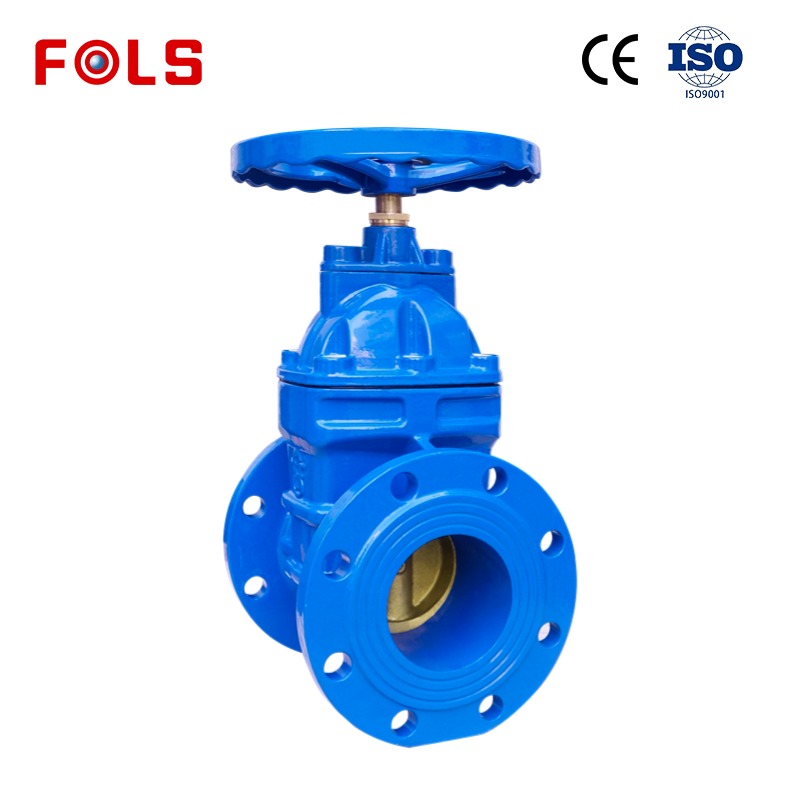
An actuated gate valve may be a candidate for isolation where the project calls for a gate-style closure and the valve is suitable for the fluid and pressure conditions. Compare actuation time, required installation height, torque or thrust, and the manufacturer's guidance on leakage. Gate valves are generally evaluated for open-or-closed duties rather than assumed to be precision throttling devices.
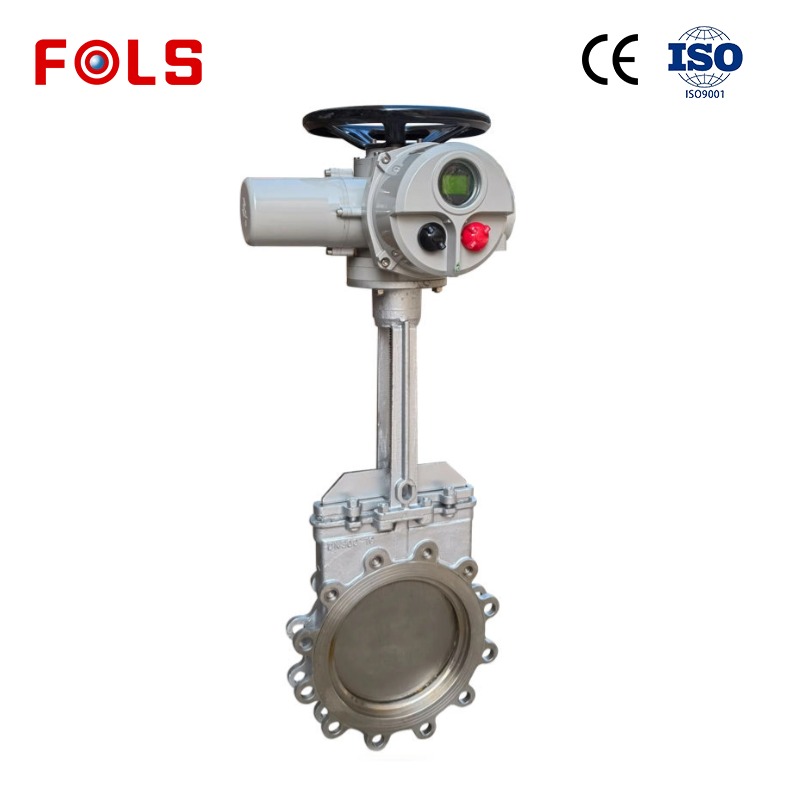
A knife gate valve may be considered for certain slurry or solids-bearing services. Its suitability depends on the actual design, differential pressure, flow direction, sealing arrangement and maintenance needs. Neither alternative is interchangeable with an Electric Butterfly Valve merely because it can be automated. Ask for service-specific documentation and compare complete assemblies under the same conditions.
Specify the valve and actuator as one system
Start with the line conditions: fluid composition, concentration, operating and maximum temperatures, normal and maximum pressure, pressure differential across the valve, flow range and pipe size. Also identify the connection pattern, flow direction where relevant, available face-to-face space and required shutoff class or leakage acceptance criteria.
Next, ask how the Electric Butterfly Valve must behave. Is it normally open or normally closed? How often does it cycle? Is the command on/off or modulating? What supply voltage, signal and feedback are available? Required opening and closing times must be checked against both actuator capability and system transients; a faster movement is not automatically preferable.
Actuator sizing needs the valve manufacturer's torque data at the relevant pressure and service conditions, including any appropriate design margin. An undersized actuator may not move the disc when required; excessive sizing can also create problems if the assembly limits are ignored. Confirm mounting compatibility and the allowable shaft and valve torque with the suppliers.
Plan for power loss and maintenance
Do not assume that every Electric Butterfly Valve closes when power fails. Depending on the actuator and configuration, it may remain at its last position. A specified fail-open or fail-close function can require a dedicated spring or backup power arrangement. Define the required safe state in the plant's risk review, then verify the chosen equipment and its behavior on loss of power and control signal.
Check whether staff can reach the unit for inspection, wiring and manual operation. Clarify the manual override procedure, position indication, environmental protection, spare parts and service access before installation. Any maintenance must follow the site's isolation and electrical safety procedures; a valve position indicator alone is not proof that a line is safe to open.
A practical request-for-quotation checklist
- Identify the fluid, solids, temperature, pressure and expected differential pressure.
- Provide line size, connection details, available space and leakage criteria.
- State on/off or modulating service, cycle frequency and required travel time.
- List supply voltage, control signal, feedback, enclosure and cable requirements.
- Describe the required action on loss of power or signal, plus manual override needs.
- Request valve and actuator sizing data, installation guidance and relevant documentation for review.
With those details, a supplier can discuss whether an Electric Butterfly Valve is a reasonable starting point and identify the information still needed. Guangzhou Fols Valve Technology focuses on industrial valves and automation; share the operating conditions and control requirements when requesting a configuration discussion.
 Hot News





