
 EN
A pump can be sized correctly and still face a difficult shutdown if liquid turns around in the line. That is where a Check Valve earns its place. It does not regulate flow, and it does not replace transient design. Its job is simpler: admit intended forward flow and close when differential pressure reverses. In a pumping system, that simple duty can limit reverse rotation, loss of discharge-side isolation, and the unstable flow conditions that follow a pump trip.
From an industrial valve application-engineer perspective, a Check Valve should be considered with the medium, pressure, temperature, line layout, pump behavior, and shutdown sequence in view. The valve body is only one part of the protection chain. Pipe length, elevation, pump inertia, valve closing response, and available maintenance access also affect the result.
Why reverse flow matters after a pump stops
During normal operation, pump discharge pressure keeps a Check Valve open. When the pump slows, stops, or loses driving power, downstream pressure can exceed upstream pressure. Without an automatic non-return function, liquid may travel back through the discharge line toward the pump. The consequences can include reverse pump rotation, a sudden change in pipe velocity, and unwanted movement through a standby branch.
The severity depends on the system. A short, low-head water line does not behave like a long rising main or a process line with changing density and temperature. That is why a Check Valve is a protection component, not a universal answer. It should be matched to the operating duty and reviewed with the pump curve and pipeline conditions.
How a Check Valve supports pump protection
A Check Valve responds to flow direction rather than to an operator command. This automatic action supports several practical objectives:
- Backflow control: it closes when reverse differential pressure develops, helping keep liquid from returning through the pump.
- Equipment isolation during a trip: it separates the stopped pump from downstream pressure until the system reaches a new balance.
- More stable parallel-pump operation: when one pump is offline, a properly selected Check Valve can help stop flow from another operating pump from circulating through it.
- Transient-risk management: closing behavior has a major influence on reverse velocity and pressure events. Some spring-assisted or non-slam designs are intended to begin closing before substantial reverse flow develops.
That last point needs some care. A Check Valve does not automatically make pressure transient disappear. A fast closure may be helpful in one line and create a different concern in another. Transient analysis, pump-stop timing, valve location, line profile, and air-management arrangements may all need engineering review.
Selection is about closing behavior, not only nominal size
Pipe diameter and pressure rating are only part of the selection picture for a Check Valve. Those inputs matter, but they do not describe how the disc, poppet, or dual plates will react as velocity falls. A useful review starts with the normal flow range and the lowest expected flow. If velocity is too low, some designs may not remain stably open; if shutdown is abrupt, the closing response becomes especially important.
Check the medium for solids, viscosity, corrosion potential, and gas content. Check whether the valve can be installed in the required orientation. Check the available space for removal and inspection. In wastewater, chemical, oil, and water-treatment applications, material and sealing choices need the same level of attention as the valve style. Guangzhou Fols Valve Technology Co., Ltd. works in industrial valve and automation communication, so a productive technical discussion should begin with the actual pipeline duty rather than a valve name alone.
A practical pump-protection checklist
- Confirm the pump type, normal and minimum flow, shutoff conditions, and whether pumps operate in parallel.
- Map the discharge line length, static head, high points, branches, and downstream pressure sources.
- Identify the reverse-flow consequence: reverse rotation, drain-back, cross-flow, or a pressure transient.
- Compare Check Valve styles by closing response, pressure loss, orientation, maintenance access, and compatibility with the medium.
- Request the dimensional, material, sealing, and performance information needed for the actual duty before finalizing the selection.
Check Valve versus globe valve throttling
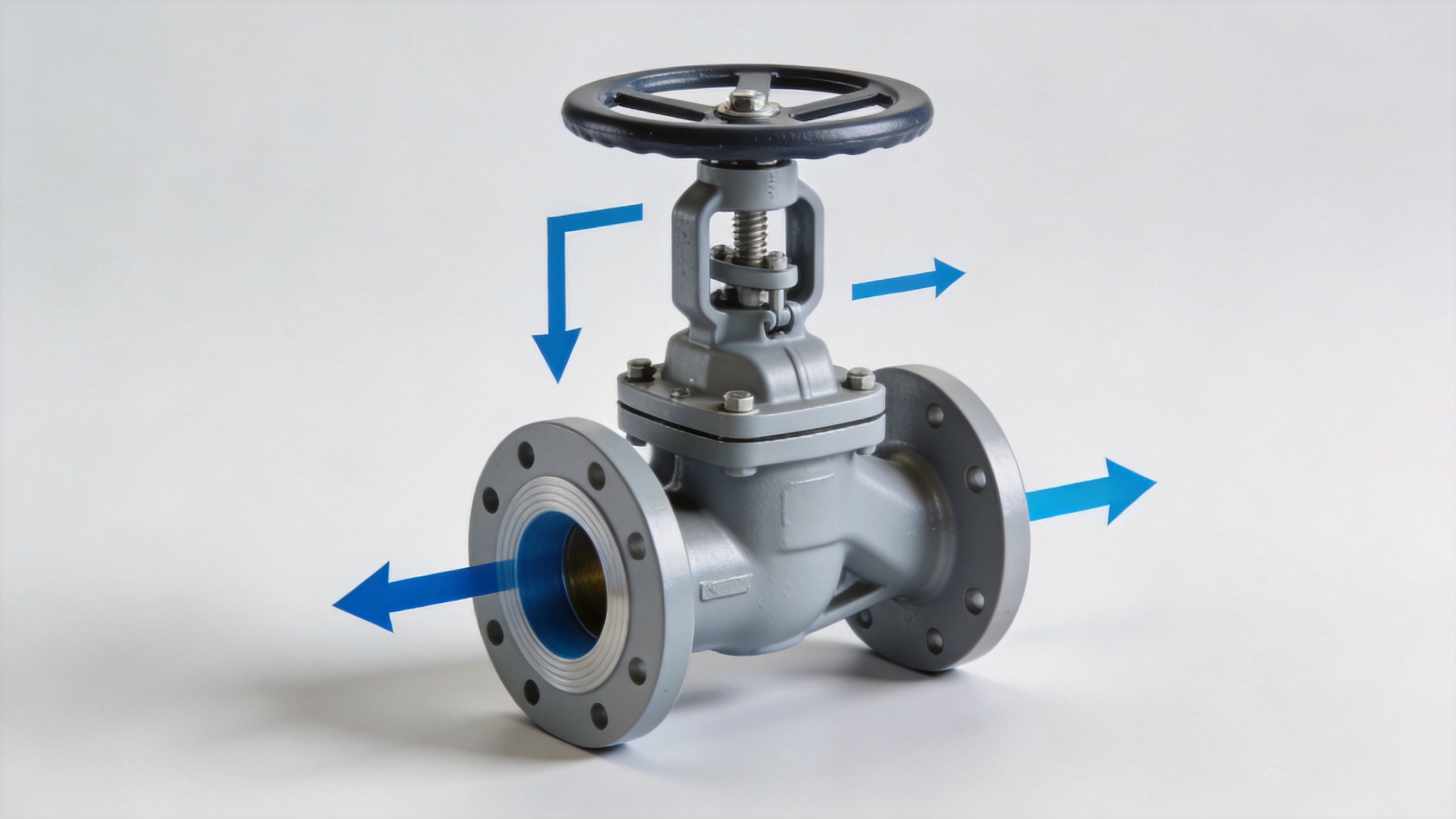
The phrase globe valve throttling describes a different job. A globe valve is commonly used where an operator or control arrangement needs to regulate flow. Its flow path and movable plug support adjustment; it does not provide passive non-return protection by itself. A Check Valve, in contrast, is selected to close when flow attempts to reverse.
In some systems both functions are needed. A globe valve may establish a process flow condition, while a Check Valve on the pump discharge handles reverse-flow duty. Using globe valve throttling in place of non-return duty can leave a stopped pump exposed unless another appropriate automatic isolation method is present. The correct sequence and locations depend on the process design, so this is a point to verify on the piping arrangement rather than settle from a generic diagram.
Where a 2 inch foot valve fits
A 2 inch foot valve is a suction-side use of the non-return principle on the suction side of a pump. Installed at the submerged end of a suction line, it helps hold liquid in that line after the pump stops. Maintaining the liquid column can support pump priming at the next start. It may also include a strainer arrangement suited to the service.
Its role is different from a discharge-side Check Valve. A foot valve addresses suction-line drain-back and loss of prime; a discharge Check Valve addresses reverse flow from the downstream system. Do not assume a 2 inch foot valve is appropriate merely because the pipe is 2 inches. The intake environment, debris level, suction lift, media, connection details, and service access require confirmation.
Installation and maintenance points that influence results
A Check Valve needs a layout that allows it to do its job. Follow the design-specific orientation guidance, leave access for inspection, and avoid using the valve body as a convenient place to compensate for poor pipe support. If vibration, solids, or rapid cycling are part of the duty, plan inspection intervals around those conditions. A noisy valve, repeated chatter, unexpected pressure change, or a pump that loses prime can be a signal to review the entire system rather than replace one part without diagnosis.
Keep the evidence trail clear as well. A product page can describe configuration directions, but final material compatibility, pressure-temperature limits, and transient suitability should come from the applicable datasheet and project information. That approach is especially useful when the system combines manual valves, electric actuators, pneumatic valves, and process controls.
Conclusion: make the Check Valve part of a system decision
A Check Valve is vital for pump protection because it automatically responds when flow wants to reverse. It can help isolate a stopped pump, support parallel-pump stability, and form one part of a thoughtful response to shutdown transients. Its value comes from matching its design and closing behavior to the line—not from choosing it by name alone.
Before specifying a Check Valve, compile the medium, pipe size, pressure and temperature range, pump arrangement, flow range, installation orientation, and the exact reverse-flow risk. With those details defined, the selection discussion becomes more precise, whether the application needs discharge protection, globe valve throttling, or a 2 inch foot valve to maintain suction-side prime.
Frequently asked questions
Can a Check Valve replace a globe valve for throttling?
No. A Check Valve is designed for automatic non-return duty. Globe valve throttling is used when controlled flow adjustment is required.
Does every pump need a Check Valve?
Not every layout has the same reverse-flow risk. The decision should reflect the pump arrangement, downstream pressure, piping profile, shutdown behavior, and process requirements.
Is a 2 inch foot valve the same as a discharge Check Valve?
No. A 2 inch foot valve is normally used at the submerged end of a suction line to help maintain prime, while a discharge Check Valve manages reverse flow from the downstream line.
 Hot News





