
 EN
What Defines Electric Ball Valve In Process Control?
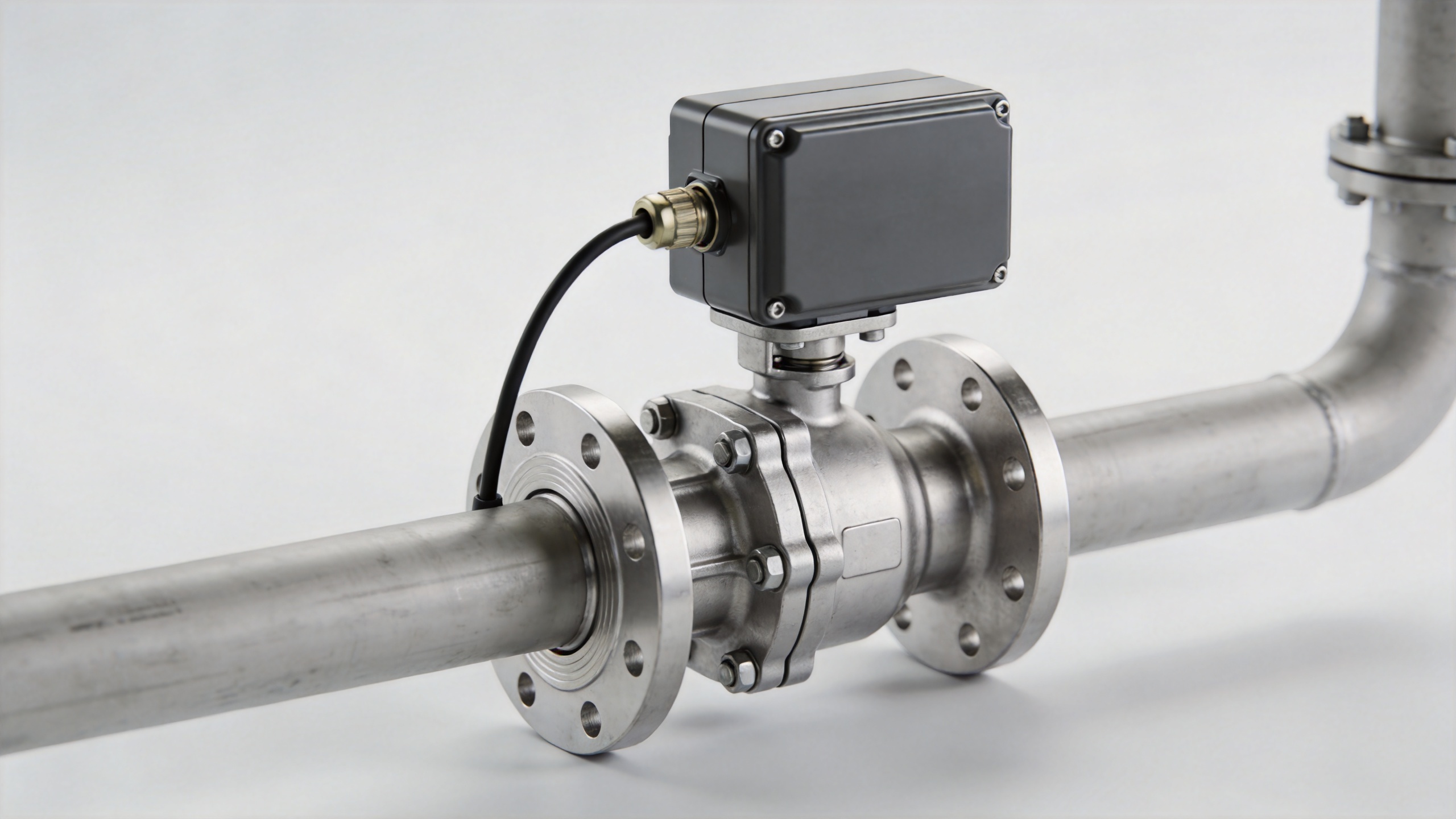
An Electric Ball Valve is more than a ball valve with a motor attached. In a process-control loop, it is a coordinated assembly of a quarter-turn valve, an electric actuator, a control command, position limits or feedback, and a defined response when power or a control signal is lost. That combination determines whether an Electric Ball Valve serves an isolation, routing, or carefully specified control task.
From an automation-control perspective, the useful question is not simply “What size Electric Ball Valve do I need?” It is: what must the valve do in this particular process, under its highest expected load, and how will the rest of the control system know that it has done it? Starting with those conditions avoids treating the actuator as an accessory.
The basic definition: valve body plus an electric control chain
A ball valve uses a drilled ball inside the valve body. Turning the stem approximately 90 degrees aligns the bore with the flow path or turns it across the path. An Electric Ball Valve uses an electric actuator to create that rotation instead of relying on a hand lever. With a two-way body, the usual task is open/close isolation. With a three-way body, the task may be diverting one stream, selecting between paths, or mixing flows, depending on the port arrangement.
For process control, the defining feature is the complete chain: a command arrives from a switch, relay, controller, or distributed control system; the actuator drives the stem; limit switches or position feedback indicate the achieved state; and the valve body changes the flow path. A compact Electric Ball Valve can therefore support remote operation without changing the basic quarter-turn behavior of the ball valve.
What the valve must do in the process
Most Electric Ball Valve applications begin with on/off duty. The controller calls for open or closed, and the valve isolates a line, starts a transfer, or changes a route. This differs from continuous throttling. A ball-valve assembly can be configured for modulating duty when the valve characteristic, actuator, control signal, position feedback, and expected cycling are all reviewed together. It should not be assumed that every on/off Electric Ball Valve is suitable for fine flow regulation.
That distinction matters in water treatment, chemical handling, drainage systems, and other industrial piping. If the control objective is isolation, repeatable end positions and appropriate cycle capability may be central. If the objective is proportional control, the engineer also needs to establish the required control accuracy, signal type, response behavior, and how the valve’s flow characteristic behaves in the installed line. The valve is only one part of that control loop.
Torque is defined by operating conditions, not nominal size alone
One of the most important characteristics of an Electric Ball Valve is actuator torque. The actuator must overcome the valve’s breakaway torque, running torque, and seating demand under the maximum expected differential pressure, temperature, and media condition. Nominal pipe size alone does not provide enough information. A matching actuator also must stay within the allowable stem torque for the selected valve.
The medium deserves equal attention. Clean water, viscous fluids, suspended solids, corrosive service, and temperature changes can affect sealing, material compatibility, and operating load. A useful specification does not merely say “water valve”; it identifies the medium, its properties, pressure range, temperature range, and whether the process may change over time. An Electric Ball Valve that works under one expected condition may need a different seal, body material, or torque allowance when those conditions change.
Signals, feedback, and the required response to abnormal conditions
The control connection also defines an Electric Ball Valve. Confirm the available power supply, command type, wiring approach, and whether the system needs simple open/close indication or continuous position feedback. For a remotely supervised line, end-of-travel indication can help distinguish a command from a confirmed valve position. Where the control system expects a proportional signal, the actuator and feedback arrangement must support that requirement.
Before selecting an Electric Ball Valve, clarify what should happen during loss of power, loss of signal, or maintenance. Some applications can tolerate the valve remaining in its last position; others require a stated fail position or a manual operating method. That answer comes from the process risk assessment and operating procedure, not from the valve name. Enclosure protection, ambient conditions, cable access, and any site-specific area classification should be confirmed against the project requirements.
How irrigation terms fit—and where they do not
A drip irrigation valve or a water sprinkler valve may also be electrically operated, but its selection context can be very different from an industrial Electric Ball Valve. Irrigation systems may prioritize zoning, low-pressure water distribution, schedule-based operation, and compatibility with a specific controller. An industrial process line may instead prioritize media compatibility, isolation logic, actuator torque, feedback, and maintenance access.
The terms can overlap when an Electric Ball Valve is used to automate a water line, yet the phrase “electric” does not make the application conditions interchangeable. For a drip irrigation valve, verify the irrigation controller, pressure, flow, and debris-management needs. For a water sprinkler valve, verify the duty, control arrangement, and the requirements that govern the particular system. In each case, identify the process function before choosing the valve and actuator combination.
A practical specification checklist
To define an Electric Ball Valve for process control, organize the inquiry around these points:
- What medium will flow, and what pressure and temperature range is expected?
- Is the required function isolation, diversion, mixing, or proportional control?
- Is a two-way or three-way flow path needed?
- What torque is required at the highest expected operating load?
- What power supply, command signal, speed, and position feedback does the control system require?
- What position is required during a loss of power or signal, and is manual operation needed?
- What connection, body, seal, enclosure, installation space, and maintenance access must be confirmed?
FOLS Valve works with industrial valves, electric actuators, pneumatic valves, and automation applications. For an Electric Ball Valve, a useful technical discussion begins with the operating conditions and control requirements above, then compares compatible valve-body and actuator configurations. Product-specific ratings, documentation, and suitability should be confirmed for the final duty.
Conclusion
In process control, an Electric Ball Valve is defined by how its quarter-turn valve body, electric actuator, signals, feedback, torque capacity, and abnormal-condition response work together. A practical selection path is to document the medium, operating envelope, flow function, control connection, and fail-state expectation before making a configuration decision. That approach makes it easier to evaluate an Electric Ball Valve as part of a system rather than as a standalone component.
 Hot News





