
 EN
What Is an Electric Ball Valve and Its Core Functions?
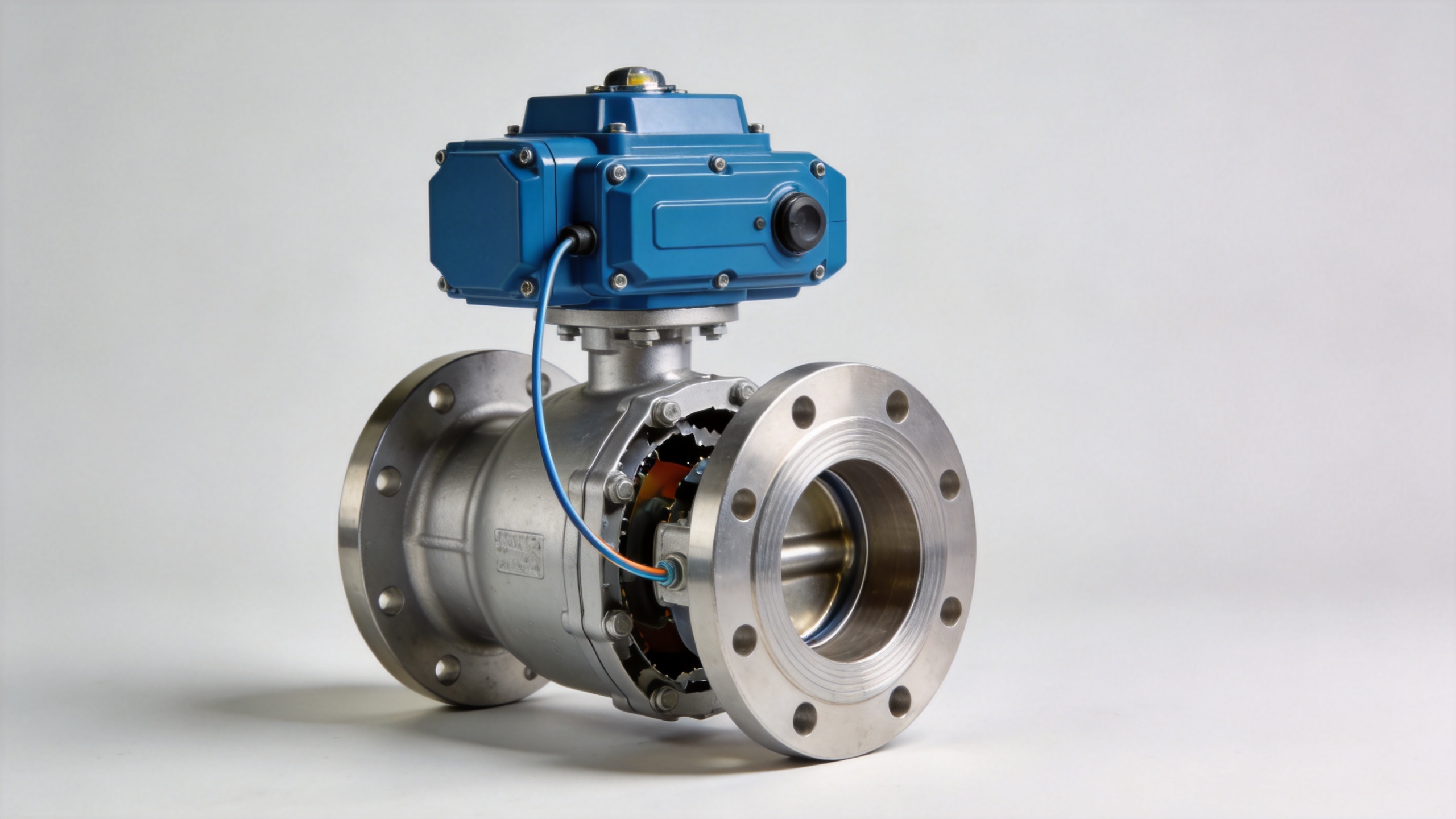
An Electric Ball Valve combines a quarter-turn ball-valve body with an electric actuator so a pipeline can be opened, closed, or directed from an electrical command. In industrial control work, it is useful to view the Electric Ball Valve as a small control chain rather than just a valve: the body contains the flow path, the actuator supplies rotary force, and the wiring or control signal tells the assembly what to do. That distinction makes early specification conversations much clearer.
From an automation-control perspective, the right Electric Ball Valve is not defined by its name alone. Medium, pressure, temperature, seal material, required operating frequency, available power, command signal, and desired position after a power loss all influence the final configuration. A ball valve may look simple, but the actuator must still suit the valve and the process around it.
How an Electric Ball Valve Works
Inside an Electric Ball Valve is a spherical closure element with a bore through it. When the bore aligns with the pipe, flow can pass through; when the ball turns so the bore is perpendicular to the pipe, flow is shut off. An electric actuator uses a motor and gear train to rotate the valve stem, usually through a quarter turn between the fully open and fully closed positions.
The command can be as simple as an on/off electrical input, or it can come from a control system that needs position feedback or a modulating response. The exact behavior is configuration-dependent. In other words, an Electric Ball Valve does not automatically provide every control feature; buyers should confirm whether the selected actuator supports on/off duty, a control signal, feedback contacts, manual override, or a specified fail position.
This is why treating the actuator as an afterthought can create a mismatch. The valve body needs sufficient torque to move under actual pressure, friction, seal loading, and operating conditions. It is more accurate to ask whether the actuator and valve work together under the stated conditions than to assume any motorized actuator will fit a particular ball valve.
Core Functions of an Electric Ball Valve
1. Remote shutoff and opening
The most common function of an Electric Ball Valve is remote isolation. A command from a panel, timer, PLC, or building-management system can open or close a line without requiring an operator at the valve. This can be valuable where access is limited, repetitive operation is needed, or the control point is located away from the piping.
2. Automated flow-path selection
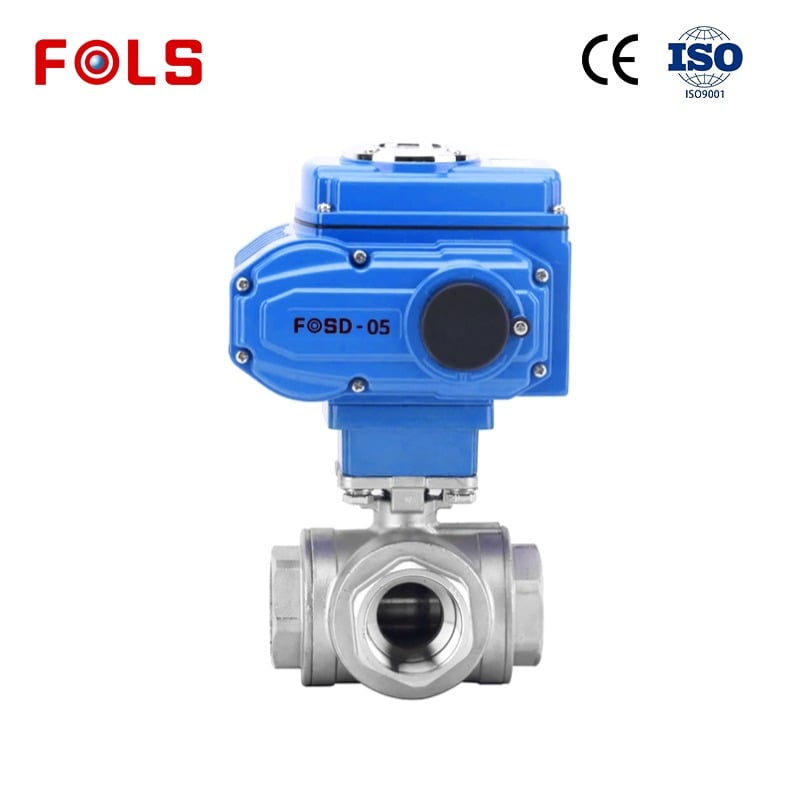
A two-way Electric Ball Valve normally serves as an open/close device. A three-way arrangement can be configured to divert or mix flow paths, depending on the ball design and port layout. Because the flow result depends on the specific porting, it is important to confirm the required flow path instead of specifying “three-way” as if it were a complete description.
3. Integration with an automated system
An Electric Ball Valve can form one endpoint of a wider automation system. A controller may issue the command, the actuator converts that command to motion, and auxiliary contacts or a position signal may report the resulting state. For a project with interlocks or alarms, the question is not only whether the valve opens and closes, but also what signal format, feedback, and wiring arrangement the control architecture requires.
4. Controlled response to an abnormal condition
Some applications need the valve to move to a defined position if electrical power is interrupted. That behavior is not universal. An Electric Ball Valve may be configured with a particular return or holding arrangement, but the actual safe position and operating sequence must be confirmed for the selected actuator. If a process depends on fail-open or fail-closed behavior, make it a written requirement rather than an assumption.
Where the Valve Body and Actuator Must Match
For an Electric Ball Valve, compatibility is a system question. First, identify the medium and whether it changes in temperature, viscosity, cleanliness, or chemical behavior. Next, confirm the pressure and temperature range at the valve, then check body material, seat material, end connection, bore type, and required shutoff expectation. Finally, match actuator torque, travel, voltage, enclosure needs, duty cycle, and control interface to those conditions.
Do not start by asking whether one Electric Ball Valve is “better” than another. Start by writing down the operating conditions. A single pressure rating means little if it is separated from temperature, medium, sealing materials, and the way the system will command the valve. The same applies to actuator torque: it is relevant only when considered with the valve’s real operating resistance and expected cycle pattern.
Electric Ball Valve Versus a Solenoid-Based Shutoff
The supplied supporting keywords, sprinkler valve solenoid and sprinkler emergency shut off valve, point to a common comparison question: is an Electric Ball Valve interchangeable with a solenoid-operated shutoff? Not necessarily. A solenoid valve and an electrically actuated ball valve use different operating mechanisms and can have different media, pressure, flow, response-time, and power-holding considerations. The appropriate choice depends on the process requirement rather than the fact that both accept an electrical signal.
For a sprinkler valve solenoid application, confirm the system’s approved design requirements, water conditions, control voltage, response expectations, and any applicable local rules before selecting a valve. For a sprinkler emergency shut off valve requirement, clarify the triggering condition, required safe position, reset process, and whether the valve must be part of a listed or engineered safety arrangement. This article provides a selection framework, not a substitute for the relevant project design review.
A Practical Selection Checklist
Before requesting a quote or technical review for an Electric Ball Valve, prepare the following information:
- Medium, concentration or contamination concerns, and the normal and maximum temperature.
- Operating pressure, line size, desired flow path, and whether a two-way or three-way body is required.
- Body, ball, and seat material requirements, plus the end connection and installation orientation.
- Available voltage, command type, expected duty cycle, and whether position feedback is needed.
- Required actuator torque margin, enclosure environment, manual override needs, and maintenance access.
- Required response after loss of power or control signal, stated as a process requirement rather than a generic feature request.
In procurement discussions, collecting these items first usually reduces repeated clarification later. It also allows a supplier focused on industrial valves and automation systems to discuss configuration options without turning unknown site conditions into unsupported promises.
Key Takeaway
An Electric Ball Valve is a ball valve fitted with an electric actuator to automate a quarter-turn flow-control function. Its core value is the ability to translate an electrical command into repeatable valve movement, while its practical suitability depends on the match among valve body, actuator, process medium, power, control interface, and safety expectation. When those conditions are confirmed together, an Electric Ball Valve can be evaluated as part of a manageable pipeline control system rather than as an isolated component.
 Hot News

