
 EN
What Defines Gate Valve In Heavy Duty Piping Design?
A gate valve isolates a pipeline by moving a gate across the flow path. In a heavy-duty piping design, that basic action is only the starting point: the valve must also match the medium, pressure and temperature, connection details, operating loads and space available for maintenance. A substantial-looking body alone says little about whether a particular valve belongs in a particular line.
From an application engineering perspective, define the service before choosing the hardware. Is the line carrying treated water, wastewater or a process fluid? Will the valve normally remain open for months, or will operators cycle it frequently? Those answers affect the seat, body, stem, actuator and inspection plan as much as the nominal pipe size does.
What does a gate valve do?
A gate valve is a linear-motion isolation valve. Its stem moves a gate toward the seats to shut off flow and withdraws it to open the passage. Many designs offer a relatively unobstructed flow path when fully open, although bore geometry and pressure loss depend on the actual valve. Unlike a check valve, it does not act automatically in response to reverse flow.
In most services the intended operating positions are fully open and fully closed. A partially open gate can experience concentrated flow, vibration and erosion at the gate or seating surfaces; control may also be difficult to predict. If the process needs sustained modulation, specify a valve intended for that duty rather than assuming the isolation valve will regulate flow.
Which details matter under demanding conditions?
Pressure, temperature and the complete assembly
For a gate valve, confirm the maximum and minimum operating temperatures, normal and design pressures, and possible differential pressure across the closed gate. Ask for the manufacturer's pressure-temperature limits for the exact body material and configuration. Pressure class alone is not a substitute for checking the applicable rating at the design temperature. Include upset conditions, test conditions and local piping requirements in the review.
Body, bonnet, bolting, packing, stem and trim operate together. A valve with a suitable body material can still be unsuitable if its seat or packing cannot tolerate the medium or temperature. For corrosive fluid, assess wetted components and concentration, not just the pipe material. For abrasive service, consider solids size and loading and obtain specific guidance on seating and wear.
Gate, seats and stem arrangement
Gate valve configurations vary. A wedge gate and its seats rely on the selected geometry and materials for the intended shutoff; other designs use different closure arrangements. Metal seats and resilient seats have different temperature, chemical compatibility and wear considerations. The required leakage acceptance must be stated in the purchase documents, with the applicable test method and acceptance criteria agreed for that valve.
A rising-stem gate valve provides a visible indication of stem travel, but it needs vertical clearance. A non-rising stem may be useful where overhead space is restricted; confirm how position will be indicated and how the stem and threads will be inspected. Neither arrangement makes a valve suitable for burial, flooding or corrosive surroundings without checking the specific design and installation requirements.
How should the valve fit into the piping system?
Match the gate valve end connections, face-to-face dimensions and bore to the project drawings. Flanged and welded connections have different installation and removal implications. Verify flange drilling or weld-end preparation against the connecting pipe and the project's applicable specifications. Do not rely on nominal size as proof that a replacement will fit.
Plan supports around the assembly, especially when an actuator or gearbox adds mass. Piping loads and misalignment should be assessed by the project engineer; a valve is not a convenient correction for a poorly aligned line. Allow access for bolting, packing adjustment, actuator removal and lifting. Check the space needed to withdraw the gate or remove the bonnet before the surrounding equipment is fixed in place.
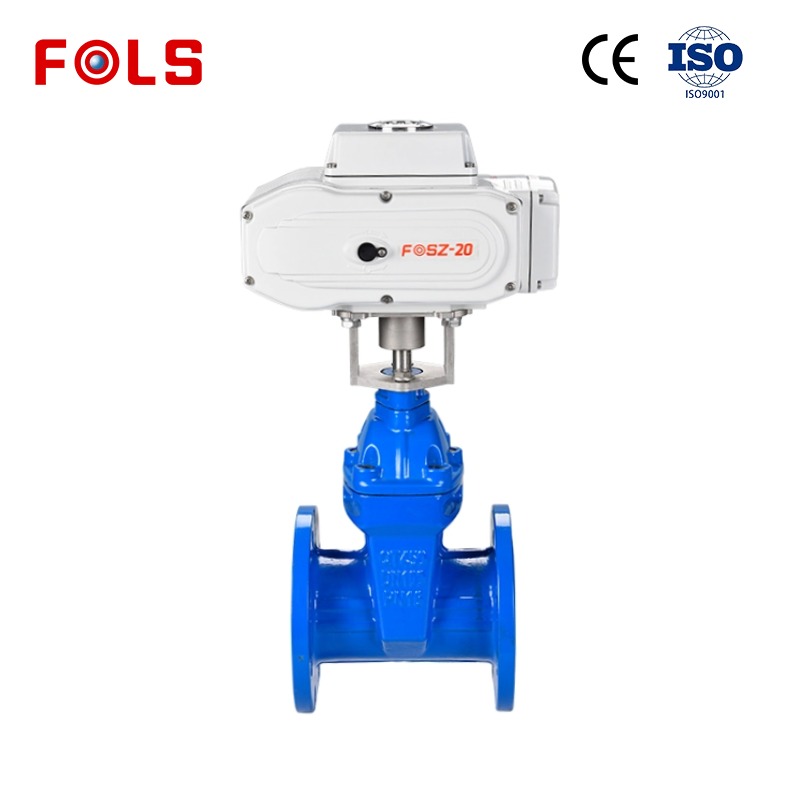
Operating torque deserves the same attention. A gate valve that can be moved under balanced pressure may require a different effort under the maximum specified differential pressure. Confirm the manufacturer's torque data, any applicable service margin, expected cycling frequency and the available power or air supply before selecting manual gearing or an actuator. Where automation is required, agree on indication, controls and the required response to loss of power; the final position depends on the actuator and system design.
Isolation or flow control: which duty is required?
A gate valve can serve as the on-off isolation component in a water line, while a separate water flow control valve regulates the process. These are different jobs, even if both components sit in the same system. Define the required flow range, pressure drop and control response before comparing control valves; a label by itself does not establish suitability.
For a process that needs modulation, a v notch ball valve may be one candidate. Its suitability depends on the flow characteristic, fluid, pressure drop, actuator and control range. A v notch ball valve is not automatically a replacement for a gate valve used for isolation: compare shutoff requirements, test criteria and the needs of each position in the line. If both functions are essential, a separate isolation valve and regulating valve may be appropriate after engineering review.
Which standards and documents should buyers request?
Specify a standard because it fits the duty, not because its number sounds reassuring. API 600 addresses bolted-bonnet steel gate valves for petroleum and natural gas industries; AWWA C509 addresses resilient-seated gate valves for water supply service. The project engineer should confirm the applicable edition, scope, local rules and any additional testing or material requirements. A standard reference here is not a claim that a particular product is certified or compliant.
Before ordering a gate valve, request a data sheet and drawings for the offered configuration. Confirm material identification, ratings at design temperature, seat and packing details, dimensions, operating torque, inspection documentation and the agreed pressure and seat tests. For potable water, hazardous fluids or other regulated duties, ask which project-specific approvals or material declarations are required and review actual documentation rather than relying on a generic product description.
A practical selection checklist
- Service: identify the fluid, concentrations, solids, normal and abnormal temperatures, and pressure conditions.
- Function: state whether the gate valve is for isolation, and identify any separate water flow control valve needed for regulation.
- Construction: check body and trim materials, seat type, stem arrangement, packing and required leakage criteria.
- Installation: verify connections, dimensions, pipe support, orientation, operating access and maintenance clearance.
- Operation: confirm differential pressure, torque, cycling, actuator utilities and indication requirements.
- Evidence: agree on relevant standards, testing, material records and the applicable project specifications.
Consider a hypothetical wastewater line with limited overhead access: the team may initially favor a non-rising stem, but should also review solids handling, seat wear, flooding exposure and position indication before selecting a design. In a clean process line, the priorities may instead be temperature rating, tightness criteria and actuator torque. The same gate valve label can cover very different assemblies.
For a useful technical discussion with Guangzhou Fols Valve Technology, assemble the duty and connection information first. The resulting inquiry gives the supplier and project engineer a common basis for checking the proposed configuration; final suitability remains dependent on the actual documentation and service conditions.
 Hot News





