
 EN
How Does Manual Valve Provide Backup In Fluid Systems?
When an automated control loop loses power, air, signal, or actuator availability, the process still needs a clear way to isolate, redirect, or restore fluid flow. A Manual Valve can provide that independent layer of control. It does not replace a properly engineered shutdown function, but a correctly selected and accessible Manual Valve gives operators a physical means to act when the automatic path is unavailable or when maintenance requires local control.
From an automation-control perspective, the key question is not whether a Manual Valve is better than an actuated valve. A more useful question is what action a person must take, under what conditions, when the normal control path cannot respond. Answering that question turns a Manual Valve from a simple hand-operated component into part of a deliberate backup plan.
Why Automated Systems Still Need a Manual Valve
Automated valves rely on more than the valve body. They may depend on electrical power, compressed air, hydraulic supply, a control signal, position feedback, and the logic that coordinates them. Any one of those elements can become unavailable during maintenance, a utility interruption, commissioning, or a fault investigation. A Manual Valve provides an operating path that does not require those upstream services.
That independence matters in a few familiar situations:
- Local isolation: a Manual Valve can isolate a pump, filter, instrument, or automatic valve so technicians can inspect a defined section of pipe.
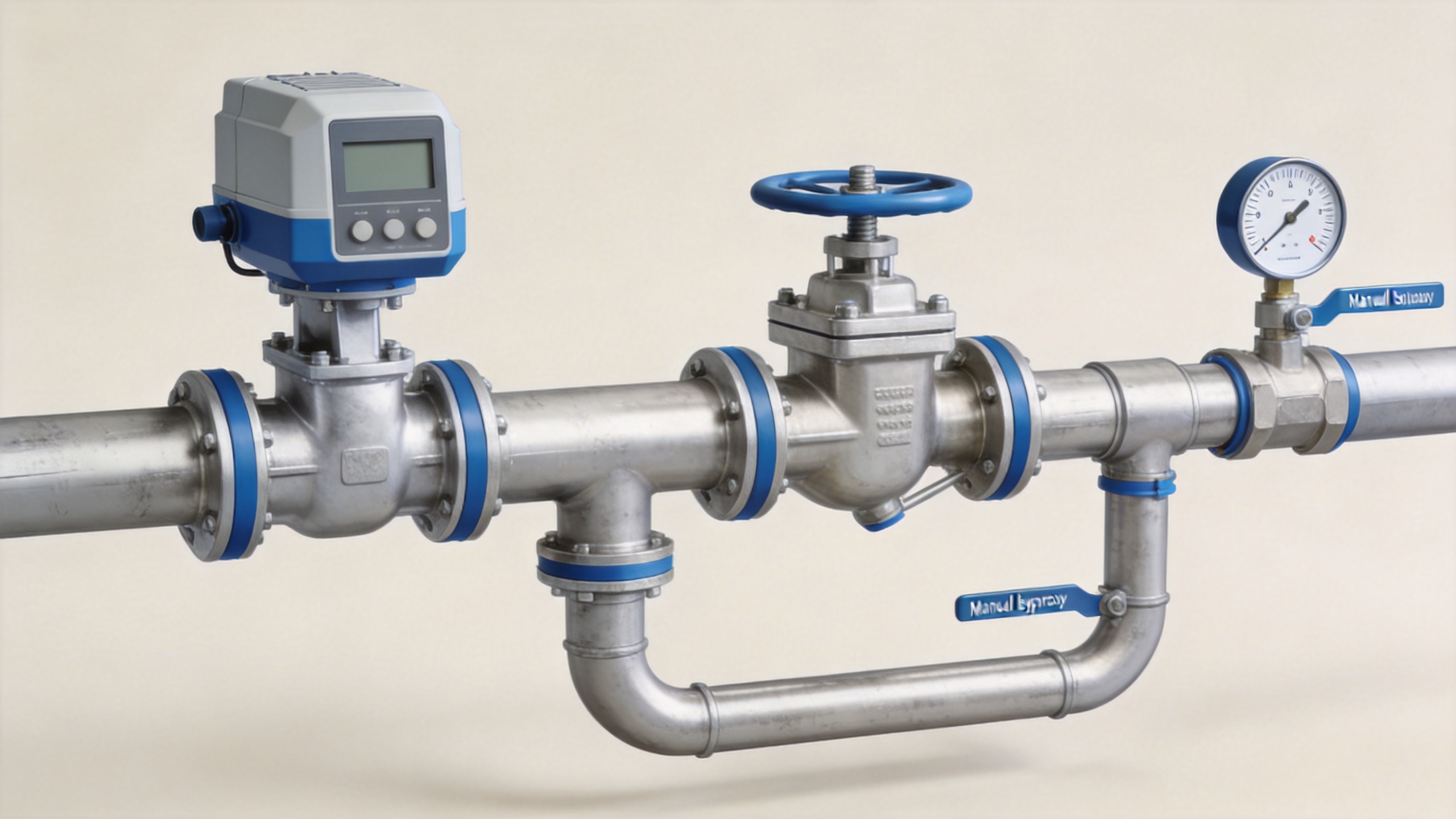
- Controlled bypass: a Manual Valve in a designed bypass line can support limited continuity while a primary component is isolated, provided the operating limits are understood.
- Commissioning and troubleshooting: a Manual Valve lets the team establish or stop a flow path without relying on incomplete control logic.
- Emergency response support: where the layout and procedure call for it, a Manual Valve gives trained personnel a local isolation action. It should not be described as an emergency shutdown system unless the full system design supports that function.
A block valve is commonly used to isolate a specific section so fluid and pressure do not reach downstream equipment. That basic isolation role explains why a Manual Valve remains valuable even in a highly automated installation.
How a Manual Valve Works as a Backup Layer
A Manual Valve provides backup by creating a separate, understandable action: open, close, or set a defined flow path by hand. The arrangement works better when the valve has a documented purpose, a visible location, a known normal position, and a procedure that states when it may be moved.
Isolation when the primary control path is unavailable
Consider an automated valve that normally modulates or shuts off flow. If its actuator cannot move, an upstream or downstream Manual Valve may allow the affected equipment to be isolated. The valve must be placed so that closing it actually separates the intended section; a handwheel located far from the equipment, or a valve with no clear isolation boundary, may add little practical value.
Bypass continuity during planned work
A bypass line can route flow around equipment that must be taken out of service. In that arrangement, each Manual Valve has a sequence: isolate the main path, open the bypass under controlled conditions, confirm the downstream response, and return to the normal path only after the work is complete. Bypass operation is not automatically safe for every service. Flow rate, pressure drop, temperature, fluid properties, and downstream demand all need review before a Manual Valve is treated as a continuity tool.
A visible local point of control
During a field response, an operator needs to recognize the right component quickly. A Manual Valve supports that need when tag identification, flow-direction information, access space, and operating status are maintained. The valve is only part of the backup; labeling, training, and isolation procedures make the action usable.
Where Valve Type and Material Matter
A Manual Valve must fit the purpose of the backup path. Quarter-turn ball valves are often considered for clear open/closed isolation, while other designs may be selected where throttling, line size, fluid characteristics, or connection requirements lead to a different choice. Do not start with the valve name alone. Start with the medium, pressure, temperature, connection, required shutoff, operating frequency, and available maintenance space.
For example, a 4 stainless steel ball valve may be considered where its material, size, end connection, sealing arrangement, and pressure-temperature rating match the actual service. The size and material words alone do not establish suitability. Likewise, a 3 pvc check valve has a different function: it is intended to resist reverse flow rather than provide the positive, hand-operated isolation action of a Manual Valve. In some systems the two may appear in the same piping section, but they should not be treated as interchangeable backups.
Design Checks Before You Rely on Manual Backup
A Manual Valve is useful only when its role has been checked in the whole system. Use this practical review before assigning backup duty:
- Define the action. Is the Manual Valve intended to isolate, bypass, drain, vent, or provide a local shutdown?
- Map the boundary. Confirm what remains pressurized or connected after the Manual Valve is moved.
- Check the operating condition. Review medium, maximum differential pressure, temperature, expected flow, and the force needed for operation.
- Check accessibility. A Manual Valve that cannot be safely reached during normal or abnormal conditions is a weak backup measure.
- Set the sequence. For bypass service, identify the order for each Manual Valve and the observations required between steps.
- Maintain the function. Exercise and inspect the Manual Valve at intervals appropriate to the service, and update tags or procedures when piping changes.
It is also important to distinguish a manual backup path from a safety-instrumented or emergency-isolation function. High-consequence service can require dedicated design, validated shutoff performance, engineered actuation, and formal procedures. A hand-operated Manual Valve may complement that design, but it should not be assigned a safety claim that has not been verified.
Making the Backup Usable in Daily Operations
The practical value of a Manual Valve is decided before a fault occurs. Keep the flow diagram current, mark normal and backup positions, leave enough room for operation and maintenance, and make sure the operating team understands what changes when the valve is opened or closed. If a manual bypass is installed, define its permitted duration and the operating observations that signal a return to the normal route.
For industrial fluid systems, a Manual Valve is therefore not a low-technology substitute for automation. It is a separate control option that can preserve a clear human action when automatic equipment is unavailable. The right next step is to list the medium, line size, pressure and temperature limits, connection type, control objective, and desired backup action. With those details, the Manual Valve can be evaluated as part of a complete, maintainable fluid-control arrangement.
 Hot News





