
 EN
How Does Check Valve Prevent Reverse Fluid Flow?
A Check Valve is an automatic one-way device in a piping system. It opens when upstream pressure is high enough to move its closing member and closes when the pressure difference falls off or reverses. That simple response helps isolate a pump, tank, branch line, or process section from unwanted backflow. From an industrial valve application engineer’s perspective, the useful question is not merely whether a Check Valve is installed. It is whether the fluid, pressure, temperature, orientation, and system transients let that valve close at the right time.
In practical terms, a Check Valve uses differential pressure rather than a handwheel, actuator, or control signal. Flow in the intended direction pushes a disc, ball, piston, or pair of plates out of contact with a seat. When forward flow slows, the closing element moves back toward the seat under gravity, a spring, its own momentum, or a combination of these forces. If downstream pressure becomes greater than upstream pressure, the resulting differential assists closure. Once the seat is sealed, the Check Valve limits sustained reverse movement through that line.
The Pressure Sequence Behind One-Way Flow
Every Check Valve has a cracking pressure: the minimum differential pressure needed to start opening it. A spring-loaded design generally needs more opening force than a gravity-closing design, while a low cracking pressure may matter in low-head or low-flow services. Opening is not an all-or-nothing event. The moving member travels until the available differential pressure, flow forces, and internal resistance reach a balance.
When flow decelerates, the balance changes. A Check Valve begins to close before there is necessarily a large reversed flow rate, but the closing speed depends on the valve design and the system. This distinction matters near a pump discharge. A pump trip, rapid isolation event, or sudden demand change can reverse the pressure differential quickly. The goal is to match the Check Valve response to that transient, not to assume that any one-way valve reacts identically in every line.
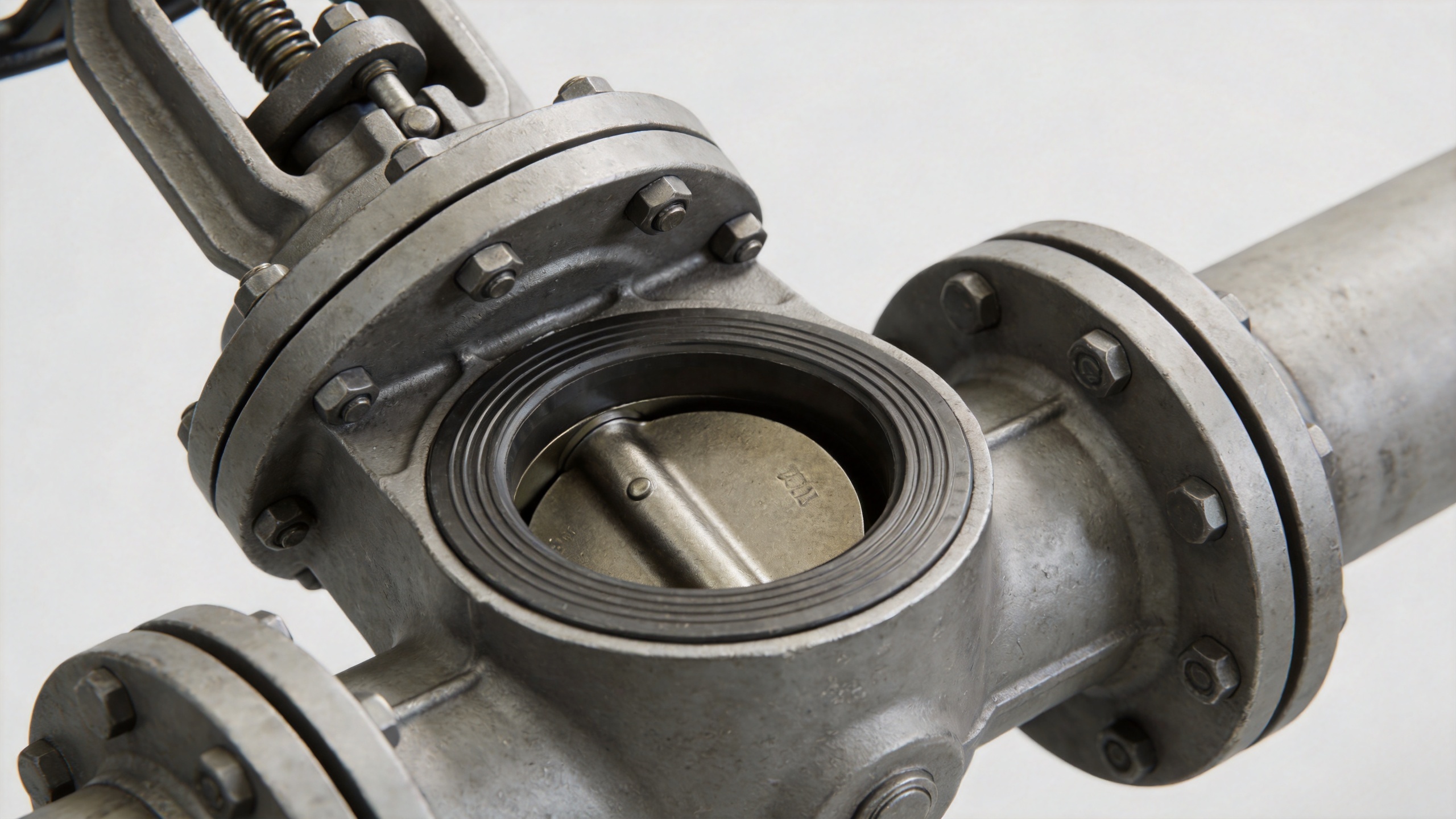
Why Closure Timing Matters
Reverse flow is not the only concern. In liquid service, a closing member that travels slowly can allow a brief reverse-flow period and then shut abruptly. That sequence can contribute to a reverse-flow pressure surge. A 2024 engineering review of hydraulic transients describes this risk for slowly closing swing-style designs and notes that silent check designs are often considered where closure behavior is important. The point is conditional: a Check Valve does not replace a system transient review.
Do not start with the question, “Which Check Valve is right?” First write down the pump behavior, pipe length, line velocity, static head, fluid characteristics, and shutdown sequence. A single pressure rating has value, but it matters more when it is considered with the pipe layout and flow changes. For a fast-changing system, engineering review may compare closing dynamics, spring force, disc travel, and the available installation location.
Common Check Valve Mechanisms
- Swing Check Valve: A hinged disc swings open with forward flow and returns toward the seat as flow declines. It can suit some horizontal liquid lines, but orientation and transient conditions need review.
- Lift Check Valve: A disc or piston lifts from its seat under forward differential pressure. Its flow direction and installation orientation are usually more restrictive, so supplier instructions matter.
- Dual-plate Check Valve: Two spring-assisted plates open around a central hinge. This compact configuration is often considered where installation space and closing response are relevant.
- Ball Check Valve: A ball moves from or toward a seat. The fluid, solids content, mounting position, and accessible inspection points should guide the choice.
- Diaphragm Check Valve: A flexible diaphragm provides one-way action in services where material compatibility and low-pressure operation are important.
A flow check valve is a common descriptive term, but it does not identify the needed body material, seat material, end connection, pressure class, or response profile. Similarly, a wastop non return valve should be selected from verified product documentation and actual operating conditions, rather than from its name alone.
Where a Check Valve Is Placed
A Check Valve is frequently placed at a pump discharge to reduce backspin and backflow when the pump stops. It can also separate parallel pumps, protect a storage branch, hold prime in a suction arrangement when the application permits, or stop one process stream from moving into another. Location is part of the design. A Check Valve installed too close to an elbow, reducer, pump nozzle, or disturbed flow zone may experience unstable flow or accelerated wear.
Follow the manufacturer’s stated flow arrow and installation guidance. Some designs work in more than one orientation; others depend on gravity or spring force and have explicit mounting limits. Provide enough room for removal and inspection. In a dirty-fluid service, ask how solids, fibers, scale, or deposits may affect the seat and moving member. This is where the problem becomes more than a valve body: maintenance access and fluid cleanliness influence whether the Check Valve remains reliable in daily operation.
Selection Checks Before Specifying a Check Valve
- Identify the medium, including viscosity, temperature, corrosiveness, gas content, and solids.
- Confirm normal, minimum, and maximum flow as well as the available differential pressure.
- Review pressure rating, temperature limits, body and trim materials, and seal compatibility together.
- Map the pump start, stop, and upset conditions that can change the closing duty.
- Verify end connections, pipe orientation, available space, inspection access, and local specification requirements.
- For applicable industrial contracts, determine whether a standard such as API 594 is relevant to the specified valve configuration; applicability must be confirmed for the actual service.
A Check Valve should be sized and specified for its working conditions, not selected solely because its nominal pipe size matches the line. In procurement discussions, define the required test documentation, material certificates, and acceptance criteria before comparing quotations. That gives engineering, purchasing, and operations a shared list of confirmed items and open questions.
Inspection and Troubleshooting
If a Check Valve leaks backward, chatters, or makes an abrupt closing sound, begin with conditions rather than assumptions. Check the actual flow direction, differential pressure, installation orientation, downstream pressure, and recent pump or control changes. Then inspect for seat wear, debris, sticking, spring damage, hinge wear, or a moving member that is not traveling freely. A Check Valve that is correct on paper can still behave poorly if deposits or unsuitable operating conditions change its movement.
Routine inspection intervals should reflect the consequence of backflow, fluid cleanliness, operating frequency, and site procedures. Before disassembly, isolate and depressurize the section under the site’s safety process. If transient noise follows a pump stop, treat it as a system question: valve type, closure characteristic, pump rundown, pipe layout, and surge analysis may all need review.
Key Takeaway
A Check Valve controls one-way flow by using pressure differential to open in the intended direction and to seat when that differential weakens or reverses. Its effectiveness depends on more than the label on the valve. Define the fluid and duty, evaluate closing behavior, install the valve in its approved orientation, and plan for inspection. With those checks in place, the Check Valve can serve as a clear, practical part of a broader piping-system design.
 Hot News





