
 EN
EN
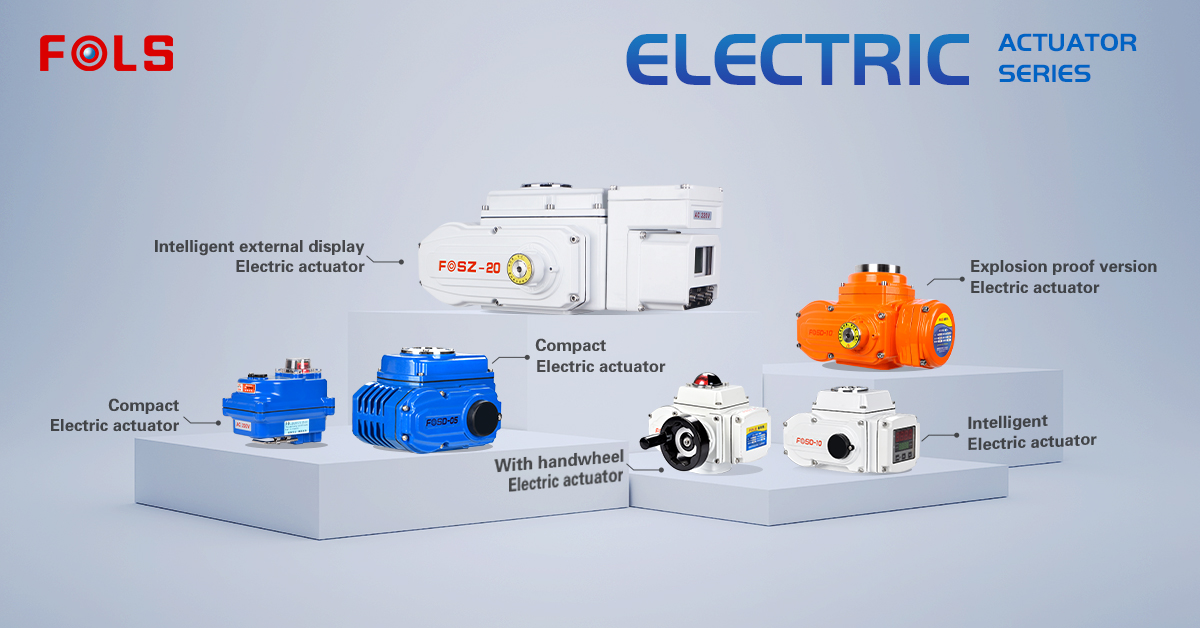
Matching Actuator Type to Valve Motion: Multi-Turn, Quarter-Turn, and Linear
How Valve Geometry Determines Electric Actuator Architecture
The shape and design of valves play a major role in determining what kind of actuator works best. For linear valves including gate and globe styles, electric actuators are needed since they create the necessary thrust to move stems vertically. Rotary valves on the other hand, such as ball and butterfly valves, work better with torque driven actuators because these need about 90 degrees of rotational force to function properly. According to recent industry findings from the Fluid Controls Institute in their 2023 report, around three out of four valve failures happen when the wrong actuator gets paired with a valve. This clearly highlights why getting the right combination matters so much for system reliability.
Torque–Rotation vs. Thrust–Displacement: Core Principles in Actuator Selection
Choosing the right electric actuator really comes down to understanding how different forces work within the system. For rotary valves, we're looking at torque conversion into angular movement measured in Newton meters per degree. Linear valves operate differently, converting thrust force into actual distance traveled, typically expressed in kilonewtons per millimeter. When evaluating performance, several important factors come into play. Seal friction varies quite a bit depending on materials used PTFE seals generally have around 0.1 coefficient whereas metal seals can reach up to 0.6. Differential pressure loads matter too, along with whether components meet ISO 5211 standards for flange connections. Getting all these aspects properly aligned helps avoid unnecessary mechanical strain and keeps systems running smoothly without unexpected breakdowns.
Case Study: Retrofitting Pneumatic Quarter-Turn Actuators with 24VDC Electric Units in a Chemical Plant
At a sulfuric acid production site, workers replaced all 58 butterfly valve actuators from old pneumatic models to newer 24VDC electric versions during a major overhaul last year. Looking at results after nearly 18 months running these new systems, maintenance expenses fell by almost half (around 42%), while compressed air usage dropped dramatically too - down 67%. Most impressive was the complete absence of equipment failures in those dangerous Zone 1 areas where explosions could happen if something goes wrong. These real world numbers show just how much better electric actuation works compared to traditional methods when dealing with tough industrial conditions day after day.
Emerging Trend: Hybrid Quarter-Turn Electric Actuators with HART Protocol and Position Feedback
Hybrid quarter-turn electric actuators that combine electric drives with hydraulic damping are now integrating HART (Highway Addressable Remote Transducer) protocol. These advanced units deliver ±0.5° position accuracy and predictive diagnostics, supporting SIL-3 safety compliance. Adoption in refining applications has grown 200% since 2021, driven by demand for smarter, safer control systems.
Selection Strategy: Matching Valve Type to Electric Actuator and ISO 5211 Standards
| Valve Type | Motion | Actuator Type | ISO 5211 Torque Class |
|---|---|---|---|
| Gate/Globe | Linear | Multi-turn | F05–F30 |
| Ball/Butterfly | 90° Rotation | Quarter-turn | F10–F60 |
| Control | Modulating | Part-turn | F20–F80 |
Always apply a 1.5x safety factor to calculated torque or thrust values. Verify mounting dimensions per ISO 5211 standards to ensure mechanical compatibility and prevent stress-induced failures.
Torque, Thrust, and Duty Cycle: Sizing Electric Actuators for Real-World Loads
Why Starting Torque Can Be 3× Running Torque: Static Friction and Differential Pressure Effects
When it comes to getting things moving, static friction really cranks up the force needed. Electric actuators often need three times as much torque just to start moving compared to when they're already running. And things get even trickier with differential pressure. Valves that are shut tight feel the full brunt of system pressure, making them harder to open initially. A big name manufacturer did some tests recently and discovered something interesting: around two thirds of all actuator overloads happen right at startup time. That's why getting the sizing right matters so much. If engineers don't factor in these sudden load spikes, motors might stall out or gears could end up damaged before the equipment even gets going properly.
Calculating Required Torque Using ISO 5211: Safety Factors, Stem Diameter, and Valve Class
ISO 5211 provides standardized methods for calculating torque in valve-actuator pairings. Critical parameters include:
| Parameter | Impact on Torque Requirement |
|---|---|
| Stem diameter | 2× diameter increase = 4× torque |
| Valve class (ASME) | Class 900 needs 3× Class 150 torque |
| Safety factor | Minimum 25% for dynamic loads |
Engineers must also consider fluid properties and actuation frequency. Undersizing risks premature failure, while oversizing leads to unnecessary cost and energy waste.
Case Study: Electric Actuator Failure Due to Corrosion-Induced Stem Galling in an Offshore LNG Facility
An offshore LNG facility experienced repeated failures in cryogenic ball valve actuators due to chloride-induced corrosion on 316L stainless steel stems, leading to galling. The failure sequence involved:
- Corrosion pits creating surface irregularities
- Startup torque spiking beyond 450 N·m due to increased friction
- Gear teeth shearing during cold startup at -162°C
The solution—upgrading to Inconel stems and applying molybdenum disulfide coating—reduced starting torque by 41% and eliminated galling, restoring reliable operation.
Innovation: Real-Time Torque Monitoring with Embedded Strain Gauges and Predictive Maintenance
Electric actuators these days come equipped with built-in strain gauges on their output shafts, which makes it possible to measure torque continuously with about 2% accuracy. What this means in practice is that operators can spot problems before they become serious issues, get automatic warnings when it's time to lubricate because friction levels go up too much, and move away from scheduled maintenance toward fixing things only when needed. According to real world testing across several industrial sites, these kinds of monitoring systems cut down unexpected equipment shutdowns by roughly 90 something percent. That kind of reliability boost translates into much better uptime for production lines and manufacturing operations.
Control Performance: On/Off, Modulating, and Smart Integration for Electric Actuators
Solving 4–20 mA Signal Drift in Analog Modulating Electric Actuators
When signal drift happens in those 4-20 mA analog systems, it messes up the position feedback for modulating electric actuators which makes the whole control system less accurate. There are several reasons why this occurs. The big ones are electromagnetic interference or EMI, those pesky ground loops, and changes in temperature throughout the day. In industrial settings, unshielded cables really cause problems because they let in voltage spikes that can change the signal quality by as much as plus or minus 5%, according to ISA-18.2 standards. To fix these issues, engineers typically install twisted pair shielded wiring first. They also use galvanic isolators to separate different parts of the circuit. Some folks prefer loop powered signal conditioners too. Interestingly enough, newer diagnostic tools that monitor how signals drift over time have actually cut down on calibration requirements quite a bit. Field tests show around a 40% reduction in needed calibrations when these advanced monitoring systems are put into place.
Critical Control Metrics: Resolution, Hysteresis, and Response Time for PID Loop Compatibility
Three key metrics determine electric actuator compatibility with PID control loops:
- Resolution (≤0.1%) minimizes overshoot in throttling applications
- Hysteresis (<1% of stroke length) ensures repeatable positioning without deadband errors
- Response time (≤2 seconds) prevents oscillation in fast processes like pressure control
Systems exceeding 3% hysteresis or 500ms response lag risk instability—particularly in critical services such as steam regulation, where delayed response can trigger pressure surges. Modern actuators with encoder feedback achieve hysteresis below 0.5%, meeting IEC 60534-8-3 Class V standards for tight shutoff and precision control.
Environmental and Power Requirements for Reliable Electric Actuator Operation
Managing Voltage Sag in 24 VDC Electric Actuators to Protect PLC I/O Modules
When voltages drop below 20 volts in a typical 24VDC system, it often causes problems for actuators and can actually damage those precious PLC input/output modules because of something called inductive kickback. To protect against this issue, technicians usually install line reactors or voltage stabilizers no more than five meters away from where the actuator sits. Shielded cables with proper grounding are another must have, along with actuators equipped with what's known as undervoltage lockout circuits (UVLO). These special circuits simply shut down operations when voltages fall below 21 volts. Facilities across the country have reported significant improvements after implementing such protection methods. One recent study found that water treatment plants saw a dramatic reduction in PLC failures - around two thirds fewer incidents according to data collected last year by ISA.
Derating for Heat, Altitude, and Hazardous Areas: ATEX, IECEx, and High-Temperature Operation
When electric actuators operate in hot environments or at higher elevations, they tend to lose their torque capacity because heat doesn't dissipate as effectively. For every degree Celsius over 40°C, the torque rating drops around 3%. Similarly, when working above 1000 meters elevation, performance decreases roughly 1% for each additional 100 meters climbed. Safety is another major concern in dangerous locations classified as Class I or II divisions. These actuators need special certifications like ATEX or IECEx. They require explosion proof enclosures for areas with gases (Groups IIA/B), dust ignition protection rated IP6X, and temperature classifications from T1 through T6 that match the autoignition points of surrounding materials. Some models designed for extreme heat incorporate ceramic bearings and H-class insulation, allowing them to function reliably even when temperatures reach up to 150°C. This makes them suitable for applications where standard equipment would simply fail under pressure.
FAQs
Why is it essential to match the actuator type with the valve motion?
Failure to correctly match the actuator with valve motion can lead to system inefficiencies and valve failures, with reports indicating that three out of four valve failures are due to incorrect actuator pairing.
What considerations are important in selecting an electric actuator?
It's important to consider the type of valve (rotary or linear), torque or thrust needed, material composition, differential pressure, and adherence to ISO 5211 standards when selecting an actuator.
What are the benefits of retrofitting pneumatic actuators with electric ones?
Retrofitting pneumatic actuators with electric ones can significantly reduce maintenance costs, decrease air usage, and improve system safety and reliability, as demonstrated in chemical and industrial applications.
What solutions exist for dealing with signal drift in electric actuators?
Signal drift can be mitigated by ensuring proper shielding and grounding, using twisted pair wiring, and deploying advanced diagnostic tools to monitor and adjust for drift.
How do environmental factors affect electric actuator performance?
Factors such as heat, altitude, and hazardous environments can reduce torque capacity and increase equipment failure risk, necessitating proper planning and certification compliance.
Table of Contents
-
Matching Actuator Type to Valve Motion: Multi-Turn, Quarter-Turn, and Linear
- How Valve Geometry Determines Electric Actuator Architecture
- Torque–Rotation vs. Thrust–Displacement: Core Principles in Actuator Selection
- Case Study: Retrofitting Pneumatic Quarter-Turn Actuators with 24VDC Electric Units in a Chemical Plant
- Emerging Trend: Hybrid Quarter-Turn Electric Actuators with HART Protocol and Position Feedback
- Selection Strategy: Matching Valve Type to Electric Actuator and ISO 5211 Standards
-
Torque, Thrust, and Duty Cycle: Sizing Electric Actuators for Real-World Loads
- Why Starting Torque Can Be 3× Running Torque: Static Friction and Differential Pressure Effects
- Calculating Required Torque Using ISO 5211: Safety Factors, Stem Diameter, and Valve Class
- Case Study: Electric Actuator Failure Due to Corrosion-Induced Stem Galling in an Offshore LNG Facility
- Innovation: Real-Time Torque Monitoring with Embedded Strain Gauges and Predictive Maintenance
- Control Performance: On/Off, Modulating, and Smart Integration for Electric Actuators
- Environmental and Power Requirements for Reliable Electric Actuator Operation
-
FAQs
- Why is it essential to match the actuator type with the valve motion?
- What considerations are important in selecting an electric actuator?
- What are the benefits of retrofitting pneumatic actuators with electric ones?
- What solutions exist for dealing with signal drift in electric actuators?
- How do environmental factors affect electric actuator performance?

