
 EN
Why Choose Electric Ball Valve For Automated Lines?
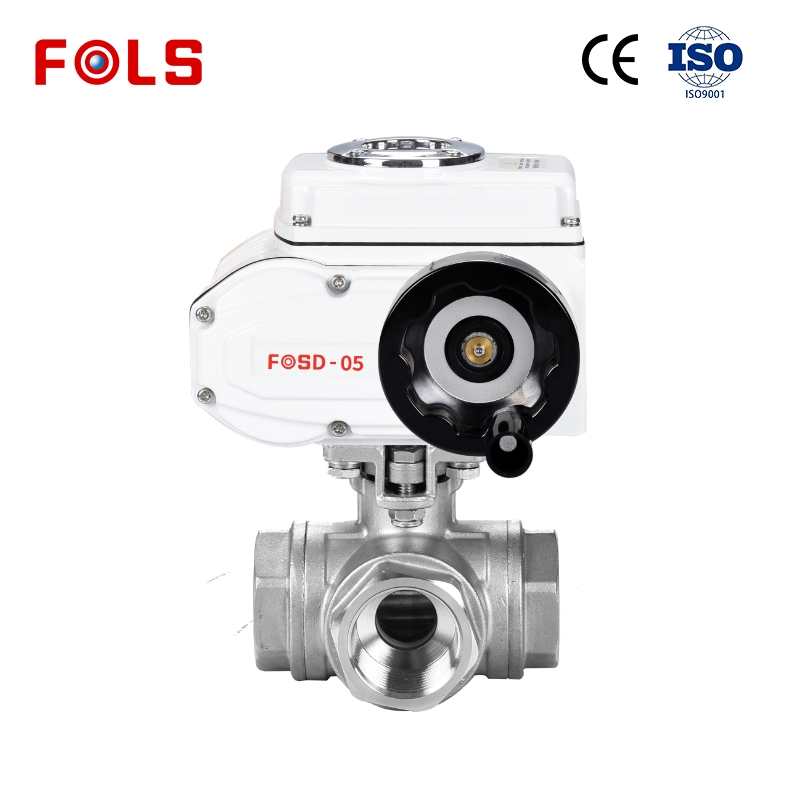
When an automated line needs repeatable shutoff or routing, an Electric Ball Valve can be a practical building block. The valve body supplies a quarter-turn flow path, while the actuator turns the stem in response to a wired command or a local control signal. For an engineer, the useful question is not whether every Electric Ball Valve fits every line. It is whether the valve, actuator, media, and control logic work together under the actual operating conditions.
For buyers planning a new skid, a packaging utility line, a water system, or a process upgrade, the benefit is straightforward: an Electric Ball Valve can place an on/off decision inside the sequence instead of depending on an operator at the valve. That only helps when the required valve position, cycle pattern, power supply, and feedback expectations are documented before purchase.
Why the ball-valve format fits automated on/off duty
A ball valve uses a bored ball that rotates approximately a quarter turn between flow and shutoff positions. Coupling that movement to an electric actuator gives the control system a way to command a defined change of state. In many automated lines, an Electric Ball Valve is considered where the process needs isolation, batch transfer, diversion through a three-way flow path, or timed water delivery.
This does not make a ball valve a universal control valve. A process that needs continuous throttling accuracy, very rapid cycling, abrasive media, or a particular fail position may call for a different valve design or a more specific actuator arrangement. The right comparison starts with the job the valve must perform, rather than with the actuator alone.
What automation teams gain from an Electric Ball Valve
- Programmable action: a PLC, timer, relay, or building-control signal can initiate a valve movement as part of a sequence.
- Clear position logic: open and closed states are easy to define for many isolation tasks; feedback switches can be specified when the controller must verify travel.
- Compact mechanical motion: quarter-turn motion generally pairs naturally with ball-valve stems, subject to verified torque and mounting details.
- Flexible line architecture: two-way valves isolate a path, while a suitably selected three-way Electric Ball Valve can support routing between defined ports.
- Reduced routine access: placing valve commands in the sequence can limit manual trips to remote or difficult-to-reach locations, while retaining a manual override where the design requires it.
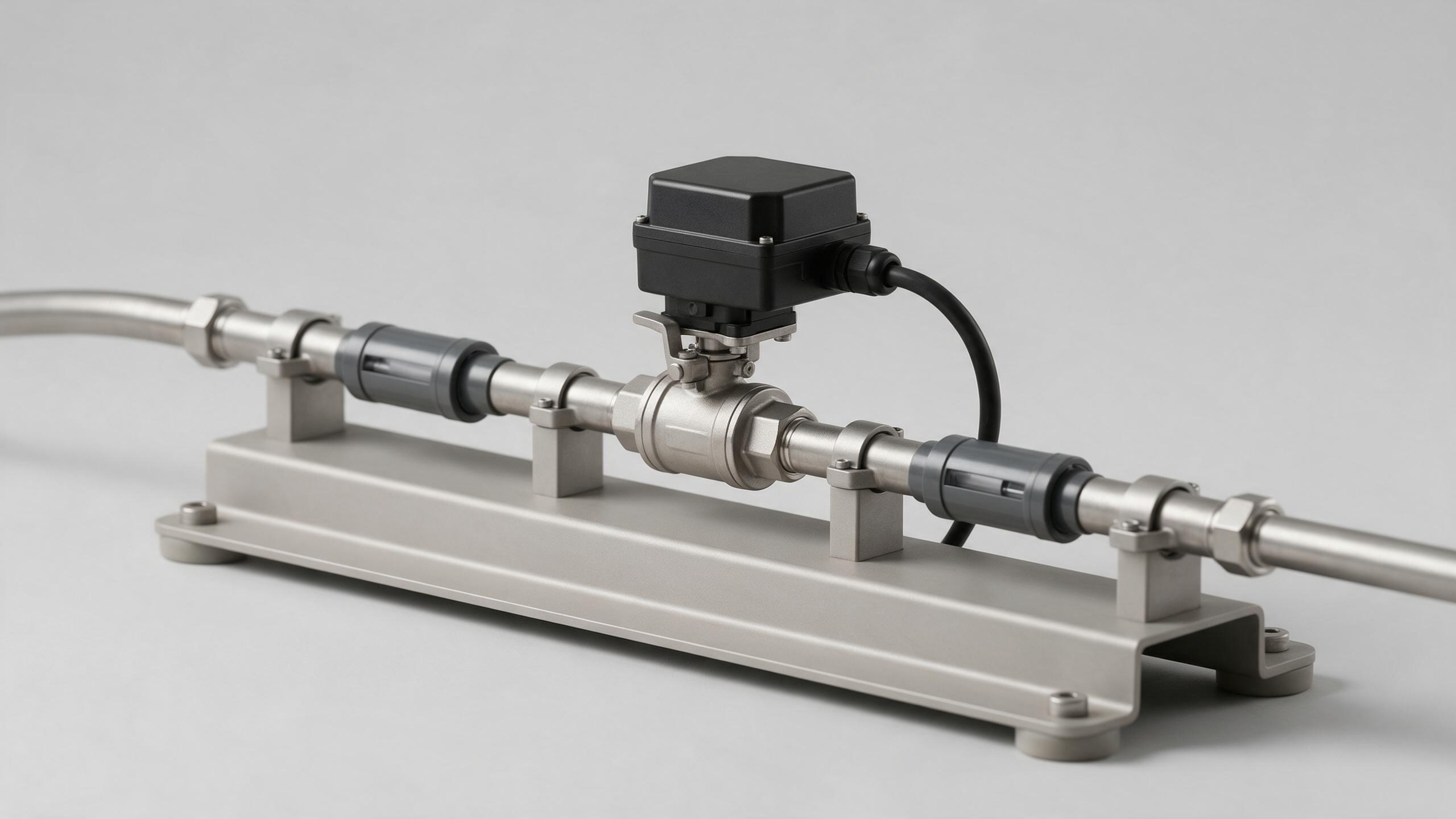
Those benefits are conditional. An actuator that is undersized, connected to the wrong voltage, or configured with the wrong control signal can turn a simple automated valve point into a startup delay.
Start selection with the process, not the catalog photo
1. Define the media and operating envelope
Record the fluid or gas, concentration where relevant, temperature range, normal and maximum pressure, line size, and required shutoff duty. These inputs guide body material, seat material, pressure class, and connection style. For water duty, material compatibility and corrosion exposure still matter; clean indoor water, outdoor water, and chemically treated water may impose different demands. The Electric Ball Valve should be reviewed as an assembly, because the valve body and actuator environment both affect suitability.
2. Match torque with margin and mounting
Valve breakaway torque can be higher than running torque, especially after a period without movement or when media deposits affect the seat area. Specify the valve torque conditions and select actuator output with an engineering margin appropriate to the service. Check the stem drive, bracket, coupling, and mounting connection together. ISO 5211 addresses attachments for part-turn actuators and industrial valves; a reference to that interface is useful only after the actual flange and drive dimensions have been confirmed for the assembly.
3. Specify the electrical and control connection
Before selecting an Electric Ball Valve, document available AC or DC power, control type, cable-entry requirements, enclosure exposure, and whether the control system needs dry-contact, voltage, analog, or fieldbus-compatible signals. Also define what should happen after power loss. Some designs remain at their last position, while others use a return mechanism or an external safety strategy. Do not assume a standard behavior; make it a written project requirement.
4. Include feedback and service access
For a line that must confirm shutoff before the next step begins, end-position feedback can be more important than a simple open command. Plan access for manual override, wiring inspection, and replacement. A technically suitable Electric Ball Valve still creates maintenance friction if its actuator cannot be reached safely once the line is assembled.
Irrigation ball valve applications: useful, but site conditions lead
An irrigation ball valve may be used to automate zones, fill lines, or water-transfer sequences where a full-open or full-closed action is appropriate. In these systems, confirm water quality, solids exposure, outdoor enclosure needs, UV exposure for nonmetallic components, cable routing, and the number of starts per day. A remote irrigation point may also need a clearly planned manual operating method for commissioning and service.
When an Electric Ball Valve is considered for irrigation, it is wise to separate hydraulic requirements from control convenience. Pipe pressure, flow, valve bore, filtration, and drain-down behavior should be reviewed with the site layout. If the operating requirement is gradual pressure regulation rather than discrete zone isolation, a different valve and control approach may be more appropriate.
Fire protection valve references need a stricter boundary
The phrase fire protection valve can describe equipment used in safety-critical systems, but it is not a generic permission to install any actuated ball valve in that role. A project involving a fire protection valve must follow the applicable system design, listing or approval requirements, authority having jurisdiction, and project documents. Required actuation behavior, supervision, environmental rating, and emergency operation must be confirmed for the specific assembly.
For that reason, this article frames a fire protection valve as a review trigger rather than an application claim. An Electric Ball Valve should only be considered after the responsible designer confirms that the assembly and its controls meet the documented system requirements. No general article can substitute for the project approval path.
A commissioning checklist for automated lines
- Verify valve identity, port configuration, flow direction where applicable, and pressure/temperature limits against the line documentation.
- Confirm actuator torque, mounting hardware, stem engagement, supply voltage, and wiring diagram.
- Test open and close commands locally and from the intended controller.
- Verify position feedback, alarm response, and the required behavior during loss of power or signal.
- Cycle the Electric Ball Valve under safe process conditions and inspect for leakage, travel obstruction, and access issues.
- Record the final settings, wiring identification, and maintenance instructions for the operations team.
Make the request for quotation more useful
Send suppliers a concise duty sheet: media, temperature, pressure, line size, connection, body and seat preferences, desired port arrangement, actuator voltage, command signal, feedback needs, enclosure exposure, cycle expectation, and required documentation. This helps the technical discussion focus on a suitable Electric Ball Valve configuration instead of a generic product label.
For automated lines, the value of an Electric Ball Valve comes from a matched system: the correct quarter-turn valve, an actuator with verified torque and interface, a control signal the line can use, and a defined response to abnormal conditions. That approach creates a clearer path from specification to commissioning across water, process, and other application-specific duties.
 Hot News





