
 EN
Where Should Gate Valve Be Placed For Isolation?
A Gate Valve belongs where an operator needs to take a defined section of pipe, equipment, or branch out of service while keeping the rest of the system usable. That sounds simple, but the placement decision is a system decision, not a catalog decision. Before selecting a location, map the flow paths, the people or process affected by an outage, and the safe way to drain, vent, lock out, and return the section to service.
From a B2B procurement perspective, it is useful to put the specification questions on one checklist: medium, pressure, temperature, pipe size, control method, access, maintenance plan, and the owner’s piping standard. A single pressure rating matters, but what matters more is whether it matches the line, the isolation boundary, and the operating method.
Start with the isolatable section, not a spacing rule
The primary job of a Gate Valve in an isolation duty is to limit how much of the system must be shut down. Draw the proposed isolated segment between two possible closure points. If a pipe break, strainer service task, pump repair, or branch modification occurred inside that segment, ask three questions:
- Can upstream flow be stopped without shutting down an unnecessarily large area?
- Can trapped pressure be relieved and the segment drained through a planned, safe route?
- Can the affected equipment be worked on without relying on a valve that is inaccessible or outside the work boundary?
There is no single universal distance for every system. A distribution network, a plant utility header, and a process line can have very different isolation layouts. The owner’s standard, applicable code, hydraulic design, critical-service requirements, and operating practice set the final rule.
Place a Gate Valve at the boundaries that matter
1. At branch connections and major takeoffs
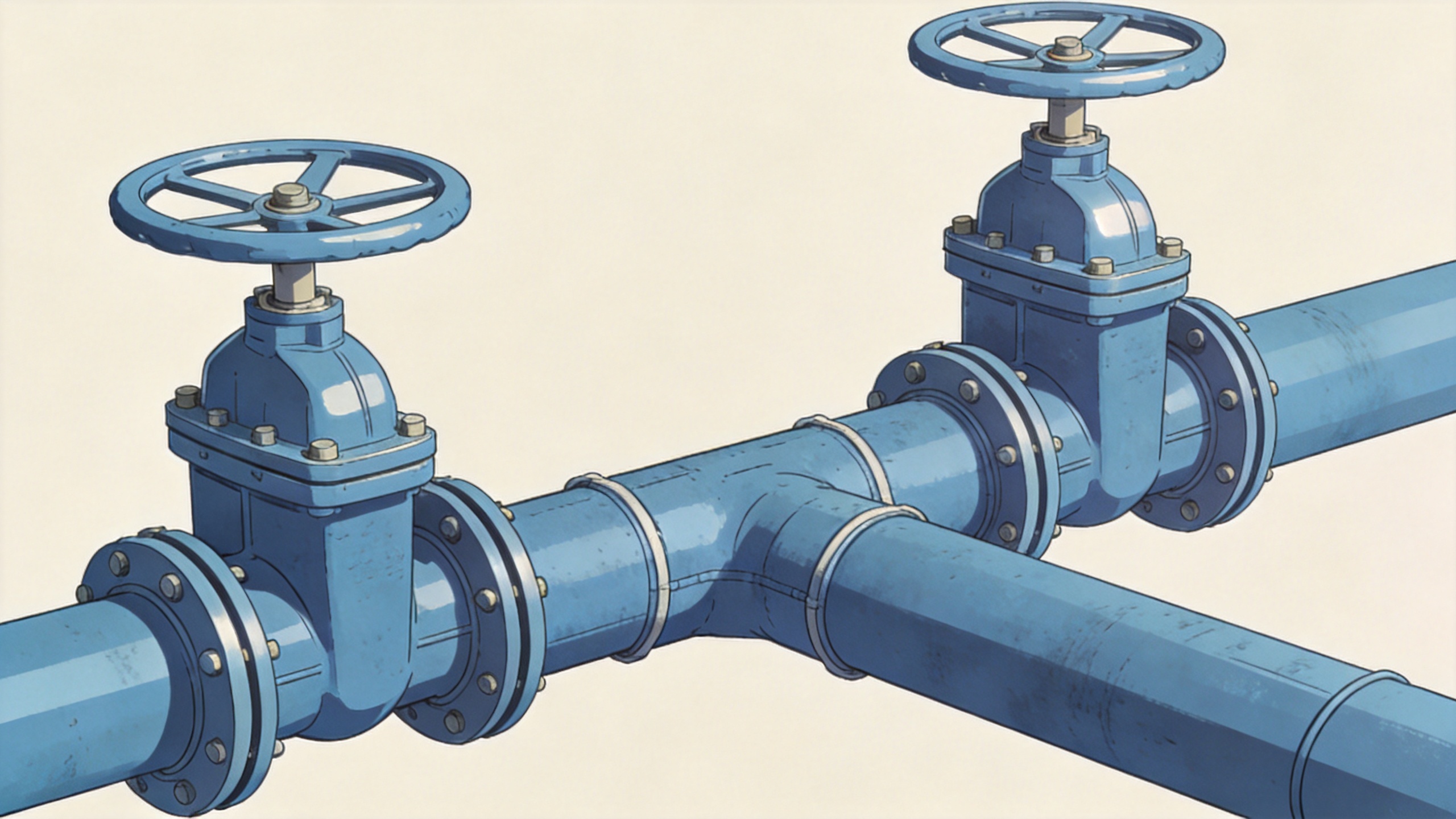
Put a Gate Valve near a branch connection when a branch may need to be repaired, modified, or pressure-tested independently. This arrangement lets the main remain in service while the branch is isolated. In water distribution work, valve location around tees and intersections is often used to reduce the number of customers or zones affected by a main repair. In industrial piping, the same logic protects the continuity of the main header.
The exact side of the fitting depends on the layout. Leave enough straight pipe and physical clearance for installation, operation, inspection, and future removal. Do not place the handwheel, gearbox, or actuator where a wall, support, traffic route, or buried obstruction makes operation impractical.
2. Upstream and downstream of maintainable equipment
Pumps, strainers, meters, heat exchangers, filters, tanks, and package skids usually need a deliberate isolation boundary. A Gate Valve on only one side may stop incoming flow but still leave backflow or stored liquid from the other side. When both sides can feed the equipment, provide isolation on both sides and consider the drain, vent, bypass, and lockout provisions needed for the actual maintenance procedure.
This is where a system view matters. The valve is only one part of the control chain; the drain point, pressure indication, actuator or handwheel access, and written isolation sequence should be reviewed together.
3. Before zones with different outage consequences
Use a Gate Valve to separate zones when the consequence of an outage changes across the boundary. Examples include a process area with a planned shutdown window, a building supply branch, a fire-protection section subject to its own procedures, or a utility line serving a critical load. The goal is not to add valves everywhere. It is to define sections that operations personnel can isolate, verify, and restore with a manageable number of steps.
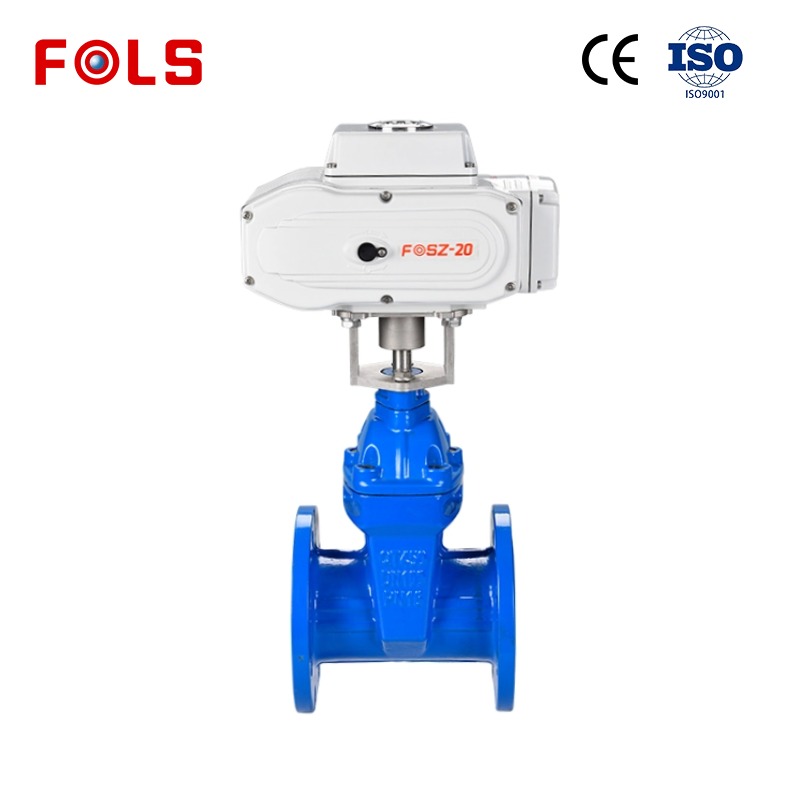
For a remote water valve application, location alone is not enough. The valve also needs a reachable power or control path, a position-feedback strategy if required, local manual override considerations, and a way to operate safely when communications are unavailable. Treat remote actuation as part of the isolation plan, not as a substitute for it.
Use Gate Valves for suitable on/off duty
A Gate Valve is commonly chosen when the intended operating state is fully open or fully closed. It is generally not the first choice for routine throttling. If the line must modulate flow, compare the control requirement with other valve types instead of asking a gate design to serve two unrelated duties.
For example, a segmented ball valve may enter the discussion where controlled flow behavior, fast cycling, or a particular process duty is central. That comparison does not mean one valve type replaces another in every line. It means the procurement team should separate the isolation requirement from the control requirement, then confirm the selected valve’s pressure, temperature, sealing, material, and actuation limits.
A practical placement checklist
- Define the failure or maintenance scenario. Identify what must be isolated: a pipe length, a branch, or a specific piece of equipment.
- Trace every possible flow path. Include cross-connections, bypasses, gravity return, and downstream sources that could refill the section.
- Set the isolation boundary. Locate the Gate Valve where it can stop those paths while limiting the outage area.
- Plan de-pressurization. Verify drains, vents, bleed points, and safe discharge arrangements before maintenance starts.
- Check operability. Confirm clearance, access, turns or actuator travel, environmental exposure, and labeling.
- Check the operating procedure. Ensure lockout/tagout, authority approval, and restoration steps match the physical layout.
- Confirm the project standard. Pipe material, nominal size, pressure class, end connection, coating, and authority requirements can change the final placement and valve construction.
Common placement mistakes
One common mistake is placing a Gate Valve only where it is convenient to install, then discovering that the equipment cannot be fully isolated. Another is copying a valve spacing practice from a different municipality or plant without checking local requirements. A third is treating a remote water valve as an automatic answer while overlooking access, fail position, power loss, or manual override.
Also avoid locating isolation valves where sediment, road loading, heat, corrosion exposure, or poor chamber access will make inspection and operation difficult. Lower initial purchase cost may not mean lower overall effort; installation access, maintenance, outage impact, and rework during technical clarification all belong in the comparison.
Final decision: place the valve where it makes isolation workable
The short answer is that a Gate Valve should be placed at the upstream and, when needed, downstream boundaries of the pipe section or equipment that must be isolated. At branches, intersections, equipment connections, and zone limits, choose the position that stops all relevant flow paths while keeping the shutdown section as small and operable as the system allows.
Before releasing a purchase order, ask: Does this layout isolate the intended segment? Can pressure be relieved? Can personnel reach and operate the valve? Does the valve’s on/off duty match the process? If those answers are documented alongside the project standard, the placement decision is much easier to defend during installation and maintenance.

 Hot News





