
 EN
What Is Globe Valve And Its Throttling Capabilities?
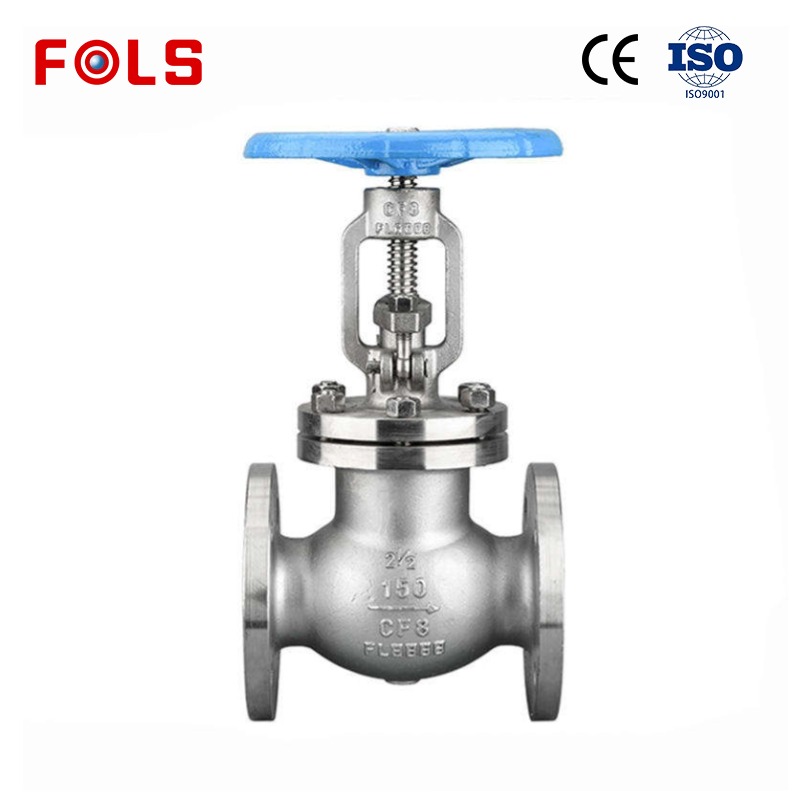
A globe valve is a linear-motion valve that regulates flow by moving a disc or plug closer to or farther from a seat. Its controllable opening makes it useful when a pipeline needs more than a simple open-or-closed decision. That control comes with a tradeoff: the flow path usually creates more pressure loss than a comparable straight-through isolation valve.
For an engineer or buyer, the useful question is not simply whether a globe valve can throttle. It is whether the chosen valve can pass the required flow at the available pressure, control it over the operating range, and tolerate the fluid and temperature. Those conditions guide the choice of trim, materials and operating method.
How a globe valve controls flow
Inside a typical globe valve, a stem moves a disc or plug relative to a seat. As the stem lifts, the opening between the moving element and seat changes. Lowering the element restricts the passage; raising it allows more fluid through. The bonnet contains the stem sealing arrangement, while the body connects the valve to the piping.
Unlike a straight-through passage, the fluid in many globe valve bodies changes direction as it travels through the seat area. Body pattern and trim design affect the actual path and capacity. The body need not look spherical for the valve to operate on the globe principle. Follow the manufacturer's marked flow direction and installation instructions for the particular design rather than assuming every valve works equally in either direction.
Why globe valve throttling is useful
Throttling means deliberately maintaining a restriction to influence flow or a related process variable. A globe valve can be held at intermediate travel instead of being used solely for isolation. Incremental stem movement changes the opening, so an operator or control system can adjust flow as demand changes.
The relationship between travel and flow is not necessarily a straight line. It depends on trim geometry, pressure conditions and the rest of the system. A globe valve intended for manual adjustment is not automatically a modulating control valve: precise automatic regulation also requires suitable trim, an actuator, control signal and properly tuned loop.
Consider a water line feeding a heat exchanger. If the process needs less flow at certain times, a properly selected globe valve can restrict that flow. But if the available pump head is already limited, the additional pressure loss may leave too little flow at peak demand. Check both cases before choosing a valve.
Pressure drop is part of the decision
Any throttling device converts part of the available pressure into a pressure drop. Even fully open, a globe valve commonly has a greater loss than a comparable full-bore isolation valve, although actual values depend on the models and conditions being compared. The pressure rating of the body describes a different issue from the pressure drop experienced during operation.
Ask for the manufacturer's flow coefficient and travel characteristics for the proposed globe valve. Supply minimum, normal and maximum flow rates, upstream and downstream pressures, fluid properties and temperature. A sizing calculation should check the valve at each duty point, including the pressure drop available across the valve and the effect of fittings. Pipe diameter alone is not a sound sizing method.
Oversizing can put normal operation close to the seat, leaving a small travel range for adjustment. Undersizing can restrict maximum flow. Neither problem can be settled from nominal pipe size alone; use the supplier's sizing method and data for the actual trim.
What limits throttling performance?
Cavitation, flashing and noise
When liquid pressure falls sufficiently at the restriction, vapor can form. If pressure subsequently recovers and vapor bubbles collapse, cavitation can cause noise, vibration and damage. If downstream pressure remains below the liquid's vapor pressure, vapor may persist as flashing; erosion can still be a concern. Gas and steam services have different noise and flow limitations.
For a globe valve with a large pressure differential, provide fluid vapor pressure and the full pressure range to an application engineer. Special trim or another system arrangement may be needed; a standard valve should not be assumed suitable for severe service. Selection must also account for the allowable noise level and downstream piping.
Materials, leakage and maintenance
Confirm body, trim, packing and seat materials against the medium, temperature and pressure. A globe valve used for isolation also needs an agreed seat leakage requirement; throttling capability alone does not define shutoff performance. Where particles or fibrous material are present, discuss clogging and wear with the supplier before specifying the valve.
Leave room to operate the handwheel or service the actuator, stem packing and bonnet. A valve that is difficult to reach may be harder to adjust and maintain. Before any intervention, follow site procedures for isolation, depressurization and handling the process fluid.
Globe valve versus gate, ball and check valves
A gate valve is commonly considered for isolation rather than sustained throttling. Ball and butterfly designs can offer lower flow resistance in some configurations, while dedicated control versions may also regulate flow. Compare the actual manufacturer's ratings and control characteristics rather than treating a valve family as a universal answer.
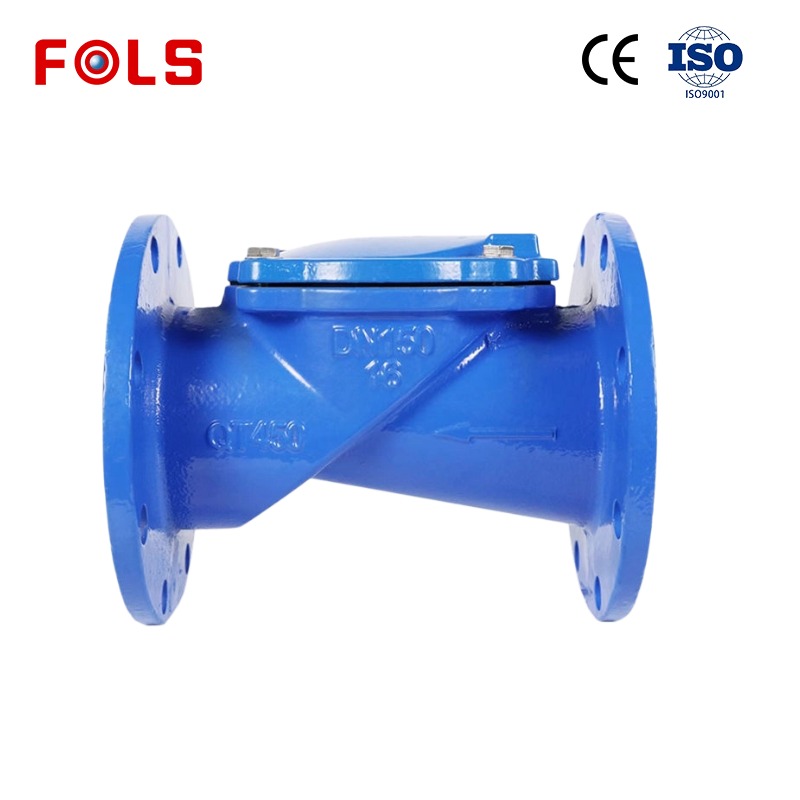
A check valve has a different job: it responds to flow conditions to limit reverse flow. An ultra low cracking pressure check valve is selected for its opening behavior at a small forward differential; it is not a substitute for an adjustable globe valve. Likewise, a 2 inch check valve for sewage pump service addresses backflow and solids compatibility, not the same task as setting process flow. A system may need both a correctly selected check valve and a separate regulating valve.
A practical globe valve selection checklist
- Define the duty. State whether the valve provides manual adjustment, automatic modulation, isolation, or a combination.
- Describe the medium. Include phase, composition, solids, temperature range and any known corrosion or vapor-pressure concerns.
- Give operating points. Supply minimum, normal and maximum flow plus inlet and outlet pressures, along with design limits and units.
- Specify the connection. Confirm pipe size, end connections, pressure class, installation orientation and available space.
- Discuss control. Identify manual, electric or pneumatic operation, available utilities, control signal and required position on loss of power or air.
- Agree on verification. Request the relevant flow data, leakage specification, materials documentation and service guidance for the proposed configuration.
FOLS Valve works in industrial valves and automation, including electric and pneumatic actuation. Share the operating points and control requirements when discussing a globe valve so that the valve and actuator can be evaluated as a system. No particular product configuration should be assumed without its supporting specification.
Frequently asked questions
Can a globe valve regulate flow continuously?
A suitably selected globe valve can operate at intermediate openings. Continuous automatic regulation depends on the trim, actuator, controller and service conditions; a manual isolation valve should not be assumed to provide the same control performance.
Is a globe valve suitable for every sewage line?
No. Solids, fibers and maintenance access can affect suitability. For dirty service, review the flow path and trim with the supplier and compare other valve types for the stated duty.
Does a larger globe valve improve flow control?
No. A larger valve can reduce pressure loss at a given flow, but it may also operate near its seat at normal demand. Evaluate capacity and controllability across the full operating range before deciding.
 Hot News





