
 EN
What Are The Benefits Of Pneumatic Butterfly Valve?
A pneumatic butterfly valve can make routine flow isolation easier to coordinate with a plant's control system. Its air-powered actuator turns a disc inside the pipe, so an operator or controller can command movement without standing beside the valve. For a wastewater line, a cooling circuit or another industrial service, that capability is useful only when the valve, air supply and process conditions are matched.
From a control-system perspective, the question is not simply whether pneumatic operation is fast. It is whether the assembly can deliver the required movement, respond appropriately to a loss of air and fit the space and maintenance routines at the installation. These benefits and checks give buyers a starting point.
How a pneumatic butterfly valve works
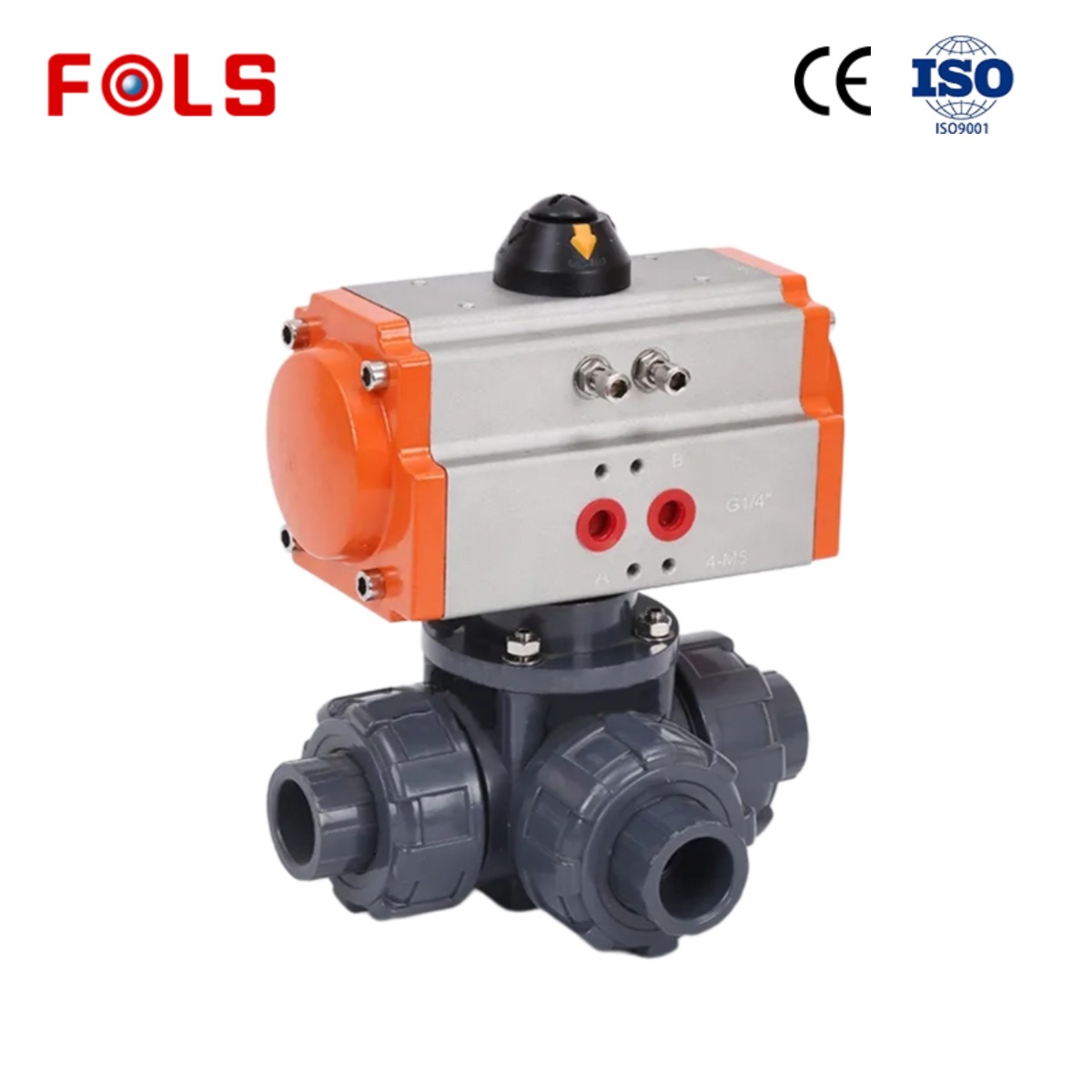
A butterfly valve uses a rotating disc attached to a shaft. Moving the disc approximately a quarter turn, or 90 degrees, changes it from an open orientation to a closed orientation. A pneumatic butterfly valve adds an actuator that uses compressed air to turn that shaft. A solenoid valve can translate an electrical control signal into an air command, while optional position feedback can tell the control system whether the valve has reached an end position.
The actuator and valve are separate parts of one assembly. Air pressure, actuator torque, mounting, the disc and seat all influence the result. An on/off package should not be assumed to provide accurate intermediate flow control; modulating service requires suitable control accessories and engineering.
What benefits can pneumatic operation provide?
Remote operation and repeatable sequencing
A pneumatic butterfly valve can be connected to a control system for remote opening and closing. In a plant with several lines, that allows valve movements to be coordinated with pumps, level signals or process stages rather than depending on a person reaching each handwheel. Position switches, where specified, can help an operator check whether a commanded movement was completed.
Repeatable sequencing is useful in locations that are difficult to access. It does not remove the need to confirm control wiring, signal logic and local isolation procedures. A command to close is not the same as proof that the disc has reached the closed position.
Responsive movement for frequent cycles
Compressed air can operate an actuator promptly, which may suit duties with repeated start and stop commands. Actual stroke time depends on actuator size, available air, accessories and load. Faster is not necessarily preferable: on a liquid line, closing too quickly can create pressure surges. The required opening and closing times should therefore be established for the whole piping system, with the actuator and air controls selected accordingly.
For a pneumatic butterfly valve used frequently, ask for the valve torque across the operating conditions and the actuator output at the lowest expected air pressure. Include any appropriate design margin, seat wear and differential pressure in the sizing discussion. An actuator that looks large enough by dimensions alone may not provide the required torque at every point in its stroke.
A compact valve body for suitable pipework
Butterfly valve bodies generally have a short face-to-face profile compared with some other valve designs. On larger lines or crowded pipe runs, a pneumatic butterfly valve may help reduce the space taken by the valve body. The actuator still needs clearance above and around the pipe, and flange, disc movement and maintenance access must be checked before installation.
The disc remains in the flow path when open, so pressure loss should be assessed for the actual flow and valve design. Compact dimensions are an advantage only when the materials, pressure rating and required sealing performance also suit the service.
Choice of response when air is lost
A pneumatic butterfly valve may use a double-acting or spring-return actuator. Double-acting designs use air to move in both directions; their behavior after air loss depends on the air circuit and configuration. A spring-return actuator uses stored spring force to drive the assembly toward a specified position when the relevant air supply is lost. Depending on assembly and control design, that position may be open or closed.
Do not infer the safe position from the word pneumatic. Identify what the process should do when air or electrical power is lost, then review the solenoid arrangement, actuator configuration and any stored-air or interlock requirements. Test the completed assembly under a planned commissioning procedure.
Integration with an existing air network
Where a plant already has suitable instrument air, a pneumatic butterfly valve can be integrated into an established utility and control arrangement. That may make sense across a group of automated valves. The air network is nevertheless part of the cost and reliability assessment: check available pressure at the actuator, air quality, flow capacity, filtration, tubing length and access for maintenance.
If no suitable air system is present, compare the additional compressor, treatment, distribution and operating requirements with an electric actuator or manual operation. The lowest valve quotation alone does not reveal the total installed cost.
Where the benefits have limits
A pneumatic butterfly valve is not interchangeable with every other valve. Verify compatibility of the body, disc and seat with the fluid, operating temperature and pressure. Consider solids, abrasion, corrosion, leakage requirements and the available isolation procedure. For throttling, confirm the intended control range and whether the selected valve and positioner are appropriate; stable control cannot be assumed from a partially open disc.
Other valves may perform different roles in the same installation. A foot valve for pump suction service helps retain liquid in the suction line under suitable conditions; it is not a substitute for a commanded isolation valve. An inline check valve is intended to respond to flow direction, while an actuated butterfly valve receives a control command. Their placement and compatibility should be reviewed as part of the pump and piping design.
What should buyers confirm before ordering?
Start with the process rather than a preferred actuator. A useful request for quotation for a pneumatic butterfly valve should include the following information, with unknown items identified for engineering review.
- Fluid and duty: medium, any solids or corrosive components, normal and upset temperature, operating and differential pressures, flow and cycle frequency.
- Pipe connection: nominal size, connection style, applicable flange details, available actuator clearance and access for inspection.
- Valve requirements: body, disc and seat compatibility; required isolation or modulating duty; leakage and any project-specific documentation requirements.
- Actuation: available air pressure and quality at the valve, torque at operating conditions, desired stroke time, and the required response to loss of air or power.
- Controls: solenoid signal, position indication, any positioner, local manual provisions and the connection to the plant control system.
For example, a hypothetical treatment line may need remote isolation at a location with limited operator access. The design team can compare the benefit of air operation with the available utility pressure, required failure position and the risk of a pressure surge during closure. It should then confirm the proposed assembly against actual line data, not treat this example as a completed design.
Making the decision
The value of a pneumatic butterfly valve comes from combining a compact quarter-turn valve with air-powered control. Remote operation, coordinated sequences and a selectable spring-return arrangement can be useful, provided the whole package is specified for the process. FOLS Valve's merchant profile describes a focus on pneumatic valves and automation; share the operating conditions and control requirements with the supplier before choosing a configuration.
 Hot News





