
 EN
Electric Actuator Applications In Modern Water Treatment Facilities
Water treatment plants depend on valves to direct raw water, isolate equipment, sequence filters, manage sludge, and protect pumps. An Electric Actuator turns those valve movements into controllable actions that can be initiated locally or from a plant control system. From an automation-solution perspective, the useful question is not simply whether to add an Electric Actuator. It is whether the valve, process duty, signal connection, and maintenance conditions form a workable control loop.
Modern facilities often need more than manual isolation. Operators may need to close a basin inlet after an alarm, move a filter valve through a backwash sequence, or confirm that a remote isolation valve has reached its commanded position. In those situations, an Electric Actuator can provide motor-driven valve travel and feedback for the supervisory workflow. The final configuration still depends on the actual valve torque, travel, enclosure requirement, power supply, control philosophy, and project documentation.
How an Electric Actuator fits the treatment control chain
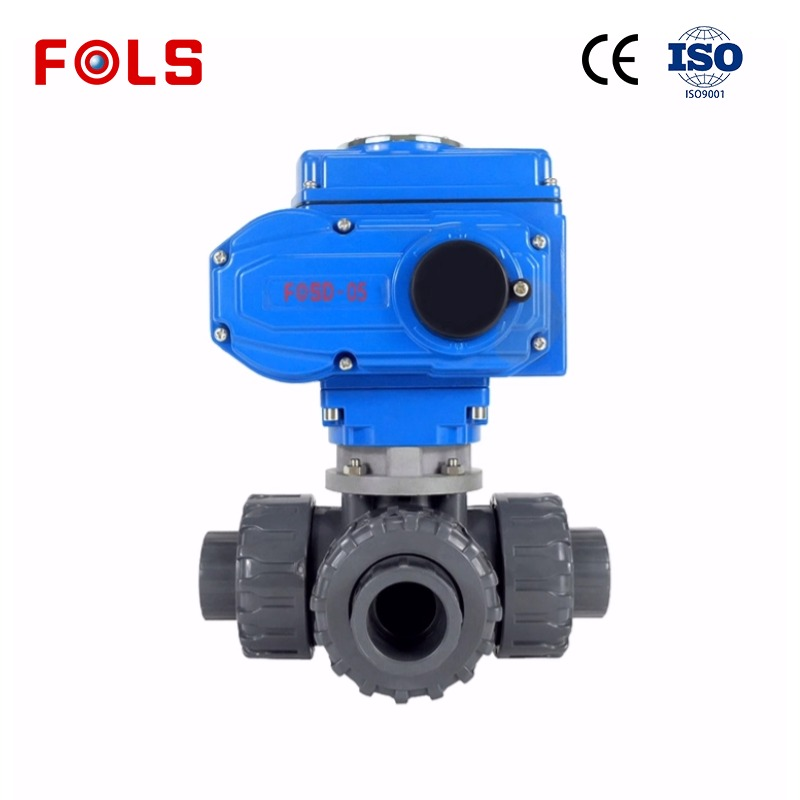
A treatment valve performs the flow-control task; an Electric Actuator supplies movement; the controller sends a command; and feedback helps the system recognize valve status. This separation matters because a valve that shuts mechanically is not automatically ready for unattended process control. A suitable Electric Actuator may need open/close indication, intermediate position feedback, local controls, alarm contacts, or an connection compatible with the plant PLC or SCADA arrangement.
Do not start with a valve name alone. Start with the medium, pressure, temperature, valve type, required operating frequency, and desired failure response. A quarter-turn butterfly or ball valve may call for a different Electric Actuator arrangement than a multi-turn gate or globe valve. The same nominal pipe size does not establish the same torque demand, especially when deposits, differential pressure, seating conditions, or operating cycles change.
Common Electric Actuator applications in water treatment
Raw-water intake and transfer isolation
At an intake structure or transfer line, an Electric Actuator can automate isolation valves that operators would otherwise reach by hand. Remote operation can be useful when the valve location is inconvenient, when a pump sequence requires coordinated valve movement, or when the control room needs a visible open/closed status. Before selection, check the valve stem or shaft torque across the expected pressure range and confirm that travel time supports the process sequence without creating unwanted hydraulic effects.
Coagulation, clarification, and filter sequencing
Treatment trains use many repeatable steps: directing flow to a basin, taking a unit out of service, rinsing a line, or moving through filter backwash. An Electric Actuator can support those repeatable valve commands when the sequence logic and position signals are defined together. Feedback is particularly valuable when the next step should begin only after the previous valve has reached its required state. For modulating duties, the control signal, resolution, and valve characteristic need review as a combined system rather than as separate purchase items.
Filter backwash and rinse lines
Backwash is a practical example of why control frequency must be made specific. Saying that a valve operates frequently is not enough; the team should identify the expected cycles per day, stroke time, differential pressure, and interlocks. An Electric Actuator chosen for occasional isolation may not match a repeatedly sequenced service. Review end-of-travel settings and torque protection with the valve manufacturer or project engineer, since travel stops and excessive-load response must correspond to the actual valve and operating conditions.
Sludge, washwater, and residuals handling
Sludge and washwater lines can introduce solids, changing viscosity, and conditions that affect valve seating or required operating torque. An Electric Actuator in these locations should be assessed with the valve’s materials, sealing approach, orientation, and access for inspection. It is also sensible to ask how a stalled or incomplete movement will appear in the control system. Clear fault indication can shorten the investigation path when a process line does not respond as expected.
Chemical-system isolation and auxiliary services
In chemical feed areas, an Electric Actuator may be applied to isolate transfer paths or coordinate supporting equipment, but chemical compatibility and site safety procedures take priority. The actuator itself is only one part of the decision. Valve body material, seals, cable entries, environmental exposure, and required interlocks need their own confirmation. Avoid treating a generic product description as an engineering approval for a specific chemical duty.
Control signals, feedback, and plant visibility
An Electric Actuator can make valve state visible beyond the field location when its feedback and alarms are integrated into the control architecture. Common needs include commanded position, actual position, open/close limits, local/remote status, torque or overload alarm, and communication health where applicable. Which signals are needed depends on the operating philosophy. A simple isolation point may only need discrete confirmation, while a flow-control point may require a more detailed position signal.
Connection layout deserves a field check. Cable routing, terminal access, conduit entries, and space to remove covers affect commissioning and later service. Automation does not remove maintenance; it shifts attention toward electrical connections, gearing, seals, settings, and diagnostic signals. A maintenance plan should state who verifies travel limits, how abnormal torque is investigated, and which records are retained after a setting change.
Where a rotary solenoid or portable valve actuator belongs
A rotary solenoid is not a substitute term for every Electric Actuator. It is generally associated with short, electrically driven rotary motion and may suit a dedicated mechanism, while plant valve automation usually begins with the valve’s torque, travel, and control requirements. Likewise, a portable valve actuator can be relevant for field operation or maintenance tasks, but it should not be assumed to provide the installed feedback, environmental protection, or control integration of a fixed Electric Actuator.
These distinctions help teams avoid an early mismatch. Compare the required motion, available power, duty cycle, mounting arrangement, control signals, and operator access before choosing a rotary solenoid, a portable valve actuator, or an installed Electric Actuator.
A practical specification checklist
- Identify the valve type, size, shaft or stem torque, travel, seating conditions, and differential pressure.
- Define whether the Electric Actuator is for on/off isolation, sequencing, or modulating control.
- State the power supply, control signal, feedback points, alarm expectations, and PLC/SCADA connection.
- Check enclosure needs, ambient conditions, cable access, mounting orientation, and maintenance clearance.
- Document travel-limit, torque, manual-override, and commissioning requirements with the responsible engineering team.
Use automation as a confirmation path, not a shortcut
An Electric Actuator can help water treatment facilities make valve actions more repeatable, observable, and easier to coordinate from a central control point. Its value is strongest when the application is defined as a complete chain: process condition, valve behavior, actuator movement, feedback, logic, and maintenance access. For project discussions, begin with a concise data sheet covering the fluid, pressure, temperature, operating frequency, valve details, electrical supply, and required signals. That approach gives suppliers and engineers a clearer basis for confirming whether a proposed Electric Actuator configuration fits the duty.
 Hot News





